# QSR Field Guide
How to read a franchise disclosure, one Item at a time, with every brand in the set side by side.
## A field guide to restaurant franchises
A Franchise Disclosure Document is twenty-three items in a fixed order. Four of them decide the deal. The rest are how you check that the salesperson was talking about the same company.
This is a reading manual. It does not rank brands or recommend a purchase. The worked examples come from public filings — German döner, halal, sandwich, chicken, hot dogs, and other quick-service systems — so no one contract looks like the law of restaurants. The [FTC Franchise Rule](https://www.ftc.gov/legal-library/browse/rules/franchise-rule) is why the order is the same in every packet, and why they have to hand it over at least fourteen calendar days before you sign or pay.
Start with the document in front of you, issue date and legal name. Item 5 is the check you write to get in. Item 6 is the percentage that compounds after that. Item 7 is the guess at what the room costs to open. Item 19 is where sales talk has to live if it is going to count. Item 20 is openings, transfers and closures. A heatmap of units wanted is pipeline. Items 11, 12 and 17 are training, territory, and whether you can leave.
[QSR Landscape](https://franchiselandscape.com/) puts the same brands on a fee table. The Buildout Index takes Item 7 apart by line. This site is the method: take the number they quoted, find the page that owns it, and notice when there isn't one.
Before your first call
- Ask for the FDD in writing, and note the legal franchisor, issue date and state filing.
- Find Item 5 and Item 6 first. Initial fee, then the ongoing percentage stack.
- Find Item 7 and read every range and footnote, not only the total.
- Turn to Item 19. Record exactly which outlets and period it covers—or that it makes no representation.
- Add the Item 20 rows yourself, then call a mixed sample from the current and former franchisee lists.
## Entries
### Read
[**How to read an FDD** The twenty-three items, and the four that decide the deal.](/how-to-read-an-fdd/)
[**Item 19** Financial performance representations, and what an empty Item 19 tells you.](/item-19/)
[**Ongoing fees** Royalty plus brand fund is the number that compounds. Watch for uncapped.](/ongoing-fees/)
[**What it costs to open** Item 7 totals, cheapest first. The high end is the planning number.](/what-it-costs/)
[**Term and territory** How long you are in, and what ground the filing actually protects.](/term-and-territory/)
[**System size** Item 20 outlet counts. A 323-unit chain and a four-unit shop, side by side.](/system-size/)
[**Training** Item 11 hours, added up. Fifteen hours and five hundred hours are different offerings.](/training/)
[**QSR vs fast casual** The label changes the rent, the labor and the build.](/qsr-vs-fast-casual/)
[**Footprint and labor questions** Square feet and headcount at peak are the two costs nobody advertises.](/footprint-and-labor-questions/)
[**Red flags in franchise marketing** Territory maps, pipeline counts, and claims that never appear in the FDD.](/red-flags-in-franchise-marketing/)
[**Emerging food categories** How to tell a real category gap from a deck slide.](/emerging-food-categories/)
[**FAQ** Short answers, then the longer entries they point to.](/faq/)
### Year over year
[**Reading successive filings** One FDD is a snapshot. Two show direction, and what the current one no longer shows.](/reading-successive-filings/)
[**Where change shows first** The seven Items that repay a diff, and the misreading each one invites.](/what-changes-between-filings/)
[**Finding prior-year filings** State registers, the franchisor's archive, and the operator who kept theirs.](/finding-prior-year-filings/)
[**Year-over-year worksheet** Older filing left, newer right. The last column is a question you could send today.](/year-over-year-worksheet/)
### Process
[**Fourteen-day rule** Calendar days, binding agreements, and how to timestamp delivery.](/fourteen-day-rule/)
[**FDD vs franchise agreement** The agreement is the contract. Item 22 lists the exhibits.](/fdd-vs-franchise-agreement/)
[**Validation calls** Sample Item 20 lists. Licensed operators are not franchisees.](/validation-calls/)
[**Discovery day** A sales visit with a diligence window. Bring the FDD.](/discovery-day/)
[**Attorney and accountant** Who reads which Items. This site does not replace either.](/attorney-and-accountant/)
[**Qualification** Net worth, liquidity and credit as separate filters. No invented minimums.](/qualification/)
[**Financing overview** SBA 7(a) as a public program. Item 7 is not a down payment.](/financing-overview/)
[**Single vs multi-unit** Area agreements versus unit deals. GDK's five-outlet minimum.](/single-vs-multi-unit/)
[**Timeline to open** Intro, FDD, validation, agreement, site, opening.](/timeline-to-open/)
### Items
[**The twenty-three Items** The whole disclosure in order, with the page that covers each one.](/the-twenty-three-items/)
[**Item 1, the franchisor** Parents, affiliates, and which entity you contract with.](/item-1-the-franchisor/)
[**Item 2, business experience** Five-year histories for the named bench.](/item-2-business-experience/)
[**Item 3, litigation** Pending cases and franchisor-initiated suits. Read the lookback even when the Item is short.](/item-3-litigation/)
[**Item 4, bankruptcy** A prescribed lookback over a named list of entities and people.](/item-4-bankruptcy/)
[**Item 5, initial fees** Every pre-opening payment to the system, not only the headline fee.](/item-5-initial-fees/)
[**Item 6, other fees** Base, timing and adjustment right before the percentage.](/item-6-other-fees/)
[**Item 7, estimated initial investment** The table, its footnotes, and what they exclude.](/item-7-initial-investment/)
[**Item 8, suppliers** Required purchases and franchisor revenue from your buying.](/item-8-suppliers/)
[**Item 9, franchisee's obligations** An index to the clauses you are about to sign.](/item-9-franchisee-obligations/)
[**Item 10, financing** What the franchisor lends, leases or guarantees. A referral still needs Item 10 language.](/item-10-financing/)
[**Item 11, franchisor assistance** Will versus may. Training hours on a calendar.](/item-11-franchisor-assistance/)
[**Item 12, territory** The boundary, the conditions, and the rights kept back.](/item-12-territory/)
[**Item 13, trademarks** Who owns the name you are renting, and what if someone objects.](/item-13-trademarks/)
[**Item 14, proprietary information** Manuals, recipes and software, and who keeps them.](/item-14-patents-and-proprietary-information/)
[**Item 15, participation in the business** Owner on site, or a trained manager on conditions.](/item-15-participation-in-the-business/)
[**Item 16, what you may sell** The menu as a contract term, and who may change it.](/item-16-what-you-may-sell/)
[**Item 17, renewal and exit** Wienerschnitzel: no renewal, no sale. Great Greek: 35 years.](/item-17-renewal-and-exit/)
[**Item 18, public figures** Compensation and investment, or a single negative sentence.](/item-18-public-figures/)
Ask what the typical unit actually is, in square feet.
## Across brands, then down one packet, then last year
A first pass is horizontal: the same Item across two or three current filings. The public [2025 GDK Wisconsin filing](https://apps.dfi.wi.gov/apps/FranchiseSearch/details.aspx?id=639752&hash=370187205&search=external&type=GENERAL), [2025 Halal Guys Wisconsin filing](https://apps.dfi.wi.gov/apps/FranchiseSearch/details.aspx?id=639117&hash=921753141&search=external&type=GENERAL) and [2025 Shah's Halal Minnesota document](https://cards.web.commerce.state.mn.us/documents/%7B9078B29B-0000-C21E-982F-C2FDAFB07783%7D/download?contentSequence=0&documentClass=FRANCHISE_REGISTRATIONS) show how differently adjacent restaurant concepts define investment, formats and obligations.
Then follow one issue through a single filing. A technology obligation might begin in Item 6, appear again as required hardware in Item 11, depend on an approved supplier under Item 8 and become a default issue in the franchise agreement. A territory promise in Item 12 may be qualified by venue carve-outs and then constrained by relocation or transfer terms in Item 17. Search is useful. Context decides what a match means.
Then run backwards. Compare two or three consecutive filings from the *same* franchisor and read what was added, dropped or quietly reworded. The measurement windows in Items 19 and 20 roll forward and the oldest year falls off the back. [Reading successive filings](/reading-successive-filings/) works the method through on four brands, and the [year-over-year worksheet](/year-over-year-worksheet/) is the sheet it produces.
Keep a one-page comparison sheet with the document date, format, Item 7 range, recurring fees, Item 19 population, Item 20 movement, training attendance, territory protection and renewal conditions. Put blanks where a filing is silent. Do not fill them with a broker's estimate. The [comparison worksheet](/comparison-worksheet/) is that sheet as a static table. The [franchisor question list](/franchisor-question-list/) is what to send the seller; [validation calls](/validation-calls/) are a different audience.
## Where the figures come from
Figures on this site come from named FDDs, a 2026 FDD, or a May 2024 comparative study of published FDDs. A 2024 fee sits beside a 2026 fee only when both years are labeled. Missing fields stay missing. bluTaco's royalty is not filled with a zero. Wienerschnitzel has no Item 7 total here; it is omitted from investment rankings rather than estimated. Doner Shack's FDD issued 29 April 2025 is a US offering with no US outlet in 2022, 2023 or 2024.
A few structures are useful as tests. GDK's FDD issued 3 September 2024 is a five-outlet minimum with an Item 7 of $690,500–$1,123,000 per 1,200–1,400 square-foot outlet, uncapped rights to raise royalty and brand fund, an Item 19 from one full-year mall unit that the 2025 filing then withdrew, and six loss years at the US company. Döner Haus's 2026 filing is one compact shop, 850–1,200 square feet, a 5% stack and an Item 19 that is still in the packet. Shah's FDD issued 10 April 2024 is a $197,000–$405,000 restaurant table (high lines summing to $410,000), no Item 19, and 0 franchised / 44 licensed of 58 outlets. The Great Greek Mediterranean Grill's FDD issued 17 August 2023 is a 35-year term and an Item 19 that includes affiliate COGS and payroll. Wienerschnitzel's May 2024 comparative record is a 323-unit system with no renewal and no right to sell. Capriotti's, same study, has no protected area. Pepper Lunch discloses 6 US units against an operator site claiming 500+ internationally.
Those facts are the worked examples.
Process entries follow the buyer's calendar: [fourteen days](/fourteen-day-rule/), [document versus contract](/fdd-vs-franchise-agreement/), [calls](/validation-calls/), [discovery day](/discovery-day/), [professionals](/attorney-and-accountant/), [qualification](/qualification/), [financing](/financing-overview/), [unit versus area](/single-vs-multi-unit/), [timeline](/timeline-to-open/). Item entries cover the chapters the Read pages assume you can find. Tools are for print and vocabulary.
Public checkpoints used throughout: the [FTC Franchise Rule](https://www.ftc.gov/legal-library/browse/rules/franchise-rule), the [buyer guide](https://www.ftc.gov/business-guidance/resources/consumers-guide-buying-franchise), the [2023 FDD walkthrough](https://www.ftc.gov/business-guidance/blog/2023/05/franchise-fundamentals-taking-deep-dive-franchise-disclosure-document), [16 CFR 436.5](https://www.law.cornell.edu/cfr/text/16/436.5), [Wisconsin DFI search](https://apps.dfi.wi.gov/apps/FranchiseSearch/), and Minnesota franchise-registration documents. SBA 7(a) appears only as a [public program description](https://www.sba.gov/funding-programs/loans/7a-loans), not as a quoted rate or a recommendation.
This publication is independent. Brand names belong to their owners. Nothing here is legal, tax or investment advice. Read the current FDD with counsel and an accountant before you sign.
The document itself
## The deal is in four of twenty-three {: .display }
Every FDD uses the same twenty-three-item order. Read these four first, then connect their definitions to the agreement and the other Items they reference.
23Numbered items
Fixed order, every brand, every year. Item 7 is the estimated initial investment; Item 20 is outlet counts and transfers.
4That decide the deal
Item 5 the entry charges, Item 6 the continuing obligations, Item 7 the opening estimate, Item 19 the permitted performance representation.
19The optional item
Item 19 is where permitted financial performance representations are defined, sourced and qualified; it may instead state that none is made.
21Audited financials
Item 21 is the franchisor's own audited statements. Read them against Item 20's openings and closings.
HTML: https://qsrfieldguide.com/
## How to read an FDD
An FDD is the document they have to give you before you sign. The state that accepts the filing has not certified the business. The [federal rule's required cover language](https://www.law.cornell.edu/cfr/text/16/436.5) says that no government agency has verified the information.
## A first pass in seven moves
**1. Find the legal name.** Match the franchisor on the cover to the party in the proposed agreement. Note the issue date and any later amendment. A trade name is not enough when different affiliates own the marks, collect the fees or supply the food.
**2. Read Items 1 through 4.** Item 1 maps parents, predecessors and affiliates. Items 2, 3 and 4 cover management, litigation and bankruptcy. You are finding which company owes you support, and whose books sit in Item 21.
**3. Find Item 5, 6 and 7.** Item 5 is what you pay before opening. Item 6 is what you keep paying. Item 7 is the guess at what the room costs to open. The franchise fee is usually already inside Item 7 — do not add it twice.
**4. Test the operating promise.** Item 8 is who you have to buy from. Item 11 is training and support. Item 12 is territory. Item 16 is what you may sell. A short menu can still require a full shop.
**5. Open Item 19.** If they show unit numbers, copy the metric, the period, how many shops, who was left out, and how many beat the average. If they say they make no representation, a landing-page claim does not fill the gap.
**6. Add the Item 20 rows yourself.** Openings, transfers, terminations, non-renewals, reacquisitions, closures. The ending count is a snapshot. The rows are how the system got there.
**7. Finish with 17, 21, 22 and the exhibits.** Item 17 is whether you can leave. Item 21 is the franchisor's own books. Item 22 lists the contracts. Item 23 is the receipt. The franchise agreement is the deal — check the summary against the clause.
What to ask for
### Item 6
The percentage, the fixed charges, the event fees, their bases, minimums and whether they can go up. Today's rate can still rise if the contract allows it.
Ask for: the cap language, verbatim
### Item 7
The range, the format and the footnotes. Premises size and the initial operating period often matter more than the headline total.
Ask for: the footnotes, not the low end
### Item 19
Whether there is a financial performance representation at all, which metric it uses and how many comparable units it covers.
Ask for: the Item 19 pages, or the reason there are none
### Item 20
Opened, closed and transferred outlets, plus current and former franchisee contacts. A locator shows neither history nor who owned the shop.
Ask for: the list, then call the ones who left
The four that decide it
## Start with four, then follow every cross-reference {: .display }
Items 5, 6, 7 and 19 give you the money outline quickly. Items 8, 11, 12, 17, 20 and 21 tell you whether that outline belongs to the restaurant, the contract and the company you are actually looking at.
## Work from current, public examples
The [FTC's buyer guidance](https://www.ftc.gov/business-guidance/blog/2023/05/franchise-fundamentals-taking-deep-dive-franchise-disclosure-document) explains the fourteen-day delivery rule and why Item 19 claims and Item 20 contacts matter. For practice, compare the regulator pages for [GDK's 2025 filing](https://apps.dfi.wi.gov/apps/FranchiseSearch/details.aspx?id=639752&hash=370187205&search=external&type=GENERAL) and [The Halal Guys' 2025 filing](https://apps.dfi.wi.gov/apps/FranchiseSearch/details.aspx?id=639117&hash=921753141&search=external&type=GENERAL) with the complete [2025 Shah's Halal document filed in Minnesota](https://cards.web.commerce.state.mn.us/documents/%7B9078B29B-0000-C21E-982F-C2FDAFB07783%7D/download?contentSequence=0&documentClass=FRANCHISE_REGISTRATIONS). Adjacent formats, with different tables, histories and contracts.
A public filing is useful for learning. For a live deal, get the current FDD from the franchisor, keep the delivery email and the receipt, and have counsel confirm that the amendments and the agreement match the version you read.
## Item 23, exhibits, and version control
Item 23 is how you prove which PDF arrived and when. Keep it with the delivery email. If an amendment arrives later, file it as a new version and restart any waiting period counsel says it requires. The [fourteen-day rule](/fourteen-day-rule/) is a clock on a specific document, not on "the brand."
Item 22 lists the contracts. Open every exhibit named there before treating Items 5, 6, 12 or 17 as complete. A development agreement can impose a five-outlet minimum while Item 7 is printed per store — GDK's FDD issued 3 September 2024 is that structure. A personal guarantee can outlive a transfer. A software license can auto-renew after termination. None of that is visible in a cover-page investment range.
## Two filings, eight lines
Put two public documents next to each other and fill the same eight lines for each.
| Line | GDK (practice file) | Shah's Halal (practice file) |
| --- | --- | --- |
| Legal franchisor / issue checkpoint | [2025 Wisconsin filing page](https://apps.dfi.wi.gov/apps/FranchiseSearch/details.aspx?id=639752&hash=370187205&search=external&type=GENERAL) | [2025 Minnesota-filed FDD](https://cards.web.commerce.state.mn.us/documents/%7B9078B29B-0000-C21E-982F-C2FDAFB07783%7D/download?contentSequence=0&documentClass=FRANCHISE_REGISTRATIONS) |
| Format in Item 7 | Typical 1,200–1,400 sq ft; five-outlet minimum (FDD issued 3 September 2024) | Full-sized restaurant, 1,200–2,000 sq ft (FDD issued 10 April 2024) |
| Item 5 | $30,000 | $30,000 |
| Item 6 stack as disclosed | 6% + 3% + 2% local; uncapped annual increases on royalty and fund | 5% + 1% + 1% local |
| Item 7 total | $690,500–$1,123,000 | $197,000–$405,000 (high lines sum to $410,000) |
| Item 19 | One full-year mall unit, $1,383,053 gross (2024 FDD) | No representation |
| Item 20 | 7 franchised at year-end 2023; Item 1 claimed 9 by issuance | 58 total; 0 franchised; 44 licensed |
| Item 17 / 12 | 10 years; non-exclusive protected area, no minimum size | 10 years; driving-distance area, non-traditional excluded |
The Halal Guys' [2025 Wisconsin filing](https://apps.dfi.wi.gov/apps/FranchiseSearch/details.aspx?id=639117&hash=921753141&search=external&type=GENERAL) is a third column: 6% royalty, 2% brand fund, 1% local, $60,000 fee, $461,400–$1,333,500 Item 7, no Item 19 in the 2024 comparative record used here, 93 units as of 2024. Same cuisine neighborhood, different paper.
## The usual mistakes
**Adding Item 5 on top of Item 7.** The franchise fee is usually already inside the total.
**Treating "protected" as exclusive.** GDK's 2024 territory is non-exclusive and has no minimum size. Capriotti's 2024 comparative record has no protected area at all.
**Filling an empty Item 19 from a call or a deck.** Shah's and The Halal Guys in the 2024 sources make no representation. A manager's round number does not fill an empty Item 19.
**Counting locator pins as franchised outlets.** Shah's 2024 Item 20: zero franchises operating.
**Using the Item 7 low as a budget.** Great Greek's 2023 low end is a discounted fee for affiliated-brand owners; a first-time buyer pays $39,500. GDK's low is still inside a five-store commitment.
**Stopping at the league table.** The tables on this site compare disclosed fields across brands. They do not replace the footnotes, the exhibits, or counsel.
Close of the first pass
- Receipt, delivery timestamp, and issue date in one folder.
- Items 5, 6, 7, 19, 20 copied onto the [comparison worksheet](/comparison-worksheet/), blanks left blank.
- Item 22 exhibits opened, not merely listed.
- Operator sample planned from the Item 20 lists.
- Counsel and an accountant retained before a signature date is treated as real.
## Related reading
- [The fourteen-day rule](/fourteen-day-rule/) — when the clock starts
- [FDD vs franchise agreement](/fdd-vs-franchise-agreement/) — the agreement is the contract; Item 22 lists the exhibits
- [Comparison worksheet](/comparison-worksheet/) — the eight lines as a printable sheet
- [Item 19](/item-19/) — population before metric
- [Registration states](/registration-states/) — matching a public file to the PDF in hand
- [Reading successive filings](/reading-successive-filings/) — the pass that needs last year's document as well
HTML: https://qsrfieldguide.com/how-to-read-an-fdd/
## Item 19
Item 19 is where a franchisor may show actual or potential outlet numbers — sales, costs, profit. The [FTC rule](https://www.law.cornell.edu/cfr/text/16/436.5) requires a reasonable basis, written substantiation and specified context. A franchisor may instead state that it makes none.
That yes-or-no is only the start. Two brands can both have an Item 19 and disclose fundamentally different evidence.
## Five common shapes
**No representation.** The Item contains the prescribed notice rather than sales or earnings data. That is lawful. It means you must not treat an informal revenue, income or payback claim from the sales process as a substitute. The [FTC's buyer guidance](https://www.ftc.gov/business-guidance/blog/2023/05/franchise-fundamentals-taking-deep-dive-franchise-disclosure-document) is blunt: financial claims made by a seller should appear in Item 19, subject to narrow exceptions.
**A limited outlet example.** A young system may have only one mature franchised outlet or a handful of company stores with enough history. The result can be accurate but not representative of a new market, a different format or an owner-operated unit. Record the denominator before recording the revenue.
**An average or median.** An average can be pulled upward by a few large stores. A median describes the middle observation but says nothing about the width of the range. Look for the number and percentage of outlets that met or exceeded each statistic.
**Subsets or quartiles.** A table may divide outlets by geography, format, age or performance band. That can add useful detail, but only if the selection rule and excluded population are clear. Do not apply the top quartile to an ordinary projection.
**Company-store data.** Affiliate outlets may have different leases, management depth, purchasing arrangements or maturity from franchised stores. Company results are evidence about those stores, not automatic evidence about a franchisee's costs.
## A worked comparison
Whether Item 19 exists tells you less than what it contains. The Great Greek Mediterranean Grill's 2023 filing reports revenue, food-cost and payroll for affiliate restaurants and selected franchise restaurants. Mad for Chicken's FDD issued 12 March 2025 reports revenue for affiliate and franchised outlets but not a complete profit measure. The 2024 filings used for Shah's Halal and The Halal Guys make no financial performance representation. Those are different kinds of evidence.
GDK's [2025 FDD](https://apps.dfi.wi.gov/apps/FranchiseSearch/details.aspx?id=639752&hash=370187205&search=external&type=GENERAL), [The Halal Guys' 2025 FDD](https://apps.dfi.wi.gov/apps/FranchiseSearch/details.aspx?id=639117&hash=921753141&search=external&type=GENERAL) and the [2025 Shah's Halal filing](https://cards.web.commerce.state.mn.us/documents/%7B9078B29B-0000-C21E-982F-C2FDAFB07783%7D/download?contentSequence=0&documentClass=FRANCHISE_REGISTRATIONS) are the current public packets. For each one, the only Item 19 notes that matter are metric, period, which shops, who was left out, and whether expenses are in the table.
A Döner Haus sales-per-labor-hour chart from franchise marketing, set against a peer series across a year.
Item 19 is the filing's performance representation. A marketing chart is a separate exhibit: useful as the company's view of labour productivity. It does not replace the Item.
## From the table to a model
Start with the represented population, not the best result. Match your intended format, market, opening age and ownership model as closely as the data allows. Revenue is not profit; subtract independently researched occupancy, labor, food, delivery, insurance, debt service and the Item 6 obligations. If an Item shows selected costs, confirm which costs are omitted and whether the accounting treatment matches your model.
Then use Item 20's contact lists. Ask operators how long ramp-up took, what changed after the represented period and whether their format resembles yours. Do not ask them to bless a single sales target; ask for the conditions that produced a range of outcomes.
## What the filings actually say
| Brand | Item 19? | What the record actually says | Source |
| --- | --- | --- | --- |
| GDK | Yes | One franchised outlet at American Dream Mall, East Rutherford, the only unit open for the full year. 2023 gross $1,383,053 | FDD issued 3 September 2024 |
| The Great Greek Mediterranean Grill | Yes | Gross revenues, COGS and payroll for six affiliate restaurants, plus high and low of six franchise restaurants open two years | FDD issued 17 August 2023 |
| Mad for Chicken | Yes | Unaudited 2023 and 2024 gross revenue for affiliate and franchised outlets, revenue only. Six outlets that closed during 2024 are excluded | FDD issued 12 March 2025 |
| 375° Chicken 'n Fries | Yes | Unaudited affiliate income statement, 2020–2023. 2023 sales $3,782,437 across two corporate shops | FDD issued 30 April 2024 |
| Döner Haus | Yes | Corporate and early franchised units | 2026 Franchise Disclosure Document |
| Dog Haus, Capriotti's, Pepper Lunch, Wienerschnitzel | Yes | A representation is made; read the cited source for metric and sample | May 2024 comparative study of published FDDs |
| Shah's Halal Food | No | The filing states that no financial performance representation is made | FDD issued 10 April 2024 |
| The Halal Guys, Crave Hot Dogs and BBQ, bluTaco | No | No representation is made | May 2024 comparative study of published FDDs |
A "yes" is a fact about a document rather than about a brand, and it can be withdrawn. GDK's representation appears in the filings issued 20 July 2023 and 3 September 2024, and the filing registered in Wisconsin on 24 September 2025 makes none at all: its Item 19 carries the standard explanatory paragraph and a leftover sentence referring to a "preceding financial performance representation" that is not in the Item. [Reading successive filings](/reading-successive-filings/) works that sequence through.
Döner Haus's 2026 FDD discloses figures for corporate and early franchised units. GDK's Item 19 is one mall unit. Mad for Chicken's is revenue without costs. 375°'s is two corporate shops. Great Greek's is the rare cost-inclusive sample here, and it is still partly affiliate. Read each Item in the filing for the metric and the sample.
Shah's "no" is lawful. It means the [FTC walkthrough](https://www.ftc.gov/business-guidance/blog/2023/05/franchise-fundamentals-taking-deep-dive-franchise-disclosure-document)'s advice applies with extra force: if a seller quotes sales anyway, ask for the Item 19 page. There is not one.
## Subset traps, worked
**Full-year filter.** GDK's 2024 table required a full year of operations. Shops that opened mid-year were out. A new suburban inline is a different format and trade area from the mall unit that remains.
**Affiliate costs.** Great Greek shows COGS and payroll for affiliates. Franchisees pay royalties (6%), brand fund (3%, raisable to 4%), and 1% local — FDD issued 17 August 2023 — which affiliates may not bear in the same way. Subtract the Item 6 stack before treating affiliate payroll as yours.
**Revenue-only.** Mad for Chicken's franchised outlets in the 12 March 2025 sample cannot support a profit claim, and the table leaves out four affiliate and two franchised outlets that closed during 2024 after operating between two and eleven months. Ask the operators who remain about occupancy and labor; do not invent a margin, and do not read a table of survivors as a table of all attempts.
**Corporate income statement.** 375°'s $3,782,437 is two corporate shops in 2023, unaudited. Treat it as affiliate results, not as a franchisee pro forma. Item 20 that year: 5 total, 2 franchised.
**International mix-in.** Pepper Lunch's 2024 comparative record discloses 6 US units and an Item 19 in that US filing. An operator website claiming 500+ locations across fifteen countries is not the sample.
Before a number enters the model
- Metric, period, outlet type, eligible vs included vs excluded.
- Whether expenses are shown, and which expenses are omitted.
- Whether the shop you would build matches format, age and channel.
- Item 20 contact list used to test ramp-up, not to bless a single target.
- Empty Item 19 left empty.
## What a "yes" still forces you to build
Great Greek's 2023 filing gives COGS and payroll for affiliates. You still have occupancy for *your* lease, delivery commissions for *your* mix, the 6% / 3% / 1% stack, a $2,500 renewal fee decades out, and a transfer fee that can be 10% of sale price. The Item does not contain those as a single "net to owner" line. Do not invent one.
GDK's $1,383,053 is gross at one mall in 2023. American Dream Mall is a different trade area from a suburban inline. Do not treat that gross, unadjusted, as yours. If you use the figure at all, ask what would have to be true locally to approach that volume, and which of those conditions Item 20 and the lease actually support.
375°'s $3,782,437 across two corporate shops in 2023 is an affiliate income statement, unaudited, covering 2020–2023. Corporate occupancy, labor mix and lack of royalty are the first three adjustments an accountant should refuse to skip. Two shops are a small sample.
If the May 2024 comparative study only records that Dog Haus, Capriotti's, Pepper Lunch or Wienerschnitzel "make a representation," stop at that fact here and open the filing for the metric. Do not recall a number from a broker one-pager.
## Related reading
- [Reading successive filings](/reading-successive-filings/) — the measurement window rolls, and the year that drops out
- [Item 20 outlet tables](/item-20-outlet-tables/) — whether the sample could even exist
- [Validation calls](/validation-calls/) — how to ask without turning a call into a fake FPR
- [Red flags in franchise marketing](/red-flags-in-franchise-marketing/) — charts that are not Item 19
- [Attorney and accountant](/attorney-and-accountant/) — who builds the model from a subset
- [Comparison worksheet](/comparison-worksheet/) — population fields, not the highlight figure
HTML: https://qsrfieldguide.com/item-19/
## Ongoing fees
The royalty is only one row. Item 6 can also include a brand fund, required local advertising, technology charges, payment-processing costs, training, audits, insurance shortfall, renewal, transfer, default interest and liquidated damages. Some are percentages of gross sales, some are fixed periodic amounts and some occur only after an event. Combining unlike fees into one neat rate can hide more than it reveals.
## Build three columns
Classify each Item 6 row by **base**, **timing** and **control**.
- **Base:** gross sales, purchases, a fixed dollar amount, actual cost or a formula.
- **Timing:** weekly, monthly, annually, on demand or only when an event occurs.
- **Control:** fixed for the term, adjustable to a stated cap, adjustable by a cooperative vote or adjustable without a stated ceiling.
Start by copying the filing's definition of gross sales. Delivery-platform receipts, discounts, refunds, taxes, gift-card redemptions and catering may not receive the treatment a buyer assumes. A 6% royalty on one definition is not necessarily comparable with 6% on another.
Then keep percentages and dollars separate. The [FTC's required Item 6 disclosures](https://www.law.cornell.edu/cfr/text/16/436.5) include the amount, due date, payee, refundability, conditions and whether fees are uniformly imposed. If a technology fee is fixed per month, model it as dollars at several sales levels; do not turn it into a permanent percentage. If local advertising is a minimum spend rather than a payment to the franchisor, label it that way. If a filing does not disclose enough to calculate a combined burden, leave the combined cell blank.
## A multi-brand reading
GDK's [current North American franchise page](https://germandonerkebab.com/ae/german-doner-kebab-gdk-fast-food-franchise-opportunity/rest-of-the-world) advertises a 6% royalty and 3% marketing contribution. Its [2025 Wisconsin filing](https://apps.dfi.wi.gov/apps/FranchiseSearch/details.aspx?id=639752&hash=370187205&search=external&type=GENERAL) is the document to read for definitions, additional charges and adjustment language. The marketing page is a useful lead; it is not a substitute for Item 6.
The Halal Guys provides a second pattern. Its [official franchise page](https://franchise.thehalalguys.com/) describes investment requirements and development formats, while the [2025 Wisconsin filing](https://apps.dfi.wi.gov/apps/FranchiseSearch/details.aspx?id=639117&hash=921753141&search=external&type=GENERAL) contains the enforceable fee disclosures. Shah's Halal's [2025 Minnesota-filed FDD](https://cards.web.commerce.state.mn.us/documents/%7B9078B29B-0000-C21E-982F-C2FDAFB07783%7D/download?contentSequence=0&documentClass=FRANCHISE_REGISTRATIONS) supplies a third table with its own defined bases and conditions. Read the rows side by side, but do not assume a similarly named “marketing” charge buys the same services.
## Model what can change
Run at least three cases: the disclosed current charges, every adjustable charge at its stated cap and a sensitivity case for fixed fees during a weak-sales month. Add renewal and required refurbishment on the years when they occur rather than smoothing them out of sight. Ask existing franchisees which Item 6 charges changed, which required payments sit elsewhere in the document and whether advertising assessments produced store-level spending or only systemwide activity.
The objective is a schedule that preserves what the contract actually says and exposes what remains uncertain.
## Worked stacks
Fee stack, as this site uses the term, is royalty plus brand fund plus required local advertising when those percentages are disclosed. A missing royalty or fund leaves the brand unranked. Do not write a zero to make a row sortable.
| Brand | Royalty | Brand fund | Local | Notes | Source |
| --- | --- | --- | --- | --- | --- |
| Döner Haus | 3% | 2% | — | Local spend is a flat $2,000 a month subject to a 10% annual increase, so it is a dollar row rather than a percentage | 2026 Franchise Disclosure Document |
| Shah's Halal Food | 5% | 1% | 1% | — | FDD issued 10 April 2024 |
| Wienerschnitzel | 5% | 1% | — | Local not in this record | May 2024 comparative study of published FDDs |
| Pepper Lunch | 5% | 2% | — | — | May 2024 comparative study of published FDDs |
| Mad for Chicken | 5% | 1% + 1% media | 1% | Each of brand and media can rise to 2% | FDD issued 12 March 2025 |
| GDK | 6% | 3% | 2% | Local waived if a cooperative levies up to 2%; royalty and fund may rise annually with no cap | FDD issued 3 September 2024 |
| Doner Shack | 6% | Up to 2% | 2% | The fund is capped rather than fixed, so this stack is the maximum the documents permit | FDD issued 29 April 2025 |
| The Halal Guys | 6% | 2% | 1% | — | May 2024 comparative study of published FDDs |
| The Great Greek Mediterranean Grill | 6% | 3%, raisable to 4% | 1% | 35-year term, so the stack runs a long time | FDD issued 17 August 2023 |
| Dog Haus | 6%, or 4% ghost kitchen | 2%, may rise to 3.5% | — | Plus $5,000 a year technology development | May 2024 comparative study of published FDDs |
| Capriotti's | 6–7% | 2%, rising to as much as 4% | 1.5% | Plus 0.65% technology | May 2024 comparative study of published FDDs |
| 375° Chicken 'n Fries | 6% | 1% | 1% | Footnote in the filing reads "five percent (6%)"; 6% matches the Item 6 table | FDD issued 30 April 2024 |
| Crave Hot Dogs and BBQ | 7% | 2% | 1% | — | May 2024 comparative study of published FDDs |
| bluTaco | — | — | none required | No initial fee; royalty not disclosed | May 2024 comparative study of published FDDs |
A dash is a missing field. Leave Wienerschnitzel's local cell and bluTaco's royalty cell blank. Döner Haus's local advertising is a third case: the requirement exists and is disclosed, but in dollars, so there is no percentage to add to a percentage stack.
## Fixed, event-driven, and "then-current"
Percentages are not the whole Item 6. Transfer fees here range from bluTaco's $2,500 to Great Greek's greater of $29,500 or 10% of sale price, capped at the then-current franchise fee. Renewal fees, where stated as dollars, include Halal Guys, Dog Haus and Crave at $5,000, Capriotti's at $10,000, Great Greek at $2,500. GDK's renewal fee is 50% of the then-current franchise fee. Pepper Lunch's renewal fee is "as required by the franchisor at renewal" — a blank in the model.
Technology charges that are dollars or extra percentages belong on their own lines: Dog Haus $5,000 a year; Capriotti's 0.65% of gross. Do not fold them into the stack and then compare stacks across brands as if they were complete.
Gross-sales definitions still decide the burden. A 6% royalty on delivery receipts after platform commissions is not 6% on the menu total. Copy the definition from the agreement, not from the Item 6 label.
Item 6 before a ranking conversation
- Base, timing, control for every row.
- Caps copied verbatim; "no cap" written as no cap (GDK 2024 royalty and fund).
- Technology and transfer on separate lines.
- Missing rates left missing (bluTaco).
- Term length applied: Great Greek's stack times 35 years is a different lifetime cost than a 10-year term at the same percentages.
## Cooperatives, waivers, and double-counting
GDK's 2% local spend is waived if the store joins a GDK advertising cooperative that can itself levy up to 2% (FDD issued 3 September 2024). Do not add the waived local 2% on top of the cooperative 2%. The local bucket changes payee; the stack stays 6+3+up-to-2. Write the payee on the worksheet. A cooperative that spends in your trade area buys different inventory from a national fund that never buys a local spot.
Mad for Chicken splits brand fund and media marketing at 1% each, each able to rise to 2% (FDD issued 12 March 2025), plus 1% local. The current disclosed total of those three is 3%; the contractual ceiling on the two system fees alone is 4% plus the local 1%. Current versus ceiling are two rows.
Dog Haus's 2% marketing, creative and technology fee may rise to 3.5%, with a separate $5,000 annual technology development fee (May 2024 comparative study). At low sales the $5,000 is a large effective percentage; at high sales it shrinks. That is why fixed fees stay in dollars in the model.
Crave's 7% royalty is the high royalty here (May 2024 comparative study), with 2% brand fund and 1% local. Compare it with Wienerschnitzel's 5% + 1% only after you have also compared term (10 vs 20 years), renewal (one option vs none), and transfer (yes vs no). Wienerschnitzel cannot be sold; a lower stack on that contract still leaves you without an exit.
## Related reading
- [What it costs to open](/what-it-costs/) — Item 5 sits inside Item 7
- [Item 8, suppliers](/item-8-suppliers/) — rebates that act like a second royalty
- [Item 17, renewal and exit](/item-17-renewal-and-exit/) — renewal and transfer fees
- [Comparison worksheet](/comparison-worksheet/) — unlike bases kept apart
- [Glossary](/glossary/) — fee stack, then-current, gross sales
Item 6 before Item 5
## Item 5 is small next to Item 6 {: .display }
3 basesPercentage, fixed, actual cost
Keep unlike charges separate until the document gives enough information to model them honestly.
TimingRecurring or event-driven
A weekly royalty, annual software charge and transfer fee belong on different lines and dates.
ControlFixed, capped or adjustable
The current amount and the contract's adjustment right are two different facts.
Item 6Where all of it is disclosed
Every compulsory payment is on that one table, including the ones nobody advertises.
HTML: https://qsrfieldguide.com/ongoing-fees/
## What it costs to open
Item 7 is an estimate of the investment needed to establish and begin operating one franchised business. It is not a quote, a financing promise or a maximum. The [FTC's Item 7 rule](https://www.law.cornell.edu/cfr/text/16/436.5) requires a prescribed table with expense types, amounts or ranges, payment timing, payees and refundability, plus a total.
## Read three Items as one
Start with **Item 5**, which identifies initial fees paid to the franchisor or an affiliate. Then read **Item 7**, where those fees usually reappear as part of the total investment. Do not add them twice. Finish with **Item 6**, because recurring charges begin when the agreement, development schedule or outlet operation says they begin—not necessarily when sales are strong enough to absorb them.
Build a worksheet with four buckets:
1. **Payments to the system:** franchise and development fees, opening advertising, training-related charges and required deposits.
2. **Premises and fixed assets:** lease deposits, design, permits, construction, fixtures, equipment, signs and technology.
3. **Opening inventory and launch:** initial stock, smallwares, uniforms, licenses, insurance and travel.
4. **Additional funds:** payroll, occupancy, utilities and other operating cash for the period the filing states.
The fourth bucket is often misunderstood. Federal rules call for at least three months or another reasonable initial period, but that does not mean three months is enough for a particular lease, construction delay or sales ramp. Item 7 also does not automatically include an owner's salary, debt service, personal living expenses or every local contingency. Read the footnote and ask what is excluded.
## Three adjacent concepts, three ranges
Public 2025 filings show why the total cannot be separated from format. GDK's [Wisconsin registration](https://apps.dfi.wi.gov/apps/FranchiseSearch/details.aspx?id=639752&hash=370187205&search=external&type=GENERAL) identifies the current document; its cover reports the investment for the offered outlet. The Halal Guys' [2025 Wisconsin filing](https://apps.dfi.wi.gov/apps/FranchiseSearch/details.aspx?id=639117&hash=921753141&search=external&type=GENERAL) covers a different restaurant and development structure. Shah's Halal's [complete 2025 Minnesota-filed document](https://cards.web.commerce.state.mn.us/documents/%7B9078B29B-0000-C21E-982F-C2FDAFB07783%7D/download?contentSequence=0&documentClass=FRANCHISE_REGISTRATIONS) states a $207,000–$410,000 range on its cover.
Those totals are not a cheapest-to-dearest ranking. Compare the rows. One range may assume a larger dining room, another a conversion, another a new inline build. One may include a development obligation outside the single-unit total. Real-property treatment, landlord work, equipment financing and the initial operating period can move large costs between rows or outside the table.
The current [Halal Guys franchise page](https://franchise.thehalalguys.com/) publishes broad investment requirements for single- and multi-unit buyers. That page is useful for screening, but the delivered FDD controls the definitions for a transaction. The same distinction applies to any operator calculator or “starting from” number.
## Plan above the table, not from the low end
Price the actual site with bids, local permit requirements and a construction schedule. Separate costs the franchisor estimated from costs a landlord, lender or local authority controls. Model the Item 7 low and high, then add a buyer-owned contingency that is visibly separate rather than pretending it came from the filing.
Ask current franchisees for the bridge from their Item 7 to final cash required: which rows overran, how long the store took to open, when rent started and how much operating cash remained on opening day. Compare recent stores of the same format and market type. A historical low-end conversion in a suburban strip is poor evidence for a new urban build.
The useful output is not one number. It is a sources-and-uses schedule, dated showing who supplied each estimate, when cash leaves, what can change and what the FDD does not cover.
## Additional funds are not a rounding error
The Item 7 worksheets here show how differently filings treat the opening-cash row.
| Brand | Additional funds | Months | Item 7 total | Source |
| --- | --- | --- | --- | --- |
| GDK | $15,000–$20,000 | 3 | $690,500–$1,123,000 | FDD issued 3 September 2024 |
| Shah's Halal Food | $10,000–$30,000 | 3 | $197,000–$405,000 | FDD issued 10 April 2024 |
| 375° Chicken 'n Fries | $30,000–$60,000 | 3 | $324,100–$521,500 | FDD issued 30 April 2024 |
| The Great Greek Mediterranean Grill | $35,000–$75,000 | 0–6 | $582,014–$1,088,560 | FDD issued 17 August 2023 |
| Mad for Chicken | $51,375–$162,000 | 3 | $321,125–$691,700 | FDD issued 12 March 2025 |
| Döner Haus | $20,000–$35,000 | 3 | $359,500–$586,000 | 2026 Franchise Disclosure Document |
GDK's working-capital line is small against a seven-figure high. That is a disclosed estimate, not a proof that a 1,200–1,400 square-foot shop ramps on $20,000. Mad for Chicken's high additional-funds figure is $162,000 in a 2,000–4,000 square-foot full restaurant. Same three-month label, different cash.
Shah's high column of fifteen line items sums to $410,000 against a printed total of $405,000; the cover repeats $405,000. The gap is in the document. Plan with both numbers visible. Great Greek's low franchise-fee cell is $35,550 versus $39,500 at the high — the low is a discount for owners of affiliated brands. A first-time buyer who budgets the printed low has budgeted someone else's deal.
## Construction still dominates
Where the Item 7 worksheets exist, leasehold improvements and packages dwarf the franchise fee.
- GDK: leasehold improvements $0–$250,000; MEP $150,000–$175,000; fit-out $175,000–$205,000; equipment $140,000–$175,000. Fee: $30,000. Five-outlet minimum.
- Shah's: build-out $80,000–$160,000; fixture package $30,000–$50,000. Fee: $30,000.
- Great Greek: leasehold improvements $250,000–$650,000; restaurant package $225,964–$248,560. Fee: $35,550–$39,500.
- Mad for Chicken: leasehold $75,000–$235,000; FF&E $85,000–$110,000. Fee: $35,000. Express format separately $243,500–$470,700.
- 375° Chicken 'n Fries: leasehold $100,000–$200,000; FF&E $100,000–$120,000. Fee: $40,000.
- Döner Haus: construction and leasehold improvements $131,000–$266,000; equipment $78,000–$85,000. Fee: $35,000, plus a $10,000 initial training fee.
Wienerschnitzel, bluTaco and several others have no Item 7 total here; leave them off a ranked investment table rather than estimating.
Item 7 into a capital plan
- One format per worksheet (Mad for Chicken full vs express).
- Fee not added twice.
- High-column arithmetic checked (Shah's).
- Additional-funds period read as a minimum disclosure, not a sufficient ramp.
- Multi-unit minimum applied (GDK five).
- Bids and a buyer-owned contingency on separate rows.
## Opening marketing and inventory are not the fee
Grand-opening lines here, where disclosed: GDK $10,000–$15,000; Shah's $1,000–$5,000; Great Greek included in the restaurant package; Mad for Chicken $15,000; 375° $10,000; The Halal Guys $17,000; Dog Haus $20,000–$25,000; Capriotti's $30,000; Pepper Lunch $7,500–$15,000; Crave $5,000 (sources on those records). bluTaco discloses no grand-opening requirement. A $30,000 Capriotti's launch and a $1,000–$5,000 Shah's campaign are different jobs. Neither is optional if Item 6 or the agreement requires it.
Insurance, licenses and professional fees are small rows that close a deal: GDK insurance $9,000–$18,000 and professional $10,000–$15,000; Shah's insurance $6,000–$10,000 and legal/accounting $3,000–$6,000; Mad for Chicken insurance $2,500 fixed in the table and professional $2,500–$7,000. They are also the rows an optimistic low-end budget deletes. Put them back.
Döner Haus's 2026 range of $359,500–$586,000 covers an 850–1,200 square-foot imbiss across eighteen rows, which is a coarser split than GDK's separate MEP and fit-out lines: one construction and leasehold improvements row of $131,000–$266,000 carries work that another filing would divide three ways. Different filings, different granularity. Pepper Lunch's May 2024 comparative record high of $1,471,500 is the highest disclosed total here; The Halal Guys' $1,333,500 high is next. Those highs are still estimates. A conversion in a cheap market can land nearer a different brand's low without making the filings comparable. Plan the site you have, then use the table as a check, not as a quote.
## Related reading
- [Financing overview](/financing-overview/) — equity injection is not the Item 7 total
- [Qualification](/qualification/) — liquidity versus net worth
- [Single vs multi-unit](/single-vs-multi-unit/) — when the table is per store inside a schedule
- [Item 8, suppliers](/item-8-suppliers/) — which rows are single-source
- [Footprint and labor questions](/footprint-and-labor-questions/) — the box that drives construction
HTML: https://qsrfieldguide.com/what-it-costs/
## Term and territory
A map is not a territory grant. Item 12 must say whether the franchise receives an exclusive territory, how its boundaries are determined, what protection applies and which channels or locations are excluded. Item 17 summarizes the term, renewal, termination, transfer and dispute provisions. The agreement and its exhibits supply the operative language.
## Translate the protection
Copy the boundary exactly: radius, ZIP codes, streets, population, drive time or a bespoke map. Then answer four questions.
1. **Protected from whom?** Other franchisees, company-owned outlets, affiliates or only one of those groups?
2. **Protected from what?** A traditional restaurant, every branded format, delivery, catering, packaged products or online sales?
3. **Subject to what conditions?** Opening deadlines, minimum performance, development schedules or continued compliance?
4. **Excluded where?** Airports, campuses, stadiums, hospitals, military bases, travel plazas, grocery channels or other captive venues?
The [Item 12 rule](https://www.law.cornell.edu/cfr/text/16/436.5) requires disclosure of exclusivity and reserved rights. “Protected” and “exclusive” are not synonyms, and a negotiated area with no minimum size is not the same as a guaranteed radius.
These filings demonstrate the range. The 2024 GDK filing describes a non-exclusive protected area negotiated from demographics, with specified venue and delivery carve-outs. Shah's Halal's 2024 filing describes a driving-distance area that can be smaller in cities and excludes non-traditional sites. The Halal Guys' comparative record uses a radius that varies by market. Capriotti's record states no protected area. These are contract structures, not interchangeable descriptions of “a territory.”
An airport food court is a distinct captive venue, not an ordinary street trade area. A territory clause may reserve locations like this even when nearby streets are protected. Photograph by Famartin, Wikimedia Commons, licensed CC BY-SA 4.0; resized for web display.
Wendy's [official restaurant-design page](https://www.wendys.com/franchising/restaurant-designs) shows why venue carve-outs matter operationally: it treats transportation centers, military bases, food courts and fuel stations as different formats. A buyer should not assume that a street restaurant's area blocks every smaller format bearing the same mark.
## Renewal is usually a new bargain
Move next to Item 17. Record the initial term, any renewal or successor term, conditions, fees, required remodel, release language and whether the franchisee must sign the then-current agreement. The [federal Item 17 form](https://www.law.cornell.edu/cfr/text/16/436.5) specifically requires the summary to explain what “renewal” means, including when materially different terms may apply.
A longer initial term is not automatically better. The brand set includes common ten-year terms, a twenty-year term and a thirty-five-year term. A long term gives more time to recover sunk investment only if the location, economics and adjustment clauses remain workable. It also extends exposure to royalties, required upgrades and operating restrictions.
## Test the exit before the entrance
Read transfer approval, right of first refusal, transfer fees, personal guarantees, death or disability provisions and post-term restrictions. Ask whether the lease term and options align with the franchise term. A ten-year franchise with a five-year lease, or a protected area that disappears on relocation, creates a different risk than either headline suggests.
For each candidate, draw two timelines: franchise agreement and premises lease. Mark opening deadline, development milestones, remodel dates, renewal notice windows and guarantee expiration. Have counsel trace every Item 12 and Item 17 summary to the contract. The practical question is not “Do I have a territory?” It is “Which competition is restricted, for how long, under which conditions, and what happens if this site stops working?”
## Outliers, written plainly
**Wienerschnitzel**, May 2024 comparative study of published FDDs: twenty-year term, **no right of renewal**, **no right to sell**, no protected area. Franchising since 1965, 323 outlets as of 2024. Age and scale do not create an exit the contract withheld. A buyer who needs a transferable asset is in the wrong filing.
**The Great Greek Mediterranean Grill**, FDD issued 17 August 2023: **thirty-five-year** initial term, one additional thirty-five-year term, $2,500 renewal fee. Territory typically a one-mile radius, smaller in dense areas, not exclusive, limited-access venues excluded. Transfer fee the greater of $29,500 or 10% of sale price, capped at the then-current franchise fee. A long term amortizes a $582,014–$1,088,560 Item 7 only if the site, the 6% royalty and the 3% fund (raisable to 4%) remain livable.
**Capriotti's**, May 2024 comparative study: ten-year term, one ten-year option, **no protected area**, 6–7% royalty, brand fund 2% rising to as much as 4%, 1.5% local, 0.65% technology. A transfer is a sale of a site, not of a map.
**GDK**, FDD issued 3 September 2024: ten years; one ten-year option if the outlet is not in the bottom 10% on performance; non-exclusive protected territory with no minimum size; campuses, sports venues, transport sites and aggregator delivery zones excluded. Renewal is a performance gate. Territory is a negotiation, not a guaranteed radius.
**Shah's Halal Food**, FDD issued 10 April 2024: ten years; one additional ten-year term; up to five miles by driving distance, smaller in cities; non-traditional sites excluded. Transfer fee 50% of the then-current franchise fee.
**375° Chicken 'n Fries**, FDD issued 30 April 2024: a specific location rather than an area, sized case by case, not exclusive; two additional ten-year terms.
**bluTaco**, May 2024 comparative study: agreement runs until either party terminates; a one-mile radius or less, set by population. No fixed term to align with a lease option.
**Dog Haus**, same study: half-mile to five-mile radius from demographics, population, income and age; successive ten-year terms; $5,000 renewal fee; $17,500 transfer fee.
**Döner Haus**, 2026 Franchise Disclosure Document: ten years; one ten-year successor term; $5,000 renewal fee. Territory is limited protection rather than exclusivity, about 50,000 population, or a one-mile radius where fewer than that live and work within it. Transfer fee 75% of the then-current initial franchise fee.
**Doner Shack**, FDD issued 29 April 2025: ten years; two successive five-year terms rather than a second decade; territory protected but expressly not exclusive, with no minimum geographic size and boundaries drawn case by case. Transfer fee a flat $10,000.
| Alignment problem | Why it shows up |
| --- | --- |
| 10-year franchise, 5-year lease | You may be a tenant without a franchise, or the reverse |
| 35-year franchise, 10-year lease plus options | Options are not a grant; landlord and franchisor both have to cooperate |
| No protected area plus a "territory" slide | The slide is recruiting; Item 12 is the grant |
| Bottom-decile renewal gate | Ask the definition of performance and the cohort |
| No right to sell | Estate, divorce, and lender conversations change |
Item 12 + 17 in one sitting
- Boundary copied exactly; carve-outs listed.
- Term, renewal conditions, then-current agreement, remodel.
- Transfer right and fee; Wienerschnitzel: write "no sale."
- Lease term drawn on the same page.
- Counsel traces the summary table to clause numbers.
## Delivery, grocery, and the map that stops at the curb
Item 12's reserved rights are where "protected" comes apart. GDK's 2024 filing excludes aggregator delivery zones from the protected description. A customer two streets inside your radius can still be served by another outlet's DoorDash pin if the clause allows it. Capriotti's has no radius to argue about. Shah's driving-distance area, smaller in cities, still excludes non-traditional sites — the airport photograph on this page is the canonical exclusion.
The Halal Guys' May 2024 comparative record uses a quarter-mile to two-mile radius, set by area. That is a market-by-market negotiation dressed as a range. Copy the actual exhibit map, not the range, before you bid a lease. 375°'s specific-location grant, not exclusive, means the protection conversation is really a site-approval conversation.
Renewal notice windows are easy to miss and expensive. If the agreement requires six months' written notice and a remodel bid, put those dates on the lease calendar. Great Greek's 35-year term makes the first remodel more likely to arrive while the original franchisee is still in the building. Wienerschnitzel's lack of renewal makes the last two years of a 20-year term a wind-down, not a sale prep — unless counsel finds a path the comparative record did not summarize. Crave's five-mile radius and one ten-year option (May 2024 comparative study) look "standard" next to those outliers; still copy the radius and the option conditions. Dog Haus's half-mile to five-mile band, set from demographics, is a negotiated map wearing a range. Pepper Lunch's territory "set from demographics and population density," with renewal "as required by the franchisor," leaves two blanks that a buyer should not fill from a sales map.
## Related reading
- [Item 17, renewal and exit](/item-17-renewal-and-exit/) — the summary table at more length
- [FDD vs franchise agreement](/fdd-vs-franchise-agreement/) — exhibits control
- [Single vs multi-unit](/single-vs-multi-unit/) — development area versus unit area
- [QSR vs fast casual](/qsr-vs-fast-casual/) — captive venues as a different format
- [Comparison worksheet](/comparison-worksheet/) — term and territory rows
HTML: https://qsrfieldguide.com/term-and-territory/
## System size
Item 20 shows how a franchise system changed over the last three fiscal years. The first table is a systemwide summary of franchised and company-owned outlets; later tables break out transfers, openings, terminations, non-renewals, reacquisitions and closures by state. The [federal disclosure rule](https://www.law.cornell.edu/cfr/text/16/436.5) specifies those categories and requires contact information for current and certain former franchisees.
## Add the rows yourself
Do not copy only the final total. For each year, start with outlets at the beginning, apply the disclosed movements and land on the ending count. Keep ownership changes separate from physical openings and closings:
- A **transfer** usually means the outlet stayed open but changed franchisee.
- A **reacquisition** moves an outlet from franchised to company ownership.
- A **termination**, **non-renewal** or **ceased operation** may remove a franchised outlet for different contractual or economic reasons.
- A **company opening** adds a unit but does not show franchisee demand.
Definitions and table relationships matter. If the arithmetic does not land, check footnotes, amended pages and whether the same outlet moved through more than one status during the year. The footnote is the next sentence — not a spreadsheet "fix."
## Size is context, not a grade
The brand set ranges from mature systems to early franchise programs. The 2024 comparative records used here show Wienerschnitzel at 323 total outlets, Capriotti's at 145 and Pepper Lunch at six US outlets. Shah's Halal presents a different complication: its 2024 filing described many operating locations under license arrangements while reporting no operating franchises at the relevant year end. A consumer locator and an Item 20 franchise count can therefore both be accurate while answering different questions.
Young systems can offer direct access to founders and undeveloped markets, but a small comparable population makes support, purchasing, closures and Item 19 results harder to evaluate. Large systems offer more calls and operating history, but size does not prove attractive economics or good franchisee relations. Scale is evidence about sample size and organizational demands, not quality.
Use date labels every time. GDK's [2025 Wisconsin filing page](https://apps.dfi.wi.gov/apps/FranchiseSearch/details.aspx?id=639752&hash=370187205&search=external&type=GENERAL) identifies a document effective in September 2025; The Halal Guys' [2025 Wisconsin filing](https://apps.dfi.wi.gov/apps/FranchiseSearch/details.aspx?id=639117&hash=921753141&search=external&type=GENERAL) was effective in May 2025. Their Item 20 tables close on fiscal year-end dates before those filing dates. A location page viewed today is not a same-day comparison with either table.
## Read beyond the count
Calculate simple movement measures, but label them carefully: openings as a share of beginning outlets, ceased operations as a share of beginning franchised outlets and transfers as a share of the franchised base. Do not collapse every departure into “failure.” A transfer may be healthy succession or distress; a reacquisition may be strategic or a rescue.
Then call people. The [FTC recommends](https://www.ftc.gov/business-guidance/blog/2023/05/franchise-fundamentals-taking-deep-dive-franchise-disclosure-document) using the Item 20 lists rather than relying only on contacts selected by a seller. Choose current franchisees across opening years and performance contexts, plus former franchisees from the disclosed list. Ask what caused transfers or exits, how support changed with system growth and whether planned openings arrived on schedule.
Finally, compare development obligations with actual openings. A pipeline, signed agreement or “units wanted” map is not an outlet. Item 20 records what opened and what happened afterward. That is why it belongs beside Item 19 and Item 21: store movement, unit performance and franchisor financial capacity describe different parts of the same system.
## Populations that are easy to miscount
**Licensed shops.** Shah's Halal Food, FDD issued 10 April 2024: 58 total, 14 company, 0 franchised, 44 licensed. Item 20 stated that no franchises were operating as of the filing. A 58-pin locator and a zero-franchise table can both be right. Validation calls to licensees are a different legal relationship.
**International websites.** Pepper Lunch, May 2024 comparative study: 6 US units, 0 company, 6 franchised. The brand's site claims over 500 locations across fifteen countries. Put the international claim in a note. Put 6 in the US Item 20 cell.
**Narrative vs table.** GDK, FDD issued 3 September 2024: 7 units at year-end 2023, all franchised; Item 1 claimed nine open by issuance. Ask which two opened, in what format, and whether they had a full year for Item 19 (that Item used one mall unit).
**Affiliate-heavy young systems.** Mad for Chicken, FDD issued 12 March 2025: 12 total, 10 company, 2 franchised. 375° Chicken 'n Fries, FDD issued 30 April 2024: 5 total, 3 company, 2 franchised. Item 19 samples in both filings lean corporate/affiliate. Item 20 is how you see that before you model.
**The large end.** Wienerschnitzel 323 (246 franchised, 77 company); Capriotti's 145 (135 / 10); The Halal Guys 93 (88 / 5) — May 2024 comparative study, counts as of 2024. Enough contacts for a real sample. Still rebuild the movement. Wienerschnitzel's size does not add a right to renew or sell; that filing discloses neither.
**A 2025 document with an empty US table.** Doner Shack, FDD issued 29 April 2025: zero franchised and zero company-owned US outlets at the start and end of 2022, 2023 and 2024, from a franchisor that began offering US franchises on 5 September 2024. The affiliates run three restaurants in the United Kingdom with four more UK franchises in development. There is no US movement to add up. As of 2026 the brand is not selling US franchises.
Döner Haus's 2026 Franchise Disclosure Document: 4 units as of 2025, 3 company-owned and 1 franchised. Small ending counts make every closure loud; that is the point of the tables.
Item 20 without the locator shortcut
- Beginning + movement = ending, for each year.
- Franchised / company / licensed labeled.
- Item 1 narrative next to the year-end table.
- Current and former lists sampled; discovery-day guests are extra, not the sample.
- Heatmaps filed as recruiting art.
## What "as of" is doing in the league table
Item 20 counts close on a fiscal year-end. Filing dates are later. GDK's 2024 FDD used here reports year-end 2023 counts; a 2025 Wisconsin effective date is a later document. The Halal Guys' 93 units are as of 2024 in the comparative record; the Wisconsin page used as a public checkpoint is a 2025 filing. Döner Haus's 4 units are as of 2025, inside a 2026 document. Mixing those ending counts in a sentence without years is how a four-unit shop and a 323-unit chain look like contemporaneous peers.
Founded dates are not Item 20. Wienerschnitzel founded 1961, franchising 1965, is a sixty-year operating story; 375° franchising since 2023 is not. Capriotti's founded 1976, franchising 1991, sits in between. Use founding as context for Item 2 and Item 3, and use Item 20 for what happened to shops.
Crave's 26 franchised of 26 (May 2024 comparative study) means there is no company-store laboratory in that count. bluTaco's 33 franchised of 34 is almost the same shape. Mad for Chicken's 2 franchised of 12 is the opposite shape. Franchisee-call programs look different in those three files even when the food is all "QSR."
Dog Haus's 58 franchised of 58, as of 2024, is a fully franchised count at that date. Transfers, if the tables show them, are the whole system's ownership churn. There is no company row to absorb a failed shop unless a later reacquisition creates one.
The Great Greek's 31 units as of 2023 and Crave's 26 as of 2024 sit in the middle here: enough shops to call, not enough to treat any one state table as a law of large numbers. 375°'s 5 and Pepper Lunch's 6 US units are the other side of that line. A single closing is a large percentage. That is information, not a moral. Döner Haus's 4 as of 2025 is a compact system: rebuild the three years, then call the list. The Halal Guys' 93 as of 2024 and Dog Haus's 58 as of 2024 are large enough that a convenience sample of three happy operators is statistically and practically inadequate. Use the lists. Projected openings in Item 20, when present, are still plans: compare them with the prior year's actual openings before treating a development map as evidence.
## Related reading
- [Item 20 outlet tables](/item-20-outlet-tables/) — the tables and the Shah's / Pepper Lunch worked cases
- [Validation calls](/validation-calls/) — how to sample the lists
- [Item 1, the franchisor](/item-1-the-franchisor/) — narrative counts
- [Item 19](/item-19/) — whether the FPR population matches the outlet population
- [Red flags in franchise marketing](/red-flags-in-franchise-marketing/) — units wanted versus units opened
HTML: https://qsrfieldguide.com/system-size/
## Training
Training is not one number. Item 11 must describe the subjects, classroom and on-the-job hours, location, timing, instructors, required attendees and who pays travel and living costs. The [federal disclosure format](https://www.law.cornell.edu/cfr/text/16/436.5) requires a table titled “TRAINING PROGRAM,” but identical columns do not make programs equivalent.
## Build an attendance schedule
Copy each subject and separate classroom from on-the-job time. Then add information that the hours alone omit:
- which owner, manager or employees must attend;
- whether attendance or successful completion is required;
- where training occurs and how often classes are offered;
- whether instruction is in person, remote or self-directed;
- who pays wages, travel, lodging and replacement labor;
- what pre-opening and opening-team support follows;
- what continuing or remedial training can later be required.
If two people must attend a 160-hour program, the business commitment is not simply 160 hours. It is 320 participant-hours plus travel and time away from the buyer's existing work. If a manager leaves, determine whether a replacement must repeat training and at whose cost.
## Compare shape, not prestige
The filings on this site show very different commitments. GDK's 2024 filing lists 40 classroom and 120 on-the-job hours. Shah's Halal lists 19 classroom and 85 on-the-job hours. The Halal Guys lists 24 and 136. Döner Haus's 2026 Franchise Disclosure Document lists 24 and 56. Wienerschnitzel's comparative record lists 48 classroom and 480 on-the-job hours, while bluTaco lists no classroom hours and 11.5 on-the-job hours.
Those totals do not rank instructional quality. They may reflect restaurant complexity, franchisee experience requirements, what the franchisor counts as formal instruction or a model built around an existing host retailer. Compare the subjects and attendees to the actual format. Food safety, prep, line deployment, inventory, scheduling, cash controls, delivery, local marketing and equipment care all demand evidence somewhere, but not necessarily the same mix of classroom and store time.
Wendy's [official franchise FAQ](https://www.wendys.com/franchising/franchise-faqs) provides a useful outside comparison: it describes a four-to-six-month management program combining in-restaurant training, classroom work and regional orientation. That operator-page description helps a reader form questions. The current Wendy's FDD and agreement would still control the obligations, costs and eligibility for an actual buyer.
## Separate pre-opening from ongoing support
Item 11 covers more than the training table. Read the assistance language before and after opening, site and design support, computer systems, advertising program and operating-manual treatment. Identify verbs: “will provide,” “may provide” and “may require” create different expectations.
Ask recent franchisees when they were allowed to enroll, whether construction delays forced retraining or extra travel, who staffed the opening team and how long that team stayed. Ask mature operators which support continued after launch and which training became mandatory when products, software or standards changed.
## Match training to the staffing model
Turn the curriculum into a role matrix. Who can open, close, receive inventory, run each station, handle allergens, reconcile cash and train a new employee? How many trained managers must be employed before opening? Does the model assume an owner-operator, a dedicated general manager or a multi-unit organization with its own trainers?
Finally, put training costs and payroll into the opening plan. Item 7 may include travel or training expenses, but its allowance can be a range based on assumptions that do not match the buyer's distance or attendee count. Match Item 7, Item 11 and the agreement rather than presuming the training line is all-inclusive.
The question is not whether 500 hours beats 50. It is whether the disclosed program can produce the operating roles the restaurant requires, on your timeline, with costs and completion conditions understood before the lease and opening clock begin.
## Hours against cash and calendar
Classroom plus on-the-job, as disclosed, and the Item 7 travel line where these filings has one:
| Brand | Classroom | OTJ | Combined | Training cash in Item 7 | Source |
| --- | --- | --- | --- | --- | --- |
| bluTaco | 0 | 11.5 | 11.5 | — | May 2024 comparative study of published FDDs |
| Crave Hot Dogs and BBQ | 15 | 37 | 52 | — | May 2024 comparative study of published FDDs |
| Pepper Lunch | 16 | 192 | 208 | — | May 2024 comparative study of published FDDs |
| Shah's Halal Food | 19 | 85 | 104 | Travel $2,000–$20,000 | FDD issued 10 April 2024 |
| 375° Chicken 'n Fries | 23 | 67 | 90 | $100–$5,000 | FDD issued 30 April 2024 |
| The Halal Guys | 24 | 136 | 160 | — | May 2024 comparative study of published FDDs |
| Döner Haus | 24 | 56 | 80 | Initial training fee $10,000; pre-opening travel $0–$3,000 | 2026 Franchise Disclosure Document |
| Mad for Chicken | 25 | 196 | 221 | $4,000–$10,000 | FDD issued 12 March 2025 |
| Dog Haus | 40 | 102 | 142 | — | May 2024 comparative study of published FDDs |
| GDK | 40 | 120 | 160 | $5,000–$10,000 | FDD issued 3 September 2024 |
| Wienerschnitzel | 48 | 480 | 528 | — | May 2024 comparative study of published FDDs |
| Doner Shack | 52 | 160 | 212 | — | FDD issued 29 April 2025 |
| Capriotti's | 55 | 270 | 325 | — | May 2024 comparative study of published FDDs |
| The Great Greek Mediterranean Grill | 60.25 | 180 | 240.25 | Travel and living $10,000–$20,000 | FDD issued 17 August 2023 |
Döner Haus's training cash is a charge rather than an expense estimate: a $10,000 initial training fee covering two people, with travel priced separately. Wienerschnitzel and others have hours without an Item 7 travel line here; do not invent one.
Two attendees double the person-hours and usually the travel. Shah's $2,000–$20,000 travel band is a distance-and-lodging story: a local opener and a cross-country opener are not the same Item 7 row. Great Greek's $10,000–$20,000 living band sits on 60.25 classroom hours — a long stay. 375°'s $100–$5,000 band is the wide-open version of the same problem.
Wienerschnitzel's 480 on-the-job hours will not fit in a punch-list week. Put them on the [timeline to open](/timeline-to-open/) before the landlord's rent-start date. bluTaco's 11.5 hours will fit; whether they produce a crew is a validation-call question, not a calendar question.
Pepper Lunch's 16 classroom / 192 OTJ split is a teppan-line apprenticeship shape. Crave's 15 / 37 is the short end of restaurant programs here. Neither number is a quality score. Both are absences from your other job, or payroll for people sitting in someone else's shop.
Training onto the opening plan
- Subjects, attendees, location, completion vs attendance.
- Person-hours, not just program hours.
- Item 7 travel matched to actual distance.
- Repeat-training cost if a manager leaves.
- Opening-team "will" vs "may" copied from Item 11.
## Who has to be in the room
Item 11's required attendees are the real multiplier. If the owner and a general manager must both complete the program, Wienerschnitzel's 528 hours become 1,056 person-hours plus two people's travel. Great Greek's 240-plus combined hours at $10,000–$20,000 living cost is already priced as a stay; two attendees are a second stay. bluTaco's 11.5 hours with 0 classroom may be designed around an existing host retailer — the filing's structure, including no initial fee, suggests a different labor theory. Ask. Do not assume a 11.5-hour program produces a spit operator and a closer.
Replacement training is the quiet clause. When the GM leaves in month eight, does the replacement repeat the full table, a shortened table, or an online module, and who pays? Item 6 sometimes charges for additional training. Item 11 describes when it is mandatory. Put both on the worksheet.
Capriotti's 55 classroom + 270 OTJ (May 2024 comparative study) is the long sandwich-line apprenticeship here. A linear counter, like the Subway photograph used on the QSR-versus-fast-casual page, makes those hours plausible as station drills. They still have to be scheduled against construction. Dog Haus's 40 + 102 sits near GDK's 40 + 120 with a different menu. Same-looking totals, different stations.
Döner Haus's 24 classroom + 56 OTJ (2026 Franchise Disclosure Document) is the compact German-döner program: fewer stations than GDK's 160 combined, matched to a standing-service counter with a spit, a slicer and a close.
Shah's 19 classroom hours are the short classroom end among full restaurant programs here, with 85 on the job — FDD issued 10 April 2024. That may match a simpler line or a franchisee who already cooks. It may also mean more of the real training happens after opening, unpaid, in the buyer's shop. Ask recent openers which. The Halal Guys' 24 + 136 (May 2024 comparative study) is a longer OTJ block for a platter line; still not Wienerschnitzel's 480. Crave at 15 + 37 remains the shortest restaurant-shaped program here after bluTaco.
## Related reading
- [Item 11, franchisor assistance](/item-11-franchisor-assistance/) — verbs and advertising programs
- [Timeline to open](/timeline-to-open/) — hours on a construction calendar
- [Footprint and labor questions](/footprint-and-labor-questions/) — the roles training must produce
- [Discovery day](/discovery-day/) — a tour is not the table
- [Qualification](/qualification/) — experience versus disclosed hours
HTML: https://qsrfieldguide.com/training/
## QSR vs fast casual
“Quick service” and “fast casual” are market descriptions, not legal categories. A restaurant can combine counter ordering, made-to-order food, delivery, a dining room, a drive-through or a compact captive-venue format. What matters is the operating model the filing and agreement require.
## Read the customer path
Trace an order from arrival to handoff. Does the customer queue at one counter, move along an assembly line, order at a kiosk, use a drive-through or sit for table delivery? Who clears the dining room? How many order channels can hit the kitchen at once? These choices affect labor deployment, throughput, technology and the amount of customer space.
A linear sandwich counter makes the production path visible and lets the customer move with the order. Photograph by Gregory Maxwell, Wikimedia Commons, licensed CC BY-SA 3.0; resized for web display.A separate dining room adds seats, circulation, cleaning and climate-controlled space beyond the production counter. Photograph by PaulGorduiz106, Wikimedia Commons, licensed CC BY-SA 4.0; resized for web display.
These photographs isolate one operational distinction: an ordering line and a dining room consume space and labor differently.
Three formats, overlapping labels
## The footnote decides which one you bought {: .display }
CompactCounter or standing shop
Less customer seating can reduce the box, but the production line, storage and delivery handoff still set a floor.
InlineCounter plus dining
Customer seating adds occupancy and cleaning while delivery and takeout may still compete for kitchen capacity.
CaptiveAirport, campus or food court
A smaller service footprint can carry venue-specific rent, access, menu and operating-hour constraints.
## Where the document reveals the model
Item 7 gives the premises assumptions and investment range. Item 11 describes required systems and assistance. Item 12 reveals nontraditional-location carve-outs. Item 16 limits the menu, while Item 8 may constrain purchasing. The operations manual is not public, so ask current franchisees how many stations and people are needed at peak and how delivery orders enter the line.
Compare operator language with the filed offer. GDK's [franchise page](https://germandonerkebab.com/ae/german-doner-kebab-gdk-fast-food-franchise-opportunity/rest-of-the-world) calls the concept fast casual and describes kiosk, inline and end-cap footprints; its [2025 filing](https://apps.dfi.wi.gov/apps/FranchiseSearch/details.aspx?id=639752&hash=370187205&search=external&type=GENERAL) supplies the current contractual disclosures. Wendy's [restaurant-design page](https://www.wendys.com/franchising/restaurant-designs) separately presents transportation-center, military-base, food-court and fuel-station formats. One brand can therefore occupy several points on the spectrum.
Model each offered format separately. Use seats, square footage, opening hours, order channels, peak transactions, stations and manager coverage—not “QSR” or “fast casual”—as the inputs. A category label may help a customer understand the offer. It cannot price the lease or write the labor schedule.
## Labels against the box
| Brand | What the record calls the business | Disclosed box | Source |
| --- | --- | --- | --- |
| Döner Haus | German döner imbiss | 850–1,200 sq ft, standing service | 2026 Franchise Disclosure Document |
| GDK | UK kebab QSR | 1,200–1,400 sq ft typical; kiosk / inline / end-cap in marketing | FDD issued 3 September 2024 |
| Shah's Halal Food | New York-area chicken and rice | 1,200–2,000 sq ft | FDD issued 10 April 2024 |
| The Great Greek Mediterranean Grill | Fast-casual Greek | 1,800–2,000 sq ft | FDD issued 17 August 2023 |
| Mad for Chicken | Korean fried chicken | 2,000–4,000 sq ft full; express separately | FDD issued 12 March 2025 |
| Doner Shack | UK kebab brand | 1,200–1,800 sq ft | FDD issued 29 April 2025 |
| 375° Chicken 'n Fries | Chicken and fries | 800–1,500 sq ft | FDD issued 30 April 2024 |
| Pepper Lunch | Japanese teppan fast casual | — | May 2024 comparative study of published FDDs |
| Wienerschnitzel | Drive-through hot dogs | — | May 2024 comparative study of published FDDs |
| Capriotti's | Submarine sandwiches | — | May 2024 comparative study of published FDDs |
| Dog Haus | Craft hot dogs; ghost-kitchen royalty variant | — | May 2024 comparative study of published FDDs |
A dash means square footage is not on this site. Do not guess Wienerschnitzel's box from a drive-through photograph.
Imbiss versus seated dining is an operating split. Döner Haus's standing-service range sits below GDK's typical 1,200–1,400 and well below Great Greek's 1,800–2,000. The smaller box still has a production line, storage, a handoff, and Item 6 fees (3% royalty and 2% brand fund in the 2026 FDD). Great Greek's dining room adds occupancy, cleaning and 60.25 classroom hours in the 2023 FDD. Calling both "fast casual" erases the labor schedule.
Dog Haus's 4% ghost-kitchen royalty versus 6% restaurant royalty (May 2024 comparative study) is the same brand occupying two points on the spectrum. Match Item 7, Item 12 and training to the point you are buying.
Captive venues — the airport food court in this site's Newark photograph — can look "QSR" and still carry venue rent, access and hours that no street-front Item 7 assumed. GDK's 2024 territory excludes transport sites from the protected description. A food-court deal is often a different exhibit.
Format before category
- Seats, square feet, channels, hours — from the filing and the lease, not from the label.
- Express vs full vs imbiss vs ghost kitchen as separate worksheets.
- Captive venues checked against Item 12 carve-outs.
- Labor stations mapped to the customer path in the photographs above, then to the actual shop.
## Channels change the label without changing the name
Counter, kiosk, drive-through, delivery and dining room can all sit under one trade name. Wienerschnitzel is disclosed as drive-through hot dogs; that channel needs stacking length, speaker-box labor and a different peak than a mall counter. Dog Haus's ghost-kitchen royalty of 4% versus 6% restaurant (May 2024 comparative study) is an explicit price on the channel split. GDK's marketing describes kiosk, inline and end-cap; the 2024 Item 7 used here is the 1,200–1,400 square-foot typical outlet inside a five-store minimum. If you are being sold a kiosk, ask for the kiosk's table.
The Jollibee dining-room photograph on this page is a seated fast-casual volume of space: circulation, cleaning, HVAC, and a manager who can see the floor. The Subway counter photograph is a linear QSR path. Great Greek's 1,800–2,000 square feet and 60.25 classroom hours belong nearer the first picture. Döner Haus's standing imbiss and 850–1,200 square feet belong nearer a short counter and a handoff. Shah's 1,200–2,000 can be either, depending on seating; the footnote and the lease decide.
Delivery does not make a dining room smaller. It adds tickets to the same expo. Item 12 carve-outs for aggregator zones (GDK 2024) mean the delivery customer may not even be "yours." Model the labor as if the tickets arrive anyway, then read the territory clause to see whether the sales do.
Mad for Chicken's 2,000–4,000 square-foot full restaurant versus its express range is the same brand on two points of the spectrum (FDD issued 12 March 2025). 375° at 800–1,500 square feet is already a compact chicken box (FDD issued 30 April 2024). Pepper Lunch's teppan format puts production in view of the dining room; square footage is not on this site, so do not infer it from the Japanese origin story. bluTaco's tacos-and-QSR description, 11.5 training hours and an at-will term (May 2024 comparative study) may be a host-retail or compact-counter theory — ask which, then match Item 7 if the current filing has one. Great Greek's 180 on-the-job hours in a seated room (FDD issued 17 August 2023) and bluTaco's 11.5 hours describe two different businesses.
## Related reading
- [Footprint and labor questions](/footprint-and-labor-questions/) — square feet into a schedule
- [Item 7 / what it costs](/what-it-costs/) — the investment table for that box
- [Term and territory](/term-and-territory/) — venue carve-outs
- [Emerging food categories](/emerging-food-categories/) — cuisine story versus box
- [Glossary](/glossary/) — imbiss, express, captive venue
HTML: https://qsrfieldguide.com/qsr-vs-fast-casual/
## Footprint and labor questions
Square footage alone does not tell you how the shop runs. A buyer needs the premises type, customer area, production line, storage, utilities, order channels and local rent convention before a size range becomes an occupancy budget.
Start with Item 7's footnotes. Confirm whether the area is rentable or usable, whether it describes a kiosk, inline unit, end cap, conversion or freestanding restaurant, and whether the range includes seating. Obtain a real landlord proposal and identify base rent, percentage rent, common-area charges, taxes, insurance, utilities and required operating hours. Never multiply a filing's square feet by a remembered market rent and call the result a budget.
The examples here span several models. Döner Haus's 2026 filing describes an 850–1,200-square-foot standing-service imbiss. The 2024 GDK filing used here describes a typical 1,200–1,400-square-foot outlet inside a five-outlet minimum. Shah's Halal describes 1,200–2,000 square feet. Mad for Chicken's 2024 full-restaurant format uses 2,000–4,000 square feet and separately discloses an express format. 375° Chicken 'n Fries uses 800–1,500 square feet. Similar counter-service language can therefore sit on very different real-estate and production assumptions.
Square feet, as filed
## Three formats, three occupancy lines {: .display }
850–1,200Sq ft: Döner Haus imbiss
The compact standing-service range in the 2026 filing. One shop, not a five-outlet minimum.
1,200–1,400Sq ft: GDK typical outlet
The typical range in the GDK filing used by this comparison. Verify the current offered format and its seating assumption.
1,200–2,000Sq ft: Shah's Halal assumption
The range in Shah's Halal's 2024 filing. A shared category does not make the premises requirements equivalent.
## Convert a menu into stations
Ask:
- Which stations must be staffed at opening, peak and close?
- Which prep happens before service, and which items are cooked or assembled to order?
- Do counter, kiosk, drive-through and delivery orders enter one queue?
- Who receives inventory, washes equipment, cleans customer space and covers breaks?
- Which roles require a manager or certified food-protection employee?
- Does the Item 7 rent allowance resemble current proposals for the target market and format?
Turn answers into a daypart schedule, including opening prep, overlap, breaks and closing work. Sales per labor hour can be a useful internal ratio only when both terms are defined: which sales, which paid hours, which employees, which period and which stores. A marketing benchmark with no sample or definitions cannot establish staffing for a new outlet. If a franchisor makes a financial performance claim about labor productivity during the sales process, compare it with Item 19 and its substantiation.
Franchise marketing artwork: a small-format shell drawn apart. It shows an intent, not a filed square footage.
### Ask which Item 7 the drawing represents
A shell drawn this tight makes a visual argument for a compact format: a short production line and little customer area.
None of that is a premises commitment. Ask which current format and Item 7 assumptions the drawing represents, then test the answer against a proposed site, code review and equipment utility requirements. Artwork cannot show the storage, access or labor constraints that decide whether a compact box works.
Standing service, so the square footage in Item 7 is line and counter, not seats.
## Compare like with like
Use the current [GDK filing page](https://apps.dfi.wi.gov/apps/FranchiseSearch/details.aspx?id=639752&hash=370187205&search=external&type=GENERAL), the [2025 Shah's Halal document](https://cards.web.commerce.state.mn.us/documents/%7B9078B29B-0000-C21E-982F-C2FDAFB07783%7D/download?contentSequence=0&documentClass=FRANCHISE_REGISTRATIONS) and operator format pages as current public documents, dated. Wendy's [preferred-site criteria](https://www.wendys.com/real-estate-site-criteria), for example, distinguishes freestanding requirements and lists nontraditional location types. It is useful because it states the format context explicitly, not because its dimensions transfer to another system.
For each candidate site, make one sheet with the offered format, Item 7 area, actual area, seats, channels, operating hours, proposed occupancy charges and a role-by-daypart schedule. Ask several franchisees operating the same format how the opening schedule differed from the stabilized schedule. The result should expose assumptions rather than compress them into a claim that a smaller box always means less labor or a larger box always means better throughput.
## Labor cash in the Item 7 window
Additional funds are the filing's estimate of payroll and occupancy cash during ramp. They do not staff the shop.
| Brand | Sq ft as filed | Additional funds | Months | Source |
| --- | --- | --- | --- | --- |
| Döner Haus | 850–1,200 | $20,000–$35,000 | 3 | 2026 Franchise Disclosure Document |
| GDK | 1,200–1,400 | $15,000–$20,000 | 3 | FDD issued 3 September 2024 |
| Shah's Halal Food | 1,200–2,000 | $10,000–$30,000 | 3 | FDD issued 10 April 2024 |
| 375° Chicken 'n Fries | 800–1,500 | $30,000–$60,000 | 3 | FDD issued 30 April 2024 |
| The Great Greek Mediterranean Grill | 1,800–2,000 | $35,000–$75,000 | 0–6 | FDD issued 17 August 2023 |
| Mad for Chicken | 2,000–4,000 | $51,375–$162,000 | 3 | FDD issued 12 March 2025 |
A 2,000–4,000 square-foot Korean fried-chicken dining room (Mad for Chicken) and an 850–1,200 square-foot standing imbiss (Döner Haus) need different headcounts. Training hours hint at complexity — Wienerschnitzel 48 classroom + 480 OTJ; Great Greek 60.25 + 180; bluTaco 0 + 11.5 — but hours do not produce a roster. Build the roster from stations:
- spit or grill;
- assembly / expo;
- cashier or kiosk runner;
- fryer, if the menu needs one;
- dish / smallwares;
- a manager who can close.
If delivery and counter hit the same expo, that is one more body or a longer ticket time. Item 16 (menu) and Item 8 (required equipment) decide whether a station exists. The exploded kitchen drawing on this page does not.
Footprint and labor, one sheet
- Rentable vs usable; seating in or out of the range.
- Landlord proposal vs Item 7 rent/deposit rows.
- Daypart roster, including prep and close.
- Additional-funds row compared with that roster, not treated as sufficient.
- Same-format franchisees asked how opening staffing differed from week twelve.
## Peak is a design load
Item 7 and square-footage ranges are silent on covers per hour. Ask for the prototype's station map and a peak labor chart from operators, not from marketing. A 1,200–1,400 square-foot GDK box (FDD issued 3 September 2024) with a spit, a grill and an expo is a different peak than Shah's 1,200–2,000 chicken-and-rice line (FDD issued 10 April 2024) or Pepper Lunch's teppan service (16 classroom + 192 OTJ in the May 2024 comparative record). Teppan puts cooking in the dining room; labor stands where customers sit. An imbiss puts cooking behind a counter; labor stands where tickets print.
Minimum wage is not in these FDDs as a national figure, so leave it off any cross-brand table. Local wage, scheduling laws and overtime rules belong on the buyer's labor sheet beside the roster. Additional funds of $15,000–$20,000 for three months (GDK) cannot absorb a four-person peak in a high-wage city if sales are slow. That is a sensitivity, labeled as the buyer's, not a correction to Item 7.
375°'s 800–1,500 square feet with $30,000–$60,000 additional funds (FDD issued 30 April 2024) is a smaller box with a thicker cash row than GDK's. Read both. Neither row tells you how many people to schedule. Crave's 15 classroom + 37 OTJ (May 2024 comparative study) is a short program for whatever box that filing assumes — square footage is not on this site, so do not guess it from the hours.
The sales-per-labor-hour chart used on the Item 19 page is the anti-pattern: a productivity claim with no sample. If a franchisor quotes a labor ratio in the sales process, it belongs in Item 19 or it belongs in the "unverified claim" log.
Great Greek's 1,800–2,000 square feet and $35,000–$75,000 additional funds over up to six months (FDD issued 17 August 2023) is the seated-dining end here: more floor to clean, more hours in the training table, more cash in the ramp row. Döner Haus's 850–1,200 standing imbiss is the other end. Do not put both on a single "Mediterranean QSR" labor benchmark. Capriotti's and Wienerschnitzel have no square-footage field here; do not staff them from a neighbor's range.
## Related reading
- [QSR vs fast casual](/qsr-vs-fast-casual/) — labels versus the path
- [What it costs to open](/what-it-costs/) — construction and additional funds
- [Training](/training/) — hours that have to produce the roster
- [Item 8, suppliers](/item-8-suppliers/) — equipment you must buy
- [Item 19](/item-19/) — labor-productivity charts that are not FPRs
HTML: https://qsrfieldguide.com/footprint-and-labor-questions/
## Red flags in franchise marketing
A franchise deck is a sales document. An FDD is the document a regulator will read. When they disagree, believe the FDD.
The flags below are in the filings. A young brand with a thin Item 19 is one kind of risk. A young brand with a thin Item 19, a five-store minimum, uncapped fees and six years of losses is another.
## GDK cannot count its own shops
Item 1 of German Doner Kebab's FDD issued 3 September 2024 said nine outlets were open by issuance. Item 20 of the same document said seven at year-end 2023. Both numbers are in the packet they handed you. Treat either one as "the system" and you have invented a count the filing itself will not stand behind.
The subsequent-events note in that same filing then named Bay Ridge and Brighton Beach as 2024 openings and Columbus Park as already closed. By August 2026 the public listings for Sugar Land, Bay Ridge, Westfield and Brighton Beach read permanently closed. Item 20 through 2023 recorded zero cessations. The shops added as openings are among the ones now gone. A locator is not a survival record.
Bay Ridge, 465 86th Street: named as a February 2024 opening in GDK's FDD, marked permanently closed. Slap Burger lists the same address. Item 20 of that filing does not reach this closure.
Signed deals, "in development" pins and a heatmap of units wanted are pipeline. Item 20 is openings, transfers and closures.
## Shah's locator is mostly licensed
Shah's FDD issued 10 April 2024: zero franchised outlets, forty-four licensed of fifty-eight. The locator looks like a chain. Item 20 looks like a licensing business that has started to sell franchises. Call a licensed operator to "validate" the franchise and you are asking the wrong person about the wrong contract.
Pepper Lunch does the international version of the same mismatch. The May 2024 comparative record has six US units. The operator site claims 500+ across fifteen countries. The American offering is the American filing. The overseas estate is someone else's.
Doner Shack, FDD issued 29 April 2025, shows the same mismatch in a döner shop: zero US outlets in 2022, 2023 and 2024, three affiliate restaurants and four franchises in development in the United Kingdom. UK shops do not fill US Item 20. As of 2026 the brand is not selling US franchises. A signed Prosper, Texas facade is unpublished as open. India master deals sit on the same franchise site that paused US enquiries.
## The column that does not add
Shah's printed high is $405,000. Add the line items and the column comes to $410,000. That gap is in the document. Do not "correct" it for them, and do not average it away. A filing that cannot add its own estimate is telling you how carefully the rest of it was made.
375° Chicken 'n Fries, FDD issued 30 April 2024, prints a royalty as "five percent (6%)". The Item 6 table says 6%, so that is the rate used here. The franchise agreement is the page that has to pick one.
Great Greek's 17 August 2023 low end uses a discounted fee for people who already own an affiliated brand. Quote that low to a first-time buyer and you have described a deal they cannot have.
## Fees that can go up forever
GDK's 2024 filing lets the royalty and the brand fund rise every year with no cap. The current 11% stack — 6% royalty, 3% brand fund, 2% local — is the starting rate. Model that rate, then model the clause that lets them raise it.
bluTaco's Item 6 in the May 2024 comparative record does not disclose a royalty. Leave the cell blank. Do not rank a blank as 0%, and do not sort it as the lowest stack in the fee table.
## A margin slide with nowhere to live
Shah's and The Halal Guys, in the 2024 sources, make no financial performance representation. A deck that then shows a unit margin is a claim with no Item 19 home. The [FTC's buyer guidance](https://www.ftc.gov/business-guidance/blog/2023/05/franchise-fundamentals-taking-deep-dive-franchise-disclosure-document) is blunt about this: sales and earnings talk from a franchise seller belongs in Item 19, with narrow exceptions. If nobody can point to a page of Item 19, the slide is marketing.
"Street food," "kiosk" and "fast casual" are claims about the room. Compare them with Item 7's premises, square footage, seating and construction. A larger box means different rent and a different labor chart.
## You do not own this
Wienerschnitzel, in the May 2024 comparative study: no renewal, no right to sell. A pitch about buying a business cannot survive Item 17 if Item 17 says you cannot leave and cannot transfer. Ask a lender what collateral that is.
Capriotti's, same study: no protected area. A shaded map in the deck is decoration. Another unit nearby is what the grant allows.
Renewal described as "an extension" still has to be read in Item 17: the remodel, the release, the fee and the then-current contract. The summary does not replace the clause.
Company artwork
## How Döner Haus draws the category {: .display }
Three graphics from the Döner Haus franchise pack. They show how the company presents the sandwich, the US QSR field, and its development plan.
A döner clip with a view count in the millions — the kind of reach a compact sandwich can get on a phone.Döner Haus's map of the US QSR field: burgers, hot dogs, pizza and sandwiches packed on one side; German döner drawn as open space. The slide names a 19.3% net margin target for the format.Döner Haus expansion artwork: active, priority and growth-target markets, with a stated development goal.
## The company behind the promise may be losing millions
Every obligation in Items 11, 12 and 13 — training, a defended mark, a supply chain — is a promise from a company that has to stay solvent to keep it. That company lives in [Item 21](/item-21-financials/), an exhibit at the back in a different typeface. Skipping it is how people buy a support office that cannot pay for itself.
**GDK has never made a profit.** Six years on file, six losses, about $7.47 million. The accumulated deficit at 31 December 2024 is $7,609,195. Almost nothing has been earned back. The company told its auditor it expects to keep losing money until enough franchise stores are open, and that it pays its bills because the ownership group keeps advancing working capital: $3.4 million, then $4.8 million, then $5.9 million at the 2022, 2023 and 2024 year ends, plus another $1.5 million after year end (FDD registered 24 September 2025). If those advances stop, the franchisee has no claim on them. The auditor issued an unmodified opinion and added an "Emphasis of Matter" that describes the losses, the expected further losses, and the owner advances. GDK has never covered its own costs. Operations continue because owners keep advancing cash they are free to stop advancing. That is the company that would owe you training, a mark and a supply chain for ten years.
**Atomic Wings carried a going-concern warning, then later filings dropped it.** The FDD issued 30 April 2024 carries a cover-page special risk: the auditor "expresses substantial doubt about the franchisor's ability to remain in business." Loss from operations of $205,812.35 in 2022. The FDD issued 29 April 2025 reports net income of $22,170.92 for 2023 and $110,756 for 2024, and the going-concern paragraph is gone. A softer financial-condition risk stays on the cover as item 3. Cover-page special risks can come off when later results change the picture. That is what happened here.
**Capriotti's lost far more, without a cover-page special risk.** $4,368,938 in the year ended 25 December 2022, accumulated deficit $23,777,352, unmodified report, no extra paragraph (FDD issued 21 July 2023). Auditors look at whether the company can continue, and on what funding, not at ranking the dollar size of a loss. Atomic Wings' 2022 operating loss was $205,812.35; Capriotti's 2022 loss was more than twenty times that. Only Atomic Wings had the going-concern language on the cover, so that is the one the state made you read first.
**An equity section headed "Members' Deficit" has to be read against the years behind it.** Dog Haus reported $2,344,415 of profit in FY2023, the highest figure among the Item 21 packets on the comparison table, and the statements are still headed "Members' Deficit". The Halal Guys was profitable in all three disclosed years while an accumulated deficit shrank from $(3,693,003) to $(371,445). Great Greek's three years to 30 April 2023 lost $3,915,565, largely to litigation rather than restaurant operations. Doner Shack has one audited year, a $90,719 loss. Döner Haus's 2026 filing covers a stub year from formation plus FY2025; the opinion is unmodified. Pepper Lunch and Wienerschnitzel have no statements on hand here, so their Item 21 cannot be compared.
GDK's own 2025 filing shows the hole getting deeper inside the same document: audited deficit $7,609,195 at 31 December 2024, unaudited interim $7,923,332 at 31 July 2025, on $826,507 of revenue. Seven more months, another $314,000 of deficit, still not profitable.
## Several flags at once
GDK's 2024 filing combines a young US count, a five-outlet minimum, and fees with no ceiling: seven units at year-end 2023, Item 7 per store inside a five-store commitment, royalty and fund raisable without a cap. Together they are a development schedule, a support schedule and a cost schedule pointing at a company that has never covered its own costs. The shops that filing named as 2024 openings in Bay Ridge and Brighton Beach are now marked permanently closed. Sugar Land and Westfield are too.
Shah's 2024 filing combines a licensed street presence, zero franchises, and no Item 19. Licensed shops can prove the food without proving the franchise contract, because that packet does not yet show one operating.
Wienerschnitzel's 2024 comparative record is 323 units and no exit. Capriotti's is 145 units, no protected area, a brand fund that can go to 4%, and a technology percentage. Pepper Lunch is six American shops in front of a 500-shop website. bluTaco is a missing royalty, a missing Item 7, 11.5 training hours and an at-will term. Leave those blanks on the worksheet.
A stale FDD is easy to miss. Compare the legal entity, the issue date and the state filing — GDK's [2025 Wisconsin filing](https://apps.dfi.wi.gov/apps/FranchiseSearch/details.aspx?id=639752&hash=370187205&search=external&type=GENERAL) and The Halal Guys' [2025 filing](https://apps.dfi.wi.gov/apps/FranchiseSearch/details.aspx?id=639117&hash=921753141&search=external&type=GENERAL) are the public check — against the PDF in the email. An aggregator copy is research. The document they deliver is the one the fourteen-day clock runs on.
If they cannot put the deck and the current FDD on the same page, stop. The filing is what you would be signing.
## Related reading
- [Item 19](/item-19/) — where performance claims belong
- [Item 20 outlet tables](/item-20-outlet-tables/) — locators versus movement
- [Item 21, financials](/item-21-financials/) — the franchisor's own audited results
- [The auditor's report](/the-auditors-report/) — what the headings actually mean
- [Ongoing fees](/ongoing-fees/) — caps, and the rate that is missing
- [Discovery day](/discovery-day/) — decks in a darkened room
- [Franchisor question list](/franchisor-question-list/) — the written version of "which page is that"
HTML: https://qsrfieldguide.com/red-flags-in-franchise-marketing/
## Emerging food categories
“Emerging category” can describe a real change in customer awareness, and it can be a sales phrase with no defined denominator. You do not need to settle whether a cuisine is fashionable. You need to test whether this system has an operating history, a repeatable format and a support structure that justify the contract being offered.
German döner illustrates the distinction. Döner Haus's 2026 filing is an 850–1,200-square-foot imbiss: the Berlin sandwich as a compact shop. GDK's [current franchise page](https://germandonerkebab.com/ae/german-doner-kebab-gdk-fast-food-franchise-opportunity/rest-of-the-world) describes an emerging fast-casual position and several store formats. Its [2025 Wisconsin filing](https://apps.dfi.wi.gov/apps/FranchiseSearch/details.aspx?id=639752&hash=370187205&search=external&type=GENERAL) supplies the disclosure against which those claims should be read: 1,200–1,400 square feet, a five-outlet minimum, an 11% stack, and six loss years at the US company. Street listings for Sugar Land, Bay Ridge, Westfield and Brighton Beach already read permanently closed; the 2024 FDD itself recorded Columbus Park as closed. The fact that a named format is less common in one market does not determine rent, labor, food cost or customer frequency. A scarce category also does not excuse selling a restaurant twice the size of the sandwich shop the category actually is, or treating a locator as a survival record.
Use at least two adjacent examples. Korean fried chicken can be an emerging cuisine story while Mad for Chicken's filing describes a full restaurant and a smaller express format. Pepper Lunch pairs a distinctive hot-plate service with a small disclosed US base and a much larger international claim. The Halal Guys presents a category with long local history and current multi-format development claims on its [official franchise page](https://franchise.thehalalguys.com/). Different narratives—new cuisine, imported format, regional concept, international system—create different evidence questions.
The filing, not the deck
## A TAM does not price a unit {: .display }
A category gap can suggest a demand hypothesis. It does not establish the unit format, recurring obligations or survival of stores already opened. The filing provides the first tests.
### Outlet counts
Opened, closed and transferred outlets, brand by year. A small system can be young, selective, stalled or churning; Item 20 helps separate those stories.
Ask for: Item 20
### Fees
The percentage, fixed and event-driven charges applied to the sales the category pitch promises, including adjustment rights.
Ask for: Item 6, with the cap
### Square footage
The offered store types, premises assumptions and investment rows—not the archetypal shop used in the category story.
Ask for: Item 7's footnotes
## Test the claim in layers
**Category evidence:** What exactly is being counted—restaurants, retail sales, delivery orders or a broad cuisine market? Which geography and year? A global market-size estimate is weak evidence for one US trade area.
**System evidence:** How many comparable outlets operated for a full period? What opened, transferred or closed? Does Item 19 cover the format and market being sold? A viral post or queue can show attention, not repeat visits or unit economics.
**Unit evidence:** What does Item 7 assume for premises and capital? Which hours and channels drive staffing? What recurring fees and required purchases apply? An unfamiliar food can still be sold through a familiar restaurant cost structure.
**Organization evidence:** Can the franchisor support site approval, training, supply, marketing and field operations at the planned development pace? Read Item 11, Item 20 and Item 21 together. A pipeline adds obligations before it adds experienced operators.
## Compare with mature categories
An emerging system should not be excused from ordinary restaurant diligence. Use mature operators to sharpen questions, not to claim identical economics. Five Guys' [official franchise page](https://www.fiveguys.com/support-hub/franchise/) says prospects receive an FDD, planning tools and connections to current franchisees. Wendy's [format page](https://www.wendys.com/franchising/restaurant-designs) shows how a mature operator distinguishes food-court, fuel-station, military-base and transportation-center units. Ask an emerging brand for the equivalent format definitions and support obligations in its own filing.
Competition can validate demand while raising occupancy and marketing costs; scarcity can create curiosity while requiring customer education. Neither condition tells you whether the franchise agreement allocates risk fairly.
Write an investment thesis in falsifiable terms: target customer, occasion, comparable alternatives, proposed format and evidence needed before signing. Then list which claims come from the franchisor, which come from the FDD, which come from independent local research and which remain assumptions. The phrase “emerging category” belongs in the first column, not in the conclusion.
## Döner, halal, chicken: three "new" stories, three filings
German döner in the US is still scarce in the filings. GDK's FDD issued 3 September 2024: 7 US units at year-end 2023, $690,500–$1,123,000 Item 7, 1,200–1,400 square feet, five-outlet minimum, Item 19 from one mall unit. Döner Haus's 2026 FDD: 4 units as of 2025, $359,500–$586,000, 850–1,200 square-foot standing imbiss, 3% royalty and 2% brand fund. Doner Shack's FDD issued 29 April 2025: $498,000–$1,007,000, 1,200–1,800 square feet, 6% royalty, and zero US outlets in 2022, 2023 and 2024 against three affiliate restaurants in the United Kingdom. A category gap does not tell you which of those three is a restaurant you can staff. It does not excuse treating 1,200–1,400 square feet as a street cart.
Halal platter concepts can be described as emerging in some metros and as twenty-year incumbents in others. Shah's, FDD issued 10 April 2024: 2005 founding, 58 shops, 0 franchised, 44 licensed, no Item 19. The Halal Guys, May 2024 comparative study: 1990 founding, franchising since 2014, 93 units, $60,000 fee, no Item 19 in that source. The cuisine name does not decide those contract terms.
Korean fried chicken is a cuisine story with a full-size box. Mad for Chicken, FDD issued 12 March 2025: 2,000–4,000 square feet, $321,125–$691,700, plus an express range, 12 units (10 company / 2 franchised), revenue-only Item 19. Pepper Lunch, May 2024 comparative study: teppan format, 6 US units, operator site claiming 500+ internationally, Item 7 $609,200–$1,471,500. An imported service ritual does not fill US Item 20.
| Claim type | What would falsify it |
| --- | --- |
| "No one does this food here" | Independent count of nearby substitutes (including delivery-only) |
| "The TAM is huge" | A TAM that is not the trade area and year of the proposed site |
| "The box is small" | Item 7 square feet and construction rows |
| "The system is proven overseas" | US Item 20 and US Item 19, read separately |
| "Franchisees are lining up" | Openings and transfers in Item 20, not a heatmap |
Category story, then the filing
- Define the food, the occasion, and the actual substitutes.
- Read Item 20 before the deck's white space.
- Match format (imbiss, inline, express, teppan) to Item 7.
- Keep overseas counts out of the US unit cell.
- Write the thesis so a closed store would count as contrary evidence.
## Scarcity does not cut the rent
A cuisine with few branded competitors can still bid against every other user of 1,200–2,000 square feet of inline retail. GDK's $690,500–$1,123,000 and Shah's $197,000–$405,000 (dated FDDs above) are both "emerging" relative to burgers in some markets and are not the same occupancy. Great Greek's $582,014–$1,088,560 at 1,800–2,000 square feet is a seated Greek box competing with every fast-casual lease on the same strip. Category novelty does not appear in the landlord's work letter.
375° Chicken 'n Fries, FDD issued 30 April 2024: franchising since 2023, 5 units, $324,100–$521,500, 800–1,500 square feet, an affiliate Item 19. That is an emerging *system*, which is a different claim from an emerging *cuisine*. Chicken and fries are already common; the brand is young. Diligence should follow 375°'s Item 20 and Item 21 rather than a TAM slide about poultry.
Mad for Chicken's express format at $243,500–$470,700 versus the full $321,125–$691,700 (FDD issued 12 March 2025) is how a category story splits into two boxes. If the deck shows the full dining room and the application is for express, the emerging-category pitch has already changed format. Use two worksheets.
The blue-ocean chart on the [red flags](/red-flags-in-franchise-marketing/) page is Döner Haus's map of the US QSR field. German döner can be scarce in a metro and still a 1,200-to-1,400-square-foot restaurant with a 6% royalty (GDK) or an 850-to-1,200-square-foot imbiss with a 3% royalty (Döner Haus 2026 FDD). The format picks the stack.
## Related reading
- [QSR vs fast casual](/qsr-vs-fast-casual/) — the box under the cuisine label
- [System size](/system-size/) — small US bases and international websites
- [Item 19](/item-19/) — whether anyone has disclosed results in this country
- [Red flags in franchise marketing](/red-flags-in-franchise-marketing/) — GDK's shop count, Shah's licensed map, uncapped fees
- [Item 1, the franchisor](/item-1-the-franchisor/) — US entity versus overseas parent
HTML: https://qsrfieldguide.com/emerging-food-categories/
## FAQ
**When must I receive an FDD?** Under the [FTC Franchise Rule](https://www.ftc.gov/legal-library/browse/rules/franchise-rule), a prospective franchisee must receive the disclosure at least fourteen calendar days before signing a binding agreement or paying the franchisor or an affiliate in connection with the sale. Preserve the delivery record and receipt. State rules may add requirements.
**Does a regulator approve the franchise by accepting a filing?** No. The required cover language states that no government agency has verified the information. Registration or filing makes a document available; it is not an investment recommendation.
**Is no Item 19 illegal?** No. A franchisor may state that it makes no financial performance representation. If a seller discusses sales, income or profit, ask where the claim appears in Item 19 and what population supports it.
**Which fee matters most?** There is no universal answer. Item 5 shows initial charges, Item 6 shows recurring and event-driven obligations, and Item 7 includes the opening estimate. Model percentages, fixed charges and one-time events separately.
**What does Item 7 actually tell me?** A range the franchisor estimates for establishing and beginning operation of the offered unit. Read every row and footnote, especially premises assumptions and the period covered by “additional funds.” It is not a maximum or a site-specific bid.
**Should I always plan to Item 7's high end?** The high end is a useful disclosed scenario, not a complete capital plan. Price the actual site, construction and financing; add buyer-owned contingencies; and account for costs the table says it excludes.
**Is a long term better?** Not automatically. A longer term can provide more time to recover investment, but also extends fees and restrictions. Read Item 17 for renewal conditions, remodel obligations, transfer rights and the possibility of a then-current agreement.
**Does a protected territory mean no competition?** Not necessarily. Item 12 may reserve online sales, delivery, grocery channels or captive venues, and protection may depend on performance or development obligations. Have counsel read the actual grant and carve-outs.
**Why does system size matter?** Item 20's three-year movement provides sample size and operating history. Openings, transfers, reacquisitions, terminations and closures answer different questions, so do not reduce them to one growth percentage.
**Do training hours measure quality?** No. They measure disclosed time, and counting methods differ. Compare subjects, attendees, completion conditions, travel cost, opening support and ongoing requirements to the roles the restaurant needs.
**Why does square footage belong in a field guide?** It connects format to occupancy, construction and staffing. Pair the FDD's premises assumptions with an actual lease proposal, local code review and a station-by-daypart labor plan.
**Can an operator website replace the FDD?** No. An official page can clarify current recruiting, formats or marketing claims, but the delivered FDD and agreement define the offer. Use the website to generate questions and the documents to answer contractual ones.
**Where should I start?** Follow the [first-pass workflow](/how-to-read-an-fdd/), then build a comparison sheet across current filings. Take unresolved legal terms to a franchise attorney and the capital and operating model to an accountant familiar with restaurants.
**How is the fourteen-day wait counted?** Calendar days, not business days. The [FTC Rule](https://www.ftc.gov/legal-library/browse/rules/franchise-rule) requires the current FDD at least fourteen calendar days before a binding agreement with, or payment to, the franchisor or an affiliate. Commission materials treat the day after delivery as day one. Timestamp the email. See [the fourteen-day rule](/fourteen-day-rule/).
**Does a letter of intent start the clock?** If it is binding, or if it involves a payment to the franchisor or an affiliate, treat it as a trigger and ask counsel. A non-binding outline titled "LOI" is not automatically safe; the words decide.
**What if the agreement changes after I received the FDD?** Unilateral material changes by the franchisor restart a seven-calendar-day wait on the revised agreements. Changes you initiated in negotiation do not. Details: [FDD vs franchise agreement](/fdd-vs-franchise-agreement/).
**Who should I call for validation?** A mixed sample from Item 20's current and former lists — different opening years, formats and outcomes. Seller-introduced operators are extra. Licensed operators are not franchisees: Shah's 2024 FDD reported 0 franchised and 44 licensed of 58. Script: [validation calls](/validation-calls/).
**Is discovery day required?** Some systems treat attendance as a process step. It is still a sales visit. Bring the FDD. Do not sign or pay unless the wait has run. It does not replace Item 11 or Item 19. See [discovery day](/discovery-day/).
**Do I need both a lawyer and an accountant?** The documents assume both. Counsel reads the contract, waiting period, Item 17 and guarantees. An accountant builds sources-and-uses from Item 7 and a fee schedule from Item 6. This site is not a substitute. See [attorney and accountant](/attorney-and-accountant/).
**Where are brand net-worth minimums?** In that brand's current FDD or application, if they exist. They are not in this site's brand table. [Qualification](/qualification/) treats net worth, liquidity and credit as separate concepts and does not invent cutoffs.
**Is SBA 7(a) "the franchise loan"?** It is a public guarantee program delivered through participating lenders. Read the [SBA 7(a) overview](https://www.sba.gov/funding-programs/loans/7a-loans). A consultant should not quote a rate. Item 7 is not a down payment. See [financing overview](/financing-overview/).
**Does every brand sell one store at a time?** No. GDK's FDD issued 3 September 2024 discloses a five-outlet minimum; a standalone single-store purchase is not offered. Döner Haus's 2026 filing describes one compact shop. Do not invent other brands' development schedules. See [single vs multi-unit](/single-vs-multi-unit/).
**What is the usual timeline to open?** A sequence of gates — intro, FDD, validation, agreement, site, training, opening — not a promised number of months. The only federally dated gate is the fourteen days. See [timeline to open](/timeline-to-open/).
**What does Item 1 actually tell me?** Which legal entity is the franchisor, and which parents, predecessors and affiliates take fees or operate shops. Put any narrative unit count next to Item 20. GDK 2024: nine at issuance vs seven at year-end 2023.
**Why read Item 3 if I am not a lawyer?** To see pending cases, material history, and franchisor-initiated suits against franchisees, then to ask former operators about those fights. A short Item 3 at a two-year-old system is not comparable to a short Item 3 at a 323-unit chain.
**Are required suppliers a red flag?** Not by themselves. Item 8 discloses the restriction and whether the franchisor earns on your purchases. Model that earning beside Item 6.
**What is unusual about renewal here?** Wienerschnitzel's 2024 comparative record: no right of renewal and no right to sell. Great Greek's 2023 FDD: a 35-year term. Capriotti's 2024 comparative record: no protected area. Details: [Item 17](/item-17-renewal-and-exit/).
**Can I trust a store locator for system size?** It shows what is open. Item 20 shows three years of movement and who was a franchisee. Pepper Lunch's 2024 comparative record discloses 6 US units against an operator site claiming 500+ internationally.
**Are the franchisor's audited statements my unit economics?** No. Item 21 is the company. Item 19, if any, is outlet performance. GDK's US company has six loss years on file and depends on owner advances. Döner Haus's 2026 filing has an unmodified opinion on a young franchisor entity. A parent guarantee, if present, is a legal document for counsel.
**What is a registration state?** A state that requires a franchisor to register or file before offering there, on top of the FTC disclosure rule. Acceptance is not verification. Public examples: [Wisconsin DFI search](https://apps.dfi.wi.gov/apps/FranchiseSearch/) and Minnesota franchise-registration documents. See [registration states](/registration-states/).
**Is there a printable comparison tool?** A static sheet with em-dash blanks, no calculator: [comparison worksheet](/comparison-worksheet/). Questions for the seller: [franchisor question list](/franchisor-question-list/). Vocabulary: [glossary](/glossary/).
**Is this legal, tax or investment advice?** No. It is a field manual for reading restaurant franchise documents. Independent publication; no affiliation or endorsement. Read the current FDD with a franchise attorney and an accountant before you sign.
## Related reading
- [How to read an FDD](/how-to-read-an-fdd/) — start here
- [Fourteen-day rule](/fourteen-day-rule/) — the waiting-period questions
- [Comparison worksheet](/comparison-worksheet/) — blanks for the answers
- [Glossary](/glossary/) — the vocabulary
- [Index](/) — the full entry list
HTML: https://qsrfieldguide.com/faq/
## Reading successive filings
Everyone tells you to read the current FDD. That is the document the [fourteen-day rule](/fourteen-day-rule/) attaches to, and it is the one you would take to a lawyer. It is also a snapshot. The three years in its tables are the years it still wants you to see.
A franchisor that has been offering for a few years has filed several of these, same twenty-three-item template, same system. Put last year's next to this year's and the form becomes a control: anything that moved is something they chose, or were required, to say differently. One filing tells you where the system is. Two tell you which way it is moving, and what the current packet no longer shows.
Almost nobody does this, which is the entire value of doing it. The prior filing is not secret. It is just not in the email.
Four comparisons from public filings. Several of the changes are the correct way to prepare the document. They are still the difference between reading a story and reading the edit.
The output is a written question with a page behind it, not a theory about the brand. "Your 2024 Item 19 covers 2020 through 2023 and your 2023 Item 19 covered 2019 through 2022. Please confirm the 2019 figures and explain how the affiliate performed in the year that is no longer shown." If the answer is boring, that sentence was cheap. If it is not, [counsel and an accountant](/attorney-and-accountant/) now know where to spend the hour.
## Case one: the window rolls, and the loss year rolls off
375° Chicken 'n Fries filed on 24 February 2023 and again on 30 April 2024. Both documents make a financial performance representation. Both present it the same way: a single aggregate income statement for the corporate outlets rather than figures for individual units.
The 2023 filing's representation covers calendar 2019 through 2022. The 2024 filing's covers 2020 through 2023. Set the two tables against each other and the overlap is identical, year for year, which tells you the underlying accounting did not change. What changed is the frame.
| Year | Sales | Net income | Margin | Appears in |
| --- | --- | --- | --- | --- |
| 2019 | $701,815 | −$42,106 | −6.0% | 2023 filing only |
| 2020 | $809,425 | $46,970 | 5.8% | both |
| 2021 | $2,355,698 | $772,366 | 32.8% | both |
| 2022 | $3,879,935 | $682,480 | 17.5% | both |
| 2023 | $3,782,437 | $804,218 | 21.3% | 2024 filing only |
FY2019 is the only loss year in the sequence, and it is the year that is not in the current document. Read the 2024 filing alone and you see four consecutive profitable years at margins between roughly six and thirty-three per cent. Read both filings and you see the same four years plus a fifth in which the business turned $701,815 of sales into a $42,106 loss.
Nothing was concealed. Item 19 speaks to the franchisor's recent fiscal years; a filing prepared in 2024 covers the years a 2024 filing covers, and the earliest year in the previous document falls off the back exactly as it is supposed to. Nobody chose to remove FY2019. The calendar removed it. That is precisely what makes the case instructive: the mechanism that hid the weakest year from the current reader is the mechanism working as designed, and no amount of careful reading of the 2024 document alone would have revealed it. Only the prior filing does.
The comparison also gives back something the newer document keeps: FY2023 sales of $3,782,437 came in slightly below FY2022's $3,879,935 while net income rose from $682,480 to $804,218. Sales down, profit up, in the same table. That is a question about mix, pricing or cost control, and it is a considerably more interesting question than "is the trend good."
Two further details fall out of the same comparison. The reporting entity is headed 375 Ventures LLC in the 2023 statement and 375 Enterprises LLC in the 2024 statement. Because the overlapping years carry identical figures, this reads as the same lineage under a new name rather than a different business — but you can only reason that way if you have both statements to compare, and the entity a financial statement belongs to is worth knowing precisely. And the whole representation is an aggregate corporate income statement, which means unit economics cannot be derived from it in either year. Five years of data in two documents still does not tell you what one restaurant makes.
The 2024 filing also carries a royalty footnote reading "five percent (6%)" against 6% in its own Item 6 table. That is a drafting slip rather than a year-over-year change, and it belongs on the same list of written questions, because the answer determines which figure the agreement actually charges.
## Case two: survivorship, disclosed in a sentence above the table
Mad for Chicken filed on 13 September 2023, on 3 May 2024 and on 12 March 2025. All three make a financial performance representation covering affiliate-owned and franchised outlets, and all three report revenue only, with no costs and no profit measure.
Read in sequence, the outlet counts inside those representations move like this: affiliate outlets 4 in FY2021, 6 in FY2022, 12 in FY2023, then 10 in FY2024; franchised outlets 0, 2, 3, then 2. Rapid expansion, then contraction. No single filing shows that arc, because no single filing covers more than two fiscal years. The 12 comes from the 2024 document and the 10 from the 2025 document, and the shape only exists once you have laid all three on the desk.
The 2025 filing then explains part of it, in its own words, in the prose above the performance table. Four affiliate outlets "have been excluded from the table below because they closed and did not operate the full year", and two franchised outlets "have been excluded because they closed and did not operate the full year". The filing adds that the excluded outlets "were open only two (2) to eleven (11) months during our most recent fiscal year."
Six outlets closed during FY2024, and the performance table shows the units that survived the year.
Sit with how good that disclosure is before deciding how to feel about it. The franchisor said what it excluded, how many, of which type, and roughly how long the excluded units had operated. It did not bury the fact in a footnote on another page. And the treatment itself is defensible on the merits: a table of full-year revenue that included a unit which traded for two months would be reporting a number nobody could use, and the reader would have to unpick it. Excluding a partial year from a full-year table is arguably the right accounting choice.
It is also survivorship, and survivorship is what makes a table of healthy-looking revenue mean less than it appears to. The remaining units may be perfectly strong. But the population in the table is not the population of the system; it is the population that made it to 31 December. Every average, every high and low, and every impression a reader forms of "what a unit does here" is computed on the outlets that did not close.
The reason this case belongs in an article about successive filings is not the exclusion, which a careful reader of the 2025 document alone would catch. It is what the exclusion means once you have the other two filings. A reader of only the 2025 filing knows six units closed. A reader of all three knows that the estate had reached twelve affiliate outlets a year earlier, that it had been four two years before that, and that the six closures came at the end of the fastest expansion in the brand's disclosed history. Those are different facts and they support different questions.
The same-unit rows are where the sequence pays off again. Between FY2022 and FY2023, as reported in the 2024 filing: Flushing $3,333,431 to $2,885,923; Brooklyn $1,392,756 to $1,097,591; Bayside $3,591,148 to $3,240,511; Sunnyside $753,334 to $2,150,959; Astoria $1,035,433 to $1,062,335; Chelsea $755,182 to $1,037,237. Between FY2023 and FY2024, as reported in the 2025 filing: Bayside $3,240,511 to $3,272,236; Flushing $2,885,923 to $2,845,751; Williamsburg $1,097,591 to $963,955.
Three of the FY2022-to-FY2023 moves are downward and three are upward, one of them nearly a tripling at Sunnyside. Anyone who reads a filing comparison as an exercise in finding decline will misread that table badly. The aggregate for the same brand went from $9,918,732 in 2021 to $10,861,284 in 2022. Systems move in several directions at once. Know which units moved which way, and ask the operators of those units why.
One row in that list is a lesson in itself. A unit labelled Brooklyn in the 2024 filing and a unit labelled Williamsburg in the 2025 filing carry the identical FY2023 figure of $1,097,591. Labels in performance tables are informal; they are not defined terms and nothing requires them to be stable between documents. Match your rows by figure as well as by name, and where a name changes, ask which address is which before you conclude that a unit appeared or vanished.
Two more items in this sequence are worth citing, not because they matter economically but because of what they teach about reading. The 2024 filing's Item 19 prose introduces the tables as showing "the 2022 and 2021 Gross Revenue" while the tables it introduces are headed 2023 and 2022. And the 2025 filing carries a page footer reading "Rev. April 2, 2024" although the document was issued 12 March 2025. Both are drafting artifacts of the kind that appear when a document is built by revising last year's. Neither changes a number. Both are excellent evidence that these documents are edited, not regenerated, which is exactly why a diff finds so much: the parts nobody revised stayed identical, so the parts that did change stand out.
Outside Item 19, the same pair of filings moves elsewhere. On-the-job training rose from 106 hours in the 2024 filing to 196 in the 2025 filing, and the Item 7 range moved as well. A near-doubling of required on-the-job hours is a real change to what an owner must supply in labour and time before opening, and it is invisible to anyone reading a single document, who simply sees a number and assumes it is the number.
## Case three: a representation that appears, narrows to one shop, and then vanishes
German Doner Kebab's US filings run 7 February 2018, 19 August 2021, 20 July 2023, 3 September 2024 and a fifth document registered with the Wisconsin Department of Financial Institutions on 24 September 2025 under [filing number 639752](https://apps.dfi.wi.gov/apps/FranchiseSearch/details.aspx?id=639752&hash=370187205&search=external&type=GENERAL) — five documents from one franchisor across seven years, which is the longest run this guide has to work with, and the fifth of them is downloadable free from a state register.
The first two make no financial performance representation at all. Both use the standard formulation: the franchisor does not make any representations about a franchisee's future financial performance or the past financial performance of company-owned or franchised outlets. The 2023 filing introduces one. The 2024 filing keeps it. The 2025 filing removes it entirely.
| Filing | Representation | Outlets covered | Period | Disclosed |
| --- | --- | --- | --- | --- |
| 7 February 2018 | None | — | — | — |
| 19 August 2021 | None | — | — | — |
| 20 July 2023 | Yes | 1 franchised | FY2022 | $1,491,322 gross revenues, 58,674 transactions, $25.42 average ticket |
| 3 September 2024 | Yes | 1 franchised | FY2023 | $1,383,053 gross revenues, 64,721 transactions, $21.37 average ticket |
| Registered 24 September 2025 | None | — | — | — |
The 2025 Item 19 is worth reading closely, because of what survived the deletion. It consists of the FTC's standard explanatory paragraph followed directly by the sentence "Other than the preceding financial performance representation, we do not make any financial performance representations." There is no preceding representation. No table, no measurement period and no figure appears anywhere in the Item; the carried-over sentence is wording left behind from the previous year's document, which did contain one. Reports are directed to Daniel Bunce in Dallas. A reader who took that sentence at face value would spend a while looking for a table that is not there, and a reader who has last year's document knows precisely what used to sit above it.
So the sequence is: two filings with nothing, two filings disclosing a single mall unit whose revenues declined between them, and then a filing that discloses nothing at all. Assemble the first four documents and stop, and you would conclude that the representation had been added and retained — the more encouraging of the two directions — and you would be wrong, not because the four documents were misread but because a fifth existed. **Confirm you hold the newest filing before drawing any conclusion about change.** State registers are searchable and free, and the whole cost of that check is a few minutes on one of them. A conclusion from a stale document is not a conservative conclusion. It is a wrong one.
The middle two filings still reward subtraction. Both representations cover the same single outlet: the unit at F1 American Dream Way in East Rutherford, New Jersey, which the 2024 filing describes as having opened on 21 August 2021 and as "the only open GDK Outlet for the entire 12 months ended December 31, 2023". Each filing explains that because only one outlet is disclosed, it has not given high, low, median or average figures — the honest thing to say when the sample is one. The 2024 document also restates a Q4 2021 period for the same unit: $409,279 in gross revenues, 17,612 transactions, a $23.24 average ticket.
Now put the two full years beside each other, which no single filing does for you. Gross revenues fell by roughly $108,000. Transactions rose by roughly 6,000. The average ticket fell by about four dollars. That is arithmetic on the franchisor's own two tables, and it is a much more specific picture than either year alone: more customers, less money, a materially smaller basket. Whether that reflects menu changes, price positioning, channel mix, a shift toward delivery, or something about the venue is not in the document. It is a question for the franchisor and for the operator, and it exists only because there were two tables to subtract.
The representation also never widened. Item 20 of the 2024 filing reports franchised outlets at year end of 1 in 2021, 1 in 2022 and 7 in 2023, and across both filings that carry a representation the disclosed performance covers exactly one outlet — the same mall unit each time. It was introduced when the system had one unit and it still described one unit when the system had seven, so a 2024 buyer was reading the same single mall location that a 2023 buyer read against a system seven times the size. Then it went, in the year the count rose again.
**The 2021 filing contains a plan, and the later filings contain the outcome.** This is the comparison that only a long run of documents makes available. A note to the audited statements in the 2021 filing — a note written by management about the company's ability to continue, not a finding by the auditor — says that the company "has two franchised locations in operation as of December 31, 2020", that it "plans to have an additional five franchised stores opened by December 31, 2021", that it is "actively working with existing franchisees on the development of 66 additional stores", and that after year end it signed a development agreement for 15 stores in the Houston metropolitan area. Item 20 of the 2025 filing puts US franchised outlets at seven at the end of 2024. Set the 66 and the 15 against the 7 and the comparison makes itself; no adjective is required. A development schedule is an intention, disclosed as an intention, and the only way to learn how a particular franchisor's intentions convert into open restaurants is to read what its own later filings report.
**And Item 20 of that same 2021 filing contradicts the note bound into it.** Table 1 reports zero franchised outlets at both the start and the end of 2018, 2019 and 2020, while the note quoted above says two franchised locations were in operation as of 31 December 2020. One of those is wrong, or the two use different definitions of an outlet, and the document does not say which. It is the best argument in this guide for reading Item 20 and [Item 21](/item-21-financials/) against each other rather than trusting either alone, and it is a discrepancy inside a single document that a reader could find without obtaining anything else.
**The 2025 outlet summary does not add up.** Item 20 of that filing extends the series through 2024 and again reports zero terminations, zero non-renewals, zero reacquisitions and zero outlets that ceased operations. But Table 1's "Franchised" row shows 2024 beginning at 7 and ending at 7, with a net change of zero, while Table 3 and Table 1's own "Total Outlets" row show 7 rising to 9 with a net change of +2 — and the company-owned row is zero at every point in the table, so there is no second outlet type for the difference to be hiding in. Projected openings as of 31 December 2024 are one signed but unopened agreement in New York. Do not repair that arithmetic in your own notes. Copy both figures. The document gives two answers. The [Item 20 page](/item-20-outlet-tables/) makes the same point about tables that fail to add up inside one filing.
**What Item 20 cannot answer, and where the answer lives instead.** Item 20 covers outlets of the *US* franchisor through the last completed fiscal year. So the 2025 filing is silent about calendar 2025 and 2026, and silent about the estate outside the United States, where Item 1 of the 2024 filing says the parent and its affiliates franchise 170 outlets across the UK, UAE, Canada, Saudi Arabia and Sweden, with 5 opening soon and 15 under development. A brand can close units steadily and still present a clean US Item 20, and a run of zeros in the closure columns is not evidence that nothing closed. It is evidence about US franchised outlets in completed fiscal years, which is a narrower statement than most readers hear.
Closures do exist here and they are documented outside the FDD. The Courier reported that the Stirling GDK on Murray Place, opened in 2022, shut permanently after a "temporary" closure, was delisted from the GDK website and was being marketed to let by TSA Property Consultants, with the company's chief operating officer, Sofia Dimen, quoted apologising for the closure and saying the company was working with the landlord. That is a named unit, a named publication and a quoted officer of the company, which is the standard a closure claim has to meet. Third-party directories described the system as "over 140" and "147" locations in the same period, so a single closure sits against a large base and does not describe a trend on its own. A second rumoured closure, in Brighton, was checked and not substantiated — the unit was still listed with current hours in mid-2025 and carried a customer review dated July 2026 — and so it is not cited here. That is the discipline: cite the specific unit, the date and the source, do not aggregate into "numerous closures" without a count you can support, and do not offer a clean Item 20 as proof of the opposite.
Four further changes fall out of the same five documents.
**The buyer being described changed shape.** In the 2024 filing, "you" is defined as a person who buys the right to operate five or more outlets, and the Item 7 range is per outlet inside that minimum. So the single disclosed unit is one unit of a commitment of at least five. A performance table covering one mall store reads differently when the smallest thing you can buy is five stores, and that relationship between Item 19's denominator and the offering's minimum is the sort of thing that only becomes visible when you are already reading across documents rather than down one.
**The narrative count and the table disagree, inside one document.** Item 1 of the 2024 filing states that in the United States "we have 9 GDK Outlet franchises open and 1 under development" as of issuance, while Item 20 of the same filing reports 7 at 2023 year end. Those are different as-of dates and both can be accurate; a system can open two outlets between a fiscal year end and an issuance date. Put both numbers on the sheet. Anyone who has been trained by comparing documents is the person who notices it.
**The franchisor kept moving.** Item 19 of the 2023 filing directs performance-related reports to an address in Concord, Massachusetts. The 2024 filing gives the principal business address as Auburn Hills, Michigan. The 2025 filing gives 11015 Beauty Lane, Dallas, Texas, a trade name of "Doner Kebab Outlet" and Daniel Bunce as Global Chief Operating Officer. Any one relocation is administratively ordinary. Three addresses in three documents is a fact about where support sits, who staffs it and which of last year's team is training this year's openings, and it costs nothing to ask.
**Item 21 ran in one direction throughout.** Six years on file, six losses, about $7.47 million, accumulated deficit $7,609,195 at 31 December 2024. The US company has never covered its own costs. The owners had advanced $5,936,215 by that date. The auditor left the opinion unmodified and wrote an emphasis-of-matter paragraph that says the company expects to keep losing and lives on those advances. The overlapping years are worth lining up here too: the FY2023 accumulated deficit is $6,095,843 in the 2024 filing and $6,095,561 in the 2025 filing, a $282 difference in the same fiscal year across two documents. [Item 21](/item-21-financials/) sets out the figures in full.
Read together, the five documents describe a franchisor that requires a five-outlet commitment, reported a loss in every one of the six fiscal years with figures on file, is funded by advances from its ownership group, disclosed one mall unit's declining revenues for two filings, and now discloses no unit performance at all. Every clause of that sentence is the franchisor's own disclosure, and not one of them is visible in any single document.
## Case four: the comparison that does not work
The most useful case in this article is the one where the technique fails, because a diff run on the wrong pair of documents produces confident nonsense.
Atomic Wings filed on 30 April 2024 and again on 29 April 2025. Neither document makes a financial performance representation: the 2024 filing states that the franchisor does not make any financial performance representations, and the 2025 filing uses the standard formulation about future and past performance. There is no withdrawal to report and no addition. A diff of Item 19 across that pair is correctly empty.
Item 20 is where the trap is. The 2024 document is an area representative offering, and its outlet table counts a type called "Area Representatives": 1 in 2021, moving from 1 to 5 during 2022, and 5 in 2023. The 2025 document counts "Franchised" outlets: 9 to 15 in 2022, 15 to 18 in 2023, and 18 to 20 in 2024.
A reader who lines up the totals sees a system going from five to twenty in two years and writes down a growth rate. That number is meaningless. An area representative is a party with development rights over a region; a franchised outlet is a restaurant. The two tables are counting different things, and the arithmetic that connects them does not exist. The tables are not wrong and neither document is misleading — they are answering the questions their own offerings pose. The error is entirely in the comparison.
So the first step of a filing comparison is not to open Item 19. It is to establish that both documents describe the same offering: the same legal franchisor, the same type of right being sold, the same unit definition, the same format. If the offering changed, you have not found a trend, you have found two different products, and the honest output is a note saying so. That single check is what separates this technique from the kind of analysis that produces a confident chart from incompatible data. It is the same discipline the [comparison worksheet](/comparison-worksheet/) applies across brands, turned to point at one brand across time.
## When there is only one filing
A first-year franchisor has nothing to compare, and it is worth being clear about what that costs and what it does not.
Doner Shack's 2025 filing is a US offering from a franchisor that began offering franchises on 5 September 2024, with zero franchised and zero company-owned US outlets at the start and end of 2022, 2023 and 2024. There is no prior US filing to diff, so every technique in this article is unavailable. What the document supports instead is a baseline: a careful record of the passages you intend to read again next year.
Item 13 is the natural place to start with a young brand, because trademark status is one of the few disclosures that changes in a direction and on a timetable. As at its issue date the filing discloses that the principal mark has no federal registration and that an application has been pending since 3 May 2024, and it states the consequence in its own words:
> Currently, we do not have a federal registration for our principal trademark. Therefore, our trademark does not have many legal benefits and rights as a federally registered trademark. If our right to use the trademark is challenged, you may have to change to an alternative trademark, which may increase your expenses.
The same Item states that no litigation over the marks is pending, that the franchisor is "not aware of any superior rights in, or infringing uses of" them, and that there are no effective material determinations of the USPTO, the Trademark Trial and Appeal Board, a state trademark administrator or any court adverse to its rights, nor any pending opposition or cancellation proceeding. Copy that as the document states it, with its date attached, and no further: a pending application is a pending application. Paraphrase it into an outcome and you have invented a fact.
**And then check the register, because that is the whole point of a disclosure with a future.** The USPTO's Trademark Status and Document Retrieval status view is public, needs no account, and settles what has happened since. Retrieved on 16 August 2026, the record for serial 79/411,340 — the stylised DONER SHACK mark, filed 3 May 2024 by the Madrid Protocol route on International Registration 1,826,161 — shows a non-final action mailed on 20 December 2024 as a refusal sent to the International Bureau, a response received on 5 March 2025, a letter of suspension on 19 March 2025, suspension checks in September 2025 and March 2026, approval for publication on 25 March 2026, publication for opposition on 21 April 2026 with no opposition filed, and **US registration 8,290,085 on the Principal Register, issued 9 June 2026**, live and active in all five classes it covers. A separate standard-character application for the words alone, serial 99/401,785, was filed on 19 September 2025 and is suspended as of 7 April 2026, with no registration.
Two disciplines apply to reporting that, and they pull in opposite directions. The first is that the registration is narrower than a registration number suggests: the words "DONER SHACK" are **disclaimed**, so the registrant claims no exclusive right in them apart from the mark as shown, and what issued protects the composite logo rather than the name. The separate attempt to register the words as words is the one still on hold. The second is that nothing here supports a statement about *why* the refusal issued or what was cited against it. The status record gives dates and outcomes; the office action itself is not in hand, and a reader who fills that gap with a theory has left the evidence behind.
What the pair of records teaches about method is the useful part. The FDD's sentence was accurate on 29 April 2025 and is out of date now, because registration issued more than a year later. Both facts belong in the file, each with its date: publishing only the filing's version would leave a reader asserting something the public register contradicts, and publishing only the registration would erase a disclosed risk that was real for the entire period the document was being handed to prospects. That is what a disclosure with a future looks like when the future arrives, and the reader who copied the language down in 2025 is the one who can see it.
The same filing offers a second lesson that applies to any document, comparison or not. Item 1 names one affiliate as the owner of the marks and licensor to the franchisor, while Item 13 names a different affiliate as the party applying for registration of the primary word and design marks. Both entities are given the same Glasgow address. Reading two Items of one document against each other is the same skill as reading two documents against each other, applied at a shorter range — and it is worth doing first, because a discrepancy inside one filing is a question you can ask without obtaining anything.
## The method, compressed
**Get the documents, and establish that the newest one is newest.** Two is a comparison and three is a trend. [Finding prior-year filings](/finding-prior-year-filings/) covers where they generally live and what to ask for. Search the state registers for a document more recent than the one you were furnished before you write down anything about direction — the GDK case is what that check is for. Record for each one the legal franchisor, the issue date, the format offered, and the fiscal years its tables cover before reading a single figure.
**Confirm they are the same offering.** Same franchisor entity, same right being sold, same unit type, same format. Atomic Wings is the reason this step is first and not fourth. If the offering changed, stop and write down that it changed; that is a finding on its own.
**Diff structurally, not impressionistically.** Work Item by Item in numerical order rather than skimming for what looks different, because the changes that matter are frequently the least dramatic on the page. [Where change shows first](/what-changes-between-filings/) sets out which Items repay the effort and what a movement in each one tends to mean.
**Record what left, not only what arrived.** New disclosures announce themselves. Departures do not: a year that rolls out of Item 19, an outlet that is no longer in a table, a paragraph of risk language that was tightened, a subsidiary that stopped being named. The 375° case is the whole argument for reading in this direction, and it is the direction almost everyone forgets.
**Keep the periods attached to every figure.** A number without its measurement period and its document date is not usable in a comparison and will eventually be used as though it were current. This is the discipline that stops a filing diff from becoming a rumour.
**Know which questions the documents cannot answer, and go elsewhere for those.** Item 20 covers the US franchisor's outlets through the last completed fiscal year, so it is silent about the current year and about every outlet outside the United States. Closures in those places are real events with public records — trade press, the operator's own site, mapping data — and each one gets cited individually, by unit, date and source. A rumour that cannot be substantiated is left out, not softened into a hedge.
**Turn each difference into one written question.** Not a theory. A question with the document, the Item and the page in it. The [franchisor question list](/franchisor-question-list/) is the format; the [year-over-year worksheet](/year-over-year-worksheet/) is where the raw comparison goes before it becomes questions.
**Take the survivors of that list to the people who can answer them.** Operators from the [Item 20 lists](/item-20-outlet-tables/) — including the former-franchisee list — can tell you what a change felt like from inside. Counsel can tell you which changed clause actually alters your position. Neither conversation is well spent on a question you could have answered by reading.
A two-filing pass, in order
- Search the state registers for a filing newer than the one you hold, before anything else.
- Identify every document: legal franchisor, issue date, offering type, format, fiscal years covered.
- Confirm they describe the same offering before comparing any number.
- Item 19: representation added, withdrawn, or unchanged; then the window, the population and every stated exclusion.
- List the fiscal years present in the older filing and absent from the newer one, and the figures those years carried.
- Item 20: rebuild each year's movement in both documents, and check the years that overlap actually agree.
- Item 21: the auditor's report in each filing, by its headings, and the overlapping years' figures.
- Items 6, 7 and 11: read the rates, ranges and hours as pairs, not as current values.
- Items 3 and 13: compare the language, not just the presence or absence of an entry, and check Item 13's status against the public register.
- Write each difference as one question naming the document, the Item and the page.
- Record the changes you found that are entirely ordinary, so the list you take to counsel is short.
## What a comparison cannot do
It cannot tell you why. Every case in this article ends at a question, and the documents contain none of the answers: not why a ticket fell four dollars, not why six units closed in a year that followed the fastest expansion in the system's disclosed history, not why a training requirement nearly doubled. Filings record outcomes in a prescribed format. Causes live with the people who were there.
It cannot tell you whether a change is good. A rolling window is the rule working. Excluding a two-month unit from a full-year table is arguably correct treatment. A relocated head office may be a growth step. Added training hours may be the franchisor responding to exactly the problem you would have worried about. These findings are questions, not scores, and they are the best-targeted hour of reading available.
And it cannot substitute for the current document. The FDD that governs a transaction is the one you are furnished, with the receipt in [Item 23](/item-23-receipts/) proving which version arrived and when. Prior filings are context. They sharpen the questions you bring to the current document, the operator calls and the professionals. They do not replace any of them, and nothing on this page is legal, tax or investment advice.
What the technique does provide is a genuine asymmetry. Almost every other buyer walking into a discovery day has read one document. The one who has read three knows which year is missing from it.
## Related reading
- [Where change shows first](/what-changes-between-filings/) — the Items that reward a diff, and what a movement in each one means
- [Finding prior-year filings](/finding-prior-year-filings/) — how earlier documents generally become available
- [Year-over-year worksheet](/year-over-year-worksheet/) — the side-by-side sheet these cases were built from
- [Item 19](/item-19/) — population before metric, in a single filing
- [Item 20, outlet tables](/item-20-outlet-tables/) — movement, and how to rebuild it
- [Item 21, financials](/item-21-financials/) — the franchisor's own results across the same run of filings
- [The auditor's report](/the-auditors-report/) — reading the report by its headings, and what an auditor change might mean
- [Comparison worksheet](/comparison-worksheet/) — the same discipline applied across brands rather than across years
HTML: https://qsrfieldguide.com/reading-successive-filings/
## Finding prior-year filings
Earlier disclosure documents are not confidential, not privileged and not destroyed. They exist in at least three places, and it is normal to find the same document in two of them. Franchise administration is state law on top of a federal rule, the states are not consistent with one another, and any of them can change how it publishes files. Confirm the current mechanics of a particular state with [counsel](/attorney-and-accountant/) or with the agency itself.
## Why earlier filings exist at all
The [FTC Franchise Rule](https://www.ftc.gov/legal-library/browse/rules/franchise-rule) requires a franchisor to prepare an FDD and furnish it before a sale. It does not require the document to be filed with the Commission, and there is no federal library of disclosure documents.
A group of states do require registration or a notice filing before a franchisor may offer in that state, and those regimes are what produce a public paper trail. Because registration in those states is generally an annual event rather than a permanent status, a franchisor that has offered in a registration state for several years has typically filed a document there in each of those years. Amendments during a year add to the pile. That is the mechanism: not a rule requiring publication of history, but the accumulation of annual filings in states that keep records.
Two consequences follow. First, the depth of the available history depends on where a franchisor has been registered and for how long, not on how large or how old the system is. A brand can be substantial and leave a thin public trail because it has not offered in the states that publish. Second, a gap in a state's records is ambiguous. It may mean the franchisor did not register that year, registered under a different legal name, filed late, or simply chose not to offer in that state. A gap is not evidence of a problem, and the [registration states](/registration-states/) page makes the same point about a single-year search.
## Three sources, in the order worth trying
**The state registration files.** This is the primary source and the one that produces documents rather than summaries. Some states publish searchable registers online, and this guide already uses two of them as worked examples: the Wisconsin Department of Financial Institutions' [franchise search](https://apps.dfi.wi.gov/apps/FranchiseSearch/) and Minnesota's franchise registration documents, one of which — the complete [2025 Shah's Halal filing](https://cards.web.commerce.state.mn.us/documents/%7B9078B29B-0000-C21E-982F-C2FDAFB07783%7D/download?contentSequence=0&documentClass=FRANCHISE_REGISTRATIONS) — is a full FDD a reader can open today. Other states hold their files differently, and some make them available on request rather than through a public web search. What a given state publishes, how far back, and whether the document itself or only the registration record is available, varies enough that the only reliable answer comes from that state's agency.
Search by the legal franchisor name from Item 1, not by the trade name. A registration file is indexed to an entity, and a system whose marks sit in one affiliate and whose franchise sales sit in another will be found under whichever entity filed. If a franchisor has been renamed or restructured, an entity-name search will miss the earlier years, which is a reason to note the entity history in Item 1 before searching rather than after.
**The franchisor.** Ask. A franchise sales team can normally retrieve last year's issued document without difficulty, and there is nothing improper in the request; it is a document they published to prospects twelve months ago. Ask in writing, ask for the complete document rather than an extract of one Item, and name the issue year you want.
The response is part of the answer. A franchisor that sends the file promptly has demonstrated something about how it handles a diligence request, which is worth knowing before you are a franchisee making requests for the rest of a ten-year term. A franchisor that declines has not done anything wrong — it is under no obligation to supply an old document — but the decline is a data point to note beside whatever the state files show.
**Franchisees.** Every operator in the system received a disclosure document when they bought, and many keep it. An operator from the [Item 20](/item-20-outlet-tables/) current-franchisee list who joined three years ago holds a three-year-old filing, and the conversation about it is often more valuable than the file: what the Item 19 said when they signed, what the training actually consisted of, whether the territory language in their agreement matches this year's summary. Former franchisees hold documents too, and the [validation calls](/validation-calls/) page covers how to approach both lists without turning the call into an informal performance representation.
Franchise brokers, consultants and industry publications sometimes hold or reference older filings as well. Anything arriving through those channels needs the same treatment as anything else second-hand: use it to locate the primary document, and do not quote a figure from a summary of a filing as though it came from the filing.
## Confirm what you actually obtained
A document that arrives without provenance is not usable in a comparison, because the entire method depends on knowing which disclosure moment each figure belongs to. Before reading a retrieved filing, establish six things and write them at the top of your notes.
The legal franchisor named on the cover. The issue date printed on the document. Any state effective date, which is a separate fact from the issue date. Whether the copy is complete, including exhibits, or an extract. Whether any amendment was filed after issuance. And which offering the document is for — a unit franchise, an area development or area representative offering, or a format that no longer exists.
That last one is the check that saved the Atomic Wings comparison on the flagship page from producing a nonsense growth rate, and it is worth performing before the reading rather than during it. State registration files also frequently contain a state-specific addendum, so a document retrieved from one state may differ in its addenda from the version furnished to a buyer elsewhere. The body Items will generally be the same document; the appended state material may not be.
A retrieved filing is a research copy. It is not the document that governs a transaction, it does not start or stop the [fourteen-day clock](/fourteen-day-rule/), and it is not a substitute for the FDD a franchisor furnishes with an [Item 23 receipt](/item-23-receipts/). Keep the two categories in separate folders and label them, because a year-old PDF and a current one look identical on a screen.
## What you will not be able to get
Set expectations before spending an afternoon on this. Some brands have no public prior filings, because they have never registered in a state that publishes. A young franchisor may have only one document in existence — the [Doner Shack case](/reading-successive-filings/) on the flagship page is exactly that situation, and the correct response is to record a baseline rather than to keep searching for a comparison that does not exist. A franchisor that restructured may have filed earlier years under an entity name you cannot guess.
There is also a point of diminishing returns going backwards. Three consecutive filings tell you almost everything a diff can tell you. Five-year-old documents increasingly describe a different business: different format, different fee structure, sometimes a different offering type, and comparisons across that distance produce differences that are real but not informative. Depth of history is not the goal. Two well-matched documents beat four badly-matched ones.
Before you start searching
- Take the legal franchisor name, and any predecessor entity, out of Item 1 of the current document.
- Note which registration states the current filing indicates the offering has been registered or noticed in.
- Search the public registers by entity name; treat an absent year as unknown, not as absent.
- Ask the franchisor in writing for the prior year's complete issued document.
- Ask two operators from the Item 20 lists whether they still hold the filing they were furnished.
- For every document you obtain, record franchisor, issue date, effective date, completeness, amendments and offering type before reading it.
- File research copies separately from the FDD furnished for your transaction.
## One document, honestly labelled
If the search produces nothing, the exercise still has a product. Write down that you looked, where you looked, and that the earlier filings were not available to you. That sentence belongs in the file beside the current document, because it distinguishes "this franchisor's history contains nothing notable" from "I could not see this franchisor's history" — and those two statements are the difference between a diligence finding and a gap you forgot you had.
## Related reading
- [Reading successive filings](/reading-successive-filings/) — what to do once you have two of them
- [Where change shows first](/what-changes-between-filings/) — the Items to read as pairs
- [Registration states](/registration-states/) — the federal rule against the state regimes that create public files
- [Item 1, the franchisor](/item-1-the-franchisor/) — the legal name a register is indexed to
- [Validation calls](/validation-calls/) — operators as a source of both documents and context
HTML: https://qsrfieldguide.com/finding-prior-year-filings/
## Where change shows first
Skim two FDDs for "what looks different" and you will find the cosmetic changes and miss the ones that matter. Take the Items in order and read each one as a pair. The same twenty-three-item format that makes one FDD comparable across brands makes two filings from one brand comparable across years. The [full item map](/the-twenty-three-items/) is the route.
Seven Items carry most of what moves. Each has a characteristic way of changing, and a characteristic way of being misread. The examples come from filings worked through on [reading successive filings](/reading-successive-filings/).
## Item 19: the measurement window and the population
This is where a comparison earns its afternoon, for two reasons that have nothing to do with the figures.
**The window moves.** A financial performance representation covers recent fiscal years, so each new filing adds a year at the front and drops one off the back. 375° Chicken 'n Fries is the clean demonstration: the 2023 filing's representation covers 2019 through 2022 and the 2024 filing's covers 2020 through 2023, so FY2019 — sales of $701,815 against a net loss of $42,106 — is in the older document and simply not in the newer one. That is the rule working, not a removal. It is also the single most valuable thing an earlier filing routinely contains, because the year that rolled off is very often the year with the least flattering figures in it, for the obvious reason that early years usually are.
Write down every fiscal year present in the older filing and absent from the newer one, and the figures those years carried. That list is the deliverable.
**The population moves, and the change is easy to miss.** Two filings can present the same metric over the same kind of table while covering quite different sets of outlets. Mad for Chicken's 2025 filing states in its own prose that four affiliate outlets and two franchised outlets "have been excluded from the table below because they closed and did not operate the full year", and that those outlets "were open only two (2) to eleven (11) months during our most recent fiscal year." Read against the two earlier filings, whose tables show the affiliate estate at 4, then 6, then 12 outlets, the exclusion sits at the end of a rapid expansion. The disclosure is explicit and the treatment is arguably correct; what it means for the reader is that the table describes survivors.
**Presence itself moves, and it can move twice.** A representation can be added and it can be withdrawn, and German Doner Kebab's five US filings do both in sequence: none in 2018, none in 2021, one introduced in 2023, kept in 2024, and removed entirely in the document registered on 24 September 2025. Watch too for a representation that stays the same size while the system grows. Both GDK filings that carry one cover a single outlet, the same mall unit in East Rutherford, while Item 20 of the 2024 filing puts franchised outlets at 1, 1 and 7 across 2021 to 2023.
Read the withdrawal carefully rather than dramatically, because the wording is where the finding is. The 2025 Item 19 consists of the standard explanatory paragraph followed by the sentence "Other than the preceding financial performance representation, we do not make any financial performance representations" — and there is no preceding representation anywhere in the Item. That vestigial sentence is a drafting artefact of a document built by revising last year's, and it is also the clearest possible confirmation that something used to be there. A reader with only the 2025 filing has one confusing sentence. A reader with both has the table that sentence used to introduce.
**The misreading.** Treating a smaller or absent Item 19 as concealment — most of the time the window rolled, an outlet became ineligible for a full-year table, or a franchisor decided its sample was too thin to represent. The opposite misreading is worse and is easier to commit: concluding that a representation was added and retained because the newest document you happen to hold is not the newest document there is. Search the state registers before writing down a direction.
For reading a single Item 19 properly in the first place, the [Item 19 page](/item-19/) covers metric, period, outlet type and exclusions.
## Item 20: the years that overlap, and whether they agree
Two consecutive filings each contain three fiscal years of outlet movement, which means two of those years appear in both documents. Those overlapping years are the highest-value cells in either table, because they are the only place in an FDD where a franchisor reports the same fact twice, independently, a year apart.
Line them up. Beginning counts, openings, terminations, non-renewals, reacquisitions, cessations, transfers and ending counts, for each year that appears twice. If they match, the tables are internally consistent and you can trust the movement you add up from them. If they do not, the footnote is the next sentence — not a choice of the more convenient number. Restatements happen for ordinary reasons, and the reason is the information.
Then read the years in sequence across the documents, which is how you see arcs no single filing contains. Mad for Chicken's affiliate estate running 4, 6, 12 and then 10 outlets across FY2021 to FY2024 is three filings' worth of counts assembled into one shape.
**Then check that each table agrees with itself.** GDK's 2025 filing reports zero terminations, zero non-renewals, zero reacquisitions and zero cessations, and its Table 1 shows the franchised row beginning and ending 2024 at 7 with a net change of zero, while Table 3 and Table 1's own total row show 7 rising to 9 with a net change of +2. Company-owned outlets are zero at every point, so there is no other outlet type for the difference to sit in. Copy both figures. The document gives two answers. Do not "fix" the table.
Two Items can also contradict each other inside one document. The note to the audited statements in GDK's 2021 filing says the company had two franchised locations in operation as of 31 December 2020, while Item 20 of the same document reports zero franchised outlets at the start and end of 2018, 2019 and 2020. Either one is wrong or they define an outlet differently, and the filing does not say which. Reading Item 20 against Item 21 is the cheapest diff available, because it needs one document rather than two.
**Read the zeros for what they cover.** A row of zeros in the closure columns is a statement about franchised outlets of the *US* franchisor through the last completed fiscal year. It says nothing about the current year and nothing about outlets outside the United States, which for a brand of foreign origin can be the large majority of the estate — Item 1 of GDK's 2024 filing describes the parent and its affiliates franchising 170 outlets across the UK, UAE, Canada, Saudi Arabia and Sweden. A specific closure is a matter for the trade press, the operator's own site and mapping data, cited by unit and date; The Courier's report of the Stirling unit on Murray Place closing permanently, being delisted from the brand's website and being marketed to let is that kind of evidence, and a clean Item 20 is not an answer to it. Where a rumoured closure cannot be substantiated it stays out of the file entirely.
Also compare the projected-openings table in an older filing with the actual openings reported in the newer one. That is the only place you get to score a franchisor's own forecast against its own subsequent report, and it is a fair test because both numbers are the franchisor's. GDK's 2021 filing is the worked case: a note to its statements records a plan for five more franchised stores by the end of 2021, work with existing franchisees on 66 additional stores, and a post-year-end development agreement for 15 stores in the Houston metropolitan area, while Item 20 of the 2025 filing puts US franchised outlets at seven at the end of 2024.
**The misreading.** Comparing totals from two tables that count different things. The Atomic Wings pair is the cautionary case: the 2024 document is an area representative offering whose table counts "Area Representatives" — 1 in 2021, 1 to 5 in 2022, 5 in 2023 — and the 2025 document counts "Franchised" outlets, 9 to 15 in 2022, 15 to 18 in 2023 and 18 to 20 in 2024. An area representative holds development rights over a region. A franchised outlet is a restaurant. Nothing connects the two counts, and a growth rate calculated across them is invented.
The [Item 20 page](/item-20-outlet-tables/) covers rebuilding movement inside one filing, which is the skill this comparison assumes.
## Item 6: the ceiling, not the rate
Buyers compare royalty percentages across brands, which the [ongoing fees](/ongoing-fees/) page does at length. Across years, the percentage is rarely the interesting part. Three other things move.
**Caps and ranges.** A fee disclosed as a ceiling — a brand fund "up to" a percentage, a royalty the franchisor may raise — occupies the same row whether it is being charged at the bottom or the top of its range. Two filings show whether the ceiling itself moved, and whether the disclosed current rate moved inside it. Those are two different changes and they have different consequences.
**New rows.** A fee that did not exist last year is the clearest possible signal of a change in how the franchisor makes money from its franchisees. Technology fees, platform fees, required software and mandated programme charges tend to arrive this way: as an additional row rather than as a change to the royalty. Count the rows in both filings before comparing any rate.
**Bases and timing.** A percentage on "gross sales" and a percentage on a differently defined base are not the same fee, and a definition can be revised between filings while the number stays put. Weekly and monthly payment change working capital without changing the annual cost.
**The misreading.** Assuming the printed number is the whole story. 375°'s 2024 filing carries a royalty footnote reading "five percent (6%)" against 6% in its own Item 6 table — a drafting slip rather than a change, but a reminder that the rate you copy into a model should be the one the agreement charges, confirmed with counsel.
## Item 7: the range, and what is inside it
The estimated initial investment is the number buyers remember and the number most likely to have moved for uninteresting reasons: construction costs, equipment prices and the franchisor's experience of what units actually cost. A range that rises between filings is not a finding by itself.
What is worth reading is the composition. Whether a line item appeared or disappeared. Whether the assumed premises size changed, since a range for 1,200 square feet and a range for 1,800 are not the same estimate. Whether the additional-funds line covers the same number of months. Whether the low end still assumes the same things — a discount, a format, a conversion — that it assumed last year. And whether the footnotes that qualify the total were rewritten, which happens more often than the totals move.
Mad for Chicken's Item 7 range moved between its 2024 and 2025 filings, and the brand also discloses a separate express format; compare the same format in both before concluding anything about direction. The [what it costs](/what-it-costs/) page covers reading one Item 7 table properly, including the arithmetic that sometimes fails inside a single filing.
**The misreading.** Treating an unchanged total as a stable estimate. Two identical ranges a year apart, in a period when the components plainly moved, is a question — not a reassurance.
## Item 11: what the franchisor commits to do
Item 11 is where the operating relationship is described, and it moves for substantive reasons more often than most Items. Training hours are the visible part. Mad for Chicken's on-the-job requirement rose from 106 hours in the 2024 filing to 196 in the 2025 filing — a near-doubling of the time an owner must supply before opening, invisible to anyone reading a single document, who sees a number and assumes it is the number.
Read the rest of the Item as a pair too. The distinction between what the franchisor "will" do and what it "may" do is the most consequential wording in the section, and a verb that changes direction between filings changes an obligation into a discretion or the reverse. Watch also for required systems and vendors moving into or out of the Item, for changes in who must attend training and who pays to get there, and for the field-support description becoming more or less specific.
An increase in required training is not a warning sign. It frequently means a franchisor learned something from its first cohort of openings. It is still a real change to what a buyer must supply, and it belongs in a labour plan rather than in a footnote. The [training page](/training/) covers how to read the hours in the first place.
## Item 13: language with a future
Trademark status is one of the few disclosures that moves in a direction and on a timetable, which makes it unusually rewarding to read as a pair.
Doner Shack's FDD issued 29 April 2025 is a useful baseline precisely because it is a first US filing with nothing to compare. As at that date it discloses that the franchisor has no federal registration for its principal mark and that an application has been pending since 3 May 2024, and states the consequence directly: if the right to use the trademark is challenged, a franchisee "may have to change to an alternative trademark, which may increase your expenses." The same Item states that no litigation over the marks is pending, that the franchisor is not aware of superior rights in or infringing uses of them, and that there are no adverse determinations by the USPTO, the Trademark Trial and Appeal Board, a state trademark administrator or any court.
Record that language verbatim, with its date, and then check the register — because in this case the register has moved and the filing has not. The USPTO status view for serial 79/411,340, retrieved 16 August 2026, shows a non-final action mailed 20 December 2024, a letter of suspension on 19 March 2025, approval for publication in March 2026, publication for opposition in April 2026 with no opposition filed, and **registration 8,290,085 on the Principal Register, issued 9 June 2026** across all five classes. The words "DONER SHACK" are disclaimed, so what issued protects the composite logo rather than the name, and a separate standard-character application for the words alone, serial 99/401,785, filed 19 September 2025, has been suspended since 7 April 2026. The status record establishes those dates and outcomes and nothing else: it does not establish why the non-final refusal issued, and a reader who supplies a reason has stopped reporting.
That is a year-over-year lesson with no second filing in it. The disclosed status was accurate when written and is now superseded, so the file needs both entries with their dates — the disclosed risk that was live for the whole period the document was being handed to prospects, and the registration that followed. An application matures into a registration, remains pending, goes abandoned, or the next filing says something else, and each is a different fact about the durability of the name a franchisee is renting. Characterise none of them: a suspension is not a denial, a registration with a disclaimer is not exclusive rights in the words, and paraphrasing either into an outcome invents a fact.
The movement runs in both directions. GDK's 2024 filing carries "Unregistered Trademark" as item 5 of its state-mandated special risks, on the cover page rather than buried in Item 13, warning in prescribed words that the primary trademark is not federally registered and that a franchisee whose right to use it is challenged "may have to identify your business and its products or services with a name that differs from that used by other franchisees or the franchisor." A cover-page risk and a registration certificate are the two ends of the same disclosure. Copy it, date it, and check the register yourself.
Beyond registration status, watch for agreements limiting use of the marks appearing or disappearing, for a change in which entity owns the marks, and for the clause about who may require a franchisee to change a mark. The [Item 13 page](/item-13-trademarks/) prices that last one against the signage rows in Item 7.
## Item 3: the language, not the count
Litigation disclosure changes in ways a count will not capture, so read the entries rather than tallying them.
A matter can appear, which is the obvious change. A matter can resolve and drop out, which is the change buyers miss, because the current document is silent about a case the previous one described. A matter can persist with revised wording, which sometimes reflects a development in the case. And an entry can move between categories — franchisor-initiated against franchisee-initiated is the distinction that matters most, because a pattern of the franchisor suing its own franchisees describes the relationship differently from a pattern of being sued.
This publication holds no year-over-year litigation evidence for the brands it uses as examples, and will not manufacture an illustration. The method stands on its own: copy every entry from both filings into one list with its status, and note which entries left. The [Item 3 page](/item-3-litigation/) explains what the Item is required to contain and why a blank is not a medal.
## The Items that frame the rest
Three more are worth a pass, not because they usually move but because when they do, they change what everything else means.
**Item 1** identifies the entity you would contract with. 375°'s Item 19 statement is headed 375 Ventures LLC in the 2023 filing and 375 Enterprises LLC in the 2024 filing, with identical figures for the overlapping years — the same lineage under a new name, which you can only establish by comparing. GDK's principal business address moved between filings, from Massachusetts in the 2023 Item 19 contact to Michigan as the 2024 principal address. Entity names, addresses, parents and affiliates are the frame around every other number. The [Item 1 page](/item-1-the-franchisor/) is the map.
**Item 2** is the management bench. Turnover in the named people is not disclosed as turnover; it appears as a different list of names. Comparing the two lists is the only way to see it, and a wholesale change in who runs support, training and operations between filings is a real change to what a franchisee is buying.
**Item 21** is the franchisor's audited financial statements, which are the one part of the document prepared to an external standard. Read them against Item 20's openings and closings in both filings, and read the auditor's report by its headings in each one. Three things move here and each is worth recording: the series itself, since a new filing adds a fiscal year and may drop the oldest; the figures for the years both documents cover, which ought to be identical and sometimes are not, as GDK's FY2023 accumulated deficit is $6,095,843 in the 2024 filing and $6,095,561 in the 2025 one; and the report in front of the statements, whose paragraphs can appear and disappear. Atomic Wings' 2024 filing carries a paragraph stating substantial doubt about the ability to continue as a going concern, and its 2025 filing does not, after two profitable years. The [Item 21 page](/item-21-financials/) covers what the statements can and cannot tell you, and [the auditor's report](/the-auditors-report/) covers why an emphasis-of-matter paragraph must never be described as a qualification.
Item-by-item diff, in priority order
- Newest filing confirmed on a state register before any direction is written down.
- Item 19: representation present or absent in each; window years; population and every stated exclusion; the years that dropped out; any sentence referring to a representation the Item does not contain.
- Item 20: overlapping years lined up between documents; each table added against itself; movement rebuilt in each; older filing's projections against newer filing's actuals.
- Item 6: row count first, then bases, timing, caps and current rates.
- Item 7: format and premises size matched before totals; composition and footnotes, not just the range.
- Item 11: hours, attendance, who pays, and every "will" that became a "may" or the reverse.
- Item 13: registration status copied verbatim and dated, then checked against the public register; ownership; the change-of-mark clause.
- Item 3: entries listed from both filings, including the ones that left.
- Items 1, 2 and 21: entity, address, named people, the auditor's report by its headings in each filing, and the statements read against the outlet tables.
## Related reading
- [Reading successive filings](/reading-successive-filings/) — the worked cases behind every example on this page
- [Year-over-year worksheet](/year-over-year-worksheet/) — these Items as a sheet you can fill
- [Finding prior-year filings](/finding-prior-year-filings/) — getting the second document
- [Item 21, financials](/item-21-financials/) — the franchisor's results, filing by filing
- [The auditor's report](/the-auditors-report/) — a paragraph that appears or disappears between filings
- [The twenty-three Items](/the-twenty-three-items/) — the full map, in order
- [Ongoing fees](/ongoing-fees/) — classifying Item 6 before comparing anything
HTML: https://qsrfieldguide.com/what-changes-between-filings/
## The fourteen-day rule
The [FTC Franchise Rule](https://www.ftc.gov/legal-library/browse/rules/franchise-rule) requires a franchisor to furnish its current disclosure document at least fourteen calendar days before a prospective franchisee signs a binding agreement with, or pays, the franchisor or an affiliate in connection with the proposed sale. The [FTC's buyer guide](https://www.ftc.gov/business-guidance/resources/consumers-guide-buying-franchise) treats that pause as the buyer's working time, not the seller's closing calendar.
Count calendar days, not business days. The Commission's compliance materials treat the day after delivery as day one, so a signature or payment may occur on the fifteenth day. A Friday email does not start a ten-day week. A holiday inside the window still counts.
## What "furnished" means
[16 CFR 436.2](https://www.law.cornell.edu/cfr/text/16/436.2) treats the document as furnished when a copy is hand-delivered, faxed, emailed or otherwise delivered by the required date; when directions for accessing it on the internet are provided by that date; or when a paper or tangible electronic copy is sent by first-class U.S. mail at least three calendar days before the required date. A portal login sent without the file is not automatically a delivery. A link that 404s is not a delivery. A "we'll send it after the call" is not a delivery.
Preserve the evidence. Save the email with headers, the download timestamp, the portal receipt, and Item 23. If the file arrives as a portal download, screenshot the filename, hash if one is shown, and the date. If it arrives as a PDF attachment, keep the original message. Do not rely on a broker's later reconstruction of when you "got the deck."
## What "binding" means
The federal trigger is a binding agreement with the franchisor or an affiliate, or a payment to either, in connection with the proposed franchise sale. The franchise agreement is the obvious case. It is not the only one.
A deposit that the franchisor or an affiliate keeps if you walk away is a payment. A development-area reservation that commits you to a fee schedule is an agreement. A "letter of intent" can be either a non-binding outline or a contract, depending on the words, not the title. A site hold paid to the landlord is usually a third-party cost and does not start the federal clock by itself; a site-hold paid to the franchisor's affiliate real-estate company can.
The Commission's guide draws the same line in the other direction. A retainer you pay your own attorney, or a market study you commission yourself, does not trigger the franchisor's disclosure duty. Those are your costs. They are also not a reason to skip the fourteen days once the FDD does arrive.
Worked example. GDK's FDD issued 3 September 2024 describes a five-outlet minimum rather than a standalone single-store purchase. A development agreement that commits the buyer to that schedule is a binding agreement for this purpose. The fourteen days must run before that document is signed, not merely before the first unit's franchise agreement. Shah's Halal Food's FDD issued 10 April 2024 is a different offering: forty-four of fifty-eight outlets then operated under license rather than franchise, and Item 20 reported no franchises operating at year-end 2023. A license conversation and a franchise conversation are not interchangeable clocks. Ask which document you are being asked to sign, and start the wait from the FDD that matches it.
## The seven-day companion rule
If the franchisor unilaterally and materially changes the basic franchise agreement or related agreements attached to the FDD, [16 CFR 436.2(b)](https://www.law.cornell.edu/cfr/text/16/436.2) requires a copy of each revised agreement at least seven calendar days before the prospect signs. Changes the prospect initiated in negotiation do not restart that seven-day period.
Two practical consequences. First, filling in the franchisee's name, entity, address and a negotiated territory map is not automatically a material unilateral rewrite. Second, a last-minute franchisor insert — a new personal-guarantee rider, a changed development schedule, a remodel deadline that was not in the exhibit — is. Ask counsel to mark every difference from the Item 22 exhibit. If the redline is the franchisor's, restart the seven-day count and put the new PDF in the same folder as the FDD.
The fourteen-day FDD wait and the seven-day revised-agreement wait can overlap. They are not substitutes. A buyer who received the FDD six weeks ago still needs seven days on a material unilateral rewrite.
## State extras
The federal rule is a floor. Registration and filing states can add earlier disclosure, different counting conventions, or extra waiting after a completed agreement is delivered. New York and a handful of others have historically started disclosure from first personal meeting in some circumstances; Michigan and Rhode Island have had their own waiting-period language. Those details change, and this page is not a state-by-state opinion letter.
What you can do without pretending to practice law:
- Confirm whether the outlet or the buyer is in a registration or filing state.
- Pull the current state filing from a public search where one exists — [Wisconsin DFI](https://apps.dfi.wi.gov/apps/FranchiseSearch/) for Wisconsin-registered offerings, Minnesota's franchise-registration documents for Minnesota-registered ones — and match issue date and legal franchisor to the PDF in hand.
- Ask counsel whether any state addendum in the FDD changes the waiting period, the form of receipt, or the list of people who must receive the document.
A Wisconsin-effective date is not a nationwide "this document is live" stamp. GDK's [2025 Wisconsin filing](https://apps.dfi.wi.gov/apps/FranchiseSearch/details.aspx?id=639752&hash=370187205&search=external&type=GENERAL) and The Halal Guys' [2025 Wisconsin filing](https://apps.dfi.wi.gov/apps/FranchiseSearch/details.aspx?id=639117&hash=921753141&search=external&type=GENERAL) are useful public checkpoints for those offerings in that state. They do not restart or waive the federal fourteen days for a buyer in a non-registration state.
Timestamp the delivery
- Record the legal franchisor name, issue date, and the exact time the file or access directions arrived.
- Save the delivery email, portal receipt, and signed Item 23 in one folder named by brand and date.
- Diary day fifteen as the earliest federal signature-or-payment date; do not treat day fourteen as closing day.
- List every document the seller wants signed — franchise agreement, development agreement, personal guarantee, deposit receipt — and flag which ones are with the franchisor or an affiliate.
- If the agreement changes from the Item 22 exhibit at the franchisor's instance, restart seven calendar days and file the new PDF beside the FDD.
- Ask counsel whether the buyer's state or the outlet's state adds a longer wait or a different receipt form.
- Do not pay a franchisor or affiliate "to hold the territory" during the wait unless counsel has confirmed that payment is not a Rule trigger — or that the FDD was already furnished in time.
## How this sits in a real timeline
Fourteen days is the legal minimum, not a reading plan. Reading Items 5 through 7, reconstructing Item 20, sampling the contact lists, and getting an attorney and accountant through the exhibits usually takes longer. Discovery day does not stop the clock. A verbal "we're ready when you are" does not stop the clock. A broker's target close date does not stop the clock.
If the seller is pushing to sign on day twelve, the correct field response is a date, not an argument about enthusiasm. "The FDD arrived on the 3rd; the federal earliest date is the 18th" is a complete sentence.
## Related reading
- [FDD vs franchise agreement](/fdd-vs-franchise-agreement/) — disclosure is not the contract
- [Timeline to open](/timeline-to-open/) — where the fourteen days sit in the longer sequence
- [Attorney and accountant](/attorney-and-accountant/) — who should be reading during the wait
- [Registration states](/registration-states/) — when a state filing is part of the delivery record
- [How to read an FDD](/how-to-read-an-fdd/) — what to do with the fourteen days
HTML: https://qsrfieldguide.com/fourteen-day-rule/
## FDD vs franchise agreement
An FDD is disclosure in a fixed order. The franchise agreement is the contract. The [FTC's FDD walkthrough](https://www.ftc.gov/business-guidance/blog/2023/05/franchise-fundamentals-taking-deep-dive-franchise-disclosure-document) exists because buyers confuse the two: they read a summary, hear a sales explanation, and later discover that the operative language was in an exhibit they never opened.
The cover of every FDD carries the required caution that no government agency has verified the information. A state that accepts the filing has not certified the business. The agreement is still the thing you will be sued on, terminated under, or asked to perform.
## What each document is for
| Document | Job | Typical length of attention |
| --- | --- | --- |
| FDD Items 1–23 | Disclose the offering in a fixed order so a buyer can compare and investigate | The fourteen-day wait, plus however long diligence actually takes |
| Item 17 table | Summarize renewal, termination, transfer and dispute terms | A first pass; every row still needs a clause cite |
| Item 22 list | Name the contracts you will be asked to sign | A table of contents for the exhibits |
| Franchise agreement | Create the ongoing legal relationship | The document counsel marks up |
| Development / area agreement | Commit additional outlets, fees and opening dates | Often more consequential than the first unit contract |
| Personal guarantee, lease rider, software license | Allocate extra risk to named people or vendors | Easy to skip; expensive to discover later |
The FDD must attach the current form of those contracts. That attachment is why Item 22 exists. Reading Items 5, 6 and 12 without opening the exhibits is how a buyer memorizes a summary and signs a different deal.
## What can change at signing
Three categories, and they are not equal.
**Blanks the parties always fill.** Legal name, notice address, opening deadline, a territory exhibit, a site address once one exists. Those completions should match what was negotiated. They are not a new offering by themselves.
**Changes the prospect asked for.** A reduced development schedule, a capped remodel spend, a clarified delivery carve-out. [16 CFR 436.2(b)](https://www.law.cornell.edu/cfr/text/16/436.2) does not restart the seven-day wait for prospect-initiated negotiation. That is not permission to skip counsel. It is a statement about the federal waiting period.
**Changes the franchisor makes unilaterally and materially.** A new guarantee, a changed fee basis, a then-current operations-manual clause that was not in the exhibit, a development schedule that grew from one unit to five. Those require a revised agreement at least seven calendar days before signature.
Worked example here. GDK's FDD issued 3 September 2024 states that the Item 7 range is per outlet inside a five-outlet minimum; a standalone single-store purchase is not offered. If the FDD you received describes that development structure, a "just sign the one-unit agreement for now" at the table is a different deal. Either the development agreement is sitting in Item 22 and you have not read it, or the seller is offering something the disclosure did not describe. Pause and match documents.
A second example. The Great Greek Mediterranean Grill's FDD issued 17 August 2023 uses a thirty-five-year initial term, against ten years in most here. Item 17 will summarize renewal as one additional thirty-five-year term and a $2,500 renewal fee. The agreement is where you learn what "then-current" means, what remodel is required, and whether a release is a condition. The summary cannot answer those.
## Exhibits that actually decide restaurant deals
Open these even if the narrative Items felt clear.
**The franchise agreement.** Term, fees, defaults, cure periods, audit, indemnification, insurance, personal guarantee, non-compete, governing law and venue. Match Item 6's bases for "gross sales" to the contractual definition. Match Item 12's territory paragraph to the exhibit map and the reserved-rights clause.
**Area development or multi-unit riders.** Opening dates, forfeitures, loss of area for missed milestones, whether the franchise fee is due per unit or up front. GDK's five-outlet minimum lives here in substance even when Item 7 is printed per store.
**Personal guarantees.** Who is on the hook after an entity files, and for how long after transfer or termination.
**Lease or lease-rider forms.** Whether the franchisor must approve the lease, takes a collateral assignment, or can step into the premises on default.
**Software, music, and required-vendor contracts.** Item 8 describes restricted sources; the exhibit may be a click-through that auto-renews at a price the FDD listed as "then-current."
**State addenda.** Registration-state riders can modify termination, governing law or integration clauses for that state's buyers. They are part of the contract package, not optional commentary.
**Operations manual acknowledgment.** Many agreements incorporate the manual by reference and let the franchisor change it. Item 11 usually offers a table of contents rather than the manual itself. Ask to review the current table of contents during diligence; do not confuse a table of contents with the standards you will be held to.
A shell drawn apart. The picture shows an intended box, not the lease, the guarantee or the development schedule attached as exhibits.
## A filing walk-through
Take two public documents and perform the same mechanical check.
1. Open the cover: legal franchisor, issue date, state effective date if any.
2. Open Item 22: list every named contract.
3. Open Item 17: copy the rows for term, renewal, termination, transfer, dispute resolution.
4. Open the franchise agreement exhibit: find the matching clauses and note every row that is vaguer, harsher or simply different.
5. Open any development agreement: write the unit count and the first missed-deadline consequence.
6. Confirm Item 23 identifies the version you actually received.
Do this on GDK's [2025 Wisconsin filing](https://apps.dfi.wi.gov/apps/FranchiseSearch/details.aspx?id=639752&hash=370187205&search=external&type=GENERAL) and on Shah's Halal's [2025 Minnesota-filed document](https://cards.web.commerce.state.mn.us/documents/%7B9078B29B-0000-C21E-982F-C2FDAFB07783%7D/download?contentSequence=0&documentClass=FRANCHISE_REGISTRATIONS). Adjacent restaurant categories, different contract architectures. The point of the exercise is the mismatch list, not a preference.
The Halal Guys' [2025 Wisconsin filing](https://apps.dfi.wi.gov/apps/FranchiseSearch/details.aspx?id=639117&hash=921753141&search=external&type=GENERAL) is a third copy of the same exercise: Item 22 will not look like GDK's, and the development language on the [operator franchise page](https://franchise.thehalalguys.com/) is still not the exhibit.
Before you treat the FDD as "the deal"
- Match the legal entity on the cover to the preamble of the agreement.
- Tick every Item 22 contract against a PDF in the package.
- Trace Item 17 rows to clause numbers; leave blanks where you have not found them.
- Read the gross-sales definition in the agreement, not only the Item 6 label.
- Read the territory exhibit and the reserved-rights clause as one pair.
- If a development agreement exists, write the unit count, dates and default consequence on the comparison sheet.
- Have counsel confirm that the signature version is the version that sat out the waiting period.
## Related reading
- [The fourteen-day rule](/fourteen-day-rule/) — when a changed agreement restarts the clock
- [Item 17, renewal and exit](/item-17-renewal-and-exit/) — the summary table and the outliers here
- [Attorney and accountant](/attorney-and-accountant/) — who reads which document
- [Comparison worksheet](/comparison-worksheet/) — a place to park the mismatches
- [How to read an FDD](/how-to-read-an-fdd/) — the twenty-three-item first pass
HTML: https://qsrfieldguide.com/fdd-vs-franchise-agreement/
## Validation calls
Item 20 requires contact information for current franchisees and for certain former franchisees. The [FTC's FDD walkthrough](https://www.ftc.gov/business-guidance/blog/2023/05/franchise-fundamentals-taking-deep-dive-franchise-disclosure-document) tells buyers to use those lists rather than a seller-selected sample. A franchisor may introduce enthusiastic operators. That is hospitality. It is not a sampling method.
A validation call is an operating interview. It is not a character reference, and it is not a substitute for the FDD. The filing tells you what the system discloses. Operators tell you how the disclosed machine felt from the line.
## Build a sample, not a fan club
Copy the current list and the former list into a sheet. Then pick across three axes:
- **Vintage.** One recently opened, one past the Item 7 "additional funds" window, one multi-year.
- **Geography and format.** A suburban inline is poor evidence for an airport food court. Item 12 carve-outs exist because those sites are different businesses.
- **Status.** Current operators, transfers, and people on the former-franchisee list.
Ten completed calls beat thirty scheduled voicemails. Keep a log: date, outlet identifier as listed, format, years open, and whether they were franchised, licensed, or company. If the list is short, that is itself a finding. A four-unit US system cannot produce a twenty-call sample.
## Licensed versus franchised
Shah's Halal Food's FDD issued 10 April 2024 reported 58 total outlets as of 2023: 14 company, 0 franchised. The note on that record: forty-four of the 58 outlets operated under a license agreement rather than a franchise, and Item 20 stated that no franchises were operating as of the filing. A consumer locator showing dozens of shops can be accurate and still be the wrong population for a franchise validation.
If you are buying a franchise, call franchisees. If the system has almost none, you are interviewing a different legal relationship — licensees, affiliates, or company managers — and you should label the notes that way. Their occupancy deals, supply terms and exit rights may not travel.
Pepper Lunch's May 2024 comparative record discloses 6 US units, all franchised, against an operator site claiming more than 500 locations across fifteen countries. International operators are not a US Item 20 sample. They can describe a kitchen. They cannot describe this filing's support, fees or churn.
GDK's FDD issued 3 September 2024 reported 7 units at year-end 2023, all franchised, and its Item 1 claimed nine open by issuance. That gap is a question for both the franchisor and the operators: which two opened, in what format, and were they in the Item 19 population?
## Questions that are legal to ask and worth asking
You are a prospective franchisee doing due diligence, not a journalist and not opposing counsel. Stay inside operating facts. Do not ask anyone to recite another person's confidential financials as if they were yours. Do not offer to share a pirated operations manual. Do not ask an operator to coach you around a non-compete.
A working script
- When did you open, and which format is the shop — inline, end cap, food court, conversion?
- How long from agreement to keys, and what slipped?
- Who attended training, where, and did anyone have to repeat it?
- How many people are on the clock at peak, and how many managers does the model actually need?
- Which Item 6 charges showed up in the first year besides royalty and brand fund?
- Which required purchases surprised you on price or on lead time?
- How often does a field consultant visit, and what happens after a bad visit?
- If you were transferring tomorrow, what would slow a sale?
- For former franchisees: what ended the relationship, and what did the exit cost besides pride?
Hearing **churn** is a skill. Listen for transfers dressed as successions, reacquisitions dressed as strategy, and "we sold to a multi-unit group" dressed as a lifestyle choice. Item 20 already classified the movement. The call tells you which row a particular shop belonged to and whether the next buyer inherited a remodel bill.
Ask what changed after the period covered by Item 19, if the filing has one. GDK's 2024 Item 19 used one franchised outlet at American Dream Mall, East Rutherford — the only unit open for the full year — and reported 2023 gross revenues of $1,383,053. That is a mall unit with a full-year history. A suburban inline opening next year is not that unit. The operator of that shop can describe a mall. Ask a different operator about a street box.
The Great Greek Mediterranean Grill's FDD issued 17 August 2023 reports gross revenues, cost of goods and payroll for six affiliate restaurants, plus the highest and lowest of six franchise restaurants open two years. Franchisee calls are how you learn whether "open two years" still describes the shop you would build, and whether affiliate cost structure looks like a franchisee's.
Mad for Chicken's FDD issued 12 March 2025 reports unaudited 2023 and 2024 gross revenue for affiliate and franchised outlets — revenue only, no costs or profit — and leaves out six outlets, four affiliate and two franchised, that closed during 2024 after operating between two and eleven months. Two franchisees is a very small list. Call both of them, ask Item 20 for the former-franchisee contacts behind those closures, and call affiliates only if you label those notes as affiliate notes.
A visible assembly line. An operator can tell you how many people that line needs at noon; the photograph cannot.
## How to hear a polite non-answer
"Everything's great, you should do it" is not data. Follow with a closed question: "If you had to pick one Item 7 row that overran, which was it?" Silence after a question about transfers is data. A request to take the conversation off the seller's scheduled group call is data.
Group validation calls hosted by the franchisor are demonstrations. Take them, then book private calls from the list. Do not send the seller your call log. Do not promise operators confidentiality you cannot keep if you later litigate; you are taking notes for your own file.
If an operator asks what you were told in Item 19, do not recite a target as if it were their number. Ask how their format and year compare to the represented population. If the Item makes no representation — Shah's Halal and The Halal Guys in the 2024 sources used here — do not fill the gap with the operator's round number.
| Brand | Item 20 population problem to keep in mind | Source |
| --- | --- | --- |
| Shah's Halal Food | 0 franchised / 44 licensed of 58 outlets as of 2023 | FDD issued 10 April 2024 |
| Pepper Lunch | 6 US units in the filing; operator site claims 500+ internationally | May 2024 comparative study of published FDDs |
| GDK | 7 at year-end 2023; Item 1 claimed 9 by issuance | FDD issued 3 September 2024 |
| 375° Chicken 'n Fries | 5 total, 2 franchised as of 2023 | FDD issued 30 April 2024 |
| Wienerschnitzel | 323 total; large sample, but no right of renewal and no right to sell | May 2024 comparative study of published FDDs |
## Related reading
- [Item 20 outlet tables](/item-20-outlet-tables/) — how the lists and the movement tables fit together
- [Item 19](/item-19/) — do not treat a call as a financial performance representation
- [Discovery day](/discovery-day/) — a hosted visit is not a sample
- [Franchisor question list](/franchisor-question-list/) — questions for the seller, as distinct from operators
- [System size](/system-size/) — why a four-unit US base and a 323-unit chain produce different calls
HTML: https://qsrfieldguide.com/validation-calls/
## Discovery day
Discovery day is the franchisor's term for a structured visit: headquarters, a flagship, sometimes a supplier warehouse, usually lunch with selected operators. It is a sales process with a conference-room agenda. It can be useful. It is not a closing, not training, and not the FDD.
The [FTC buyer guide](https://www.ftc.gov/business-guidance/resources/consumers-guide-buying-franchise) still applies in the building. Financial claims belong in Item 19. Contacts belong on the Item 20 lists. A slide in a darkened room does not acquire a reasonable basis by being projected.
## Sales versus the filing
Treat the day as two columns on one notepad.
**Sales column.** Brand story, pipeline map, chef demonstration, testimonial reel, "why this category," meet-the-founder energy. Write down claims with the exact wording. You will later ask where each one lives in the FDD.
**Diligence column.** The line at 11:40, the number of people on it, the ticket-time board if one exists, the size of the dry storage, whether the shop you toured is the format in Item 7, whether the operators in the room appear on the Item 20 list or were flown in.
If the two columns contradict, the FDD wins until someone explains them in writing. GDK's current [franchise page](https://germandonerkebab.com/ae/german-doner-kebab-gdk-fast-food-franchise-opportunity/rest-of-the-world) describes kiosk, inline and end-cap footprints. Its FDD issued 3 September 2024 describes a typical outlet of 1,200 to 1,400 square feet and an Item 7 range of $690,500–$1,123,000 per outlet inside a five-outlet minimum. A tour of a compact kiosk is not a tour of that Item 7 box. Ask which format you are standing in, then write the answer on the comparison sheet.
Shah's Halal Food's FDD issued 10 April 2024 describes 1,200–2,000 square feet and $197,000–$405,000 to open a full-sized restaurant, with the high column of the line items summing to $410,000 against a printed total of $405,000. If discovery day walks a food-court hatch, you are not looking at that table. Ask for the format name used in the filing.
The Great Greek Mediterranean Grill's FDD issued 17 August 2023 assumes 1,800–2,000 square feet and $582,014–$1,088,560. A seated dining room on the tour should look like that range's labor and occupancy, not like a standing imbiss.
Standing tables and a short customer area. Confirm whether the shop on the tour is the format whose Item 7 table you were given.
## What to bring
Paper still works when Wi-Fi is a guest network and the PDF is a hundred megabytes.
In the bag
- The current FDD, issue date written on the cover in ink, and Item 23.
- A one-page comparison sheet: fees, Item 7, Item 19 population, Item 20 movement, territory, term.
- The Item 20 current and former lists, with the operators you have already called highlighted.
- A written list of open questions, numbered, so you are not inventing them at the buffet.
- Counsel's red-flag list, if you have one: uncapped fees, then-current agreement on renewal, personal guarantee, development schedule.
- A tape measure if you are actually walking a prototype. "About twelve hundred feet" is not a measurement.
- Nothing to sign except, if the fourteen days have run and counsel has cleared it, documents you already intended to sign — which should not be a surprise sprung at 4 p.m.
Leave the deposit check at home unless the waiting period has run and the payment is the one you planned. A "we can hold the territory if you put something down today" is a fourteen-day-rule question, not a hospitality question. See the [fourteen-day rule](/fourteen-day-rule/).
## What the visit is not
**Not Item 11.** Watching a trainer run a spit or a grill for twenty minutes is not 40 classroom plus 120 on-the-job hours (GDK, FDD issued 3 September 2024), not 19 plus 85 (Shah's, FDD issued 10 April 2024), and not 48 plus 480 (Wienerschnitzel, May 2024 comparative study of published FDDs). Ask who must attend the real program, where it is held, and who pays travel.
**Not Item 19.** A manager quoting last week's sales is a conversation. If the filing makes no financial performance representation — Shah's Halal and The Halal Guys in the 2024 sources used here — do not convert the conversation into a model. If the filing has a narrow sample — GDK's one full-year mall unit at $1,383,053 gross in 2023 — do not treat the shop you toured as that unit without checking.
**Not Item 20.** The operators invited to discovery day are a curated set. Call the former-franchisee list afterward. Wienerschnitzel's May 2024 comparative record shows 323 total outlets, which makes a real sample possible. 375° Chicken 'n Fries's FDD issued 30 April 2024 shows 5 total, 2 franchised, as of 2023, which does not.
**Not a site approval.** Walking a successful shop does not approve the empty bay your broker sent on Tuesday. Item 11 and the agreement describe who approves sites and on what criteria.
**Not training completion.** Some systems later require discovery-day attendance as a process step. That still does not credit hours toward Item 11.
## A worked agenda
| Block | Sales use | Diligence use |
| --- | --- | --- |
| Welcome and history | Founding myth | Match Item 1 parents, predecessors, affiliates |
| Unit economics deck | Aspirational margins | Demand the Item 19 page or the statement that none is made |
| Kitchen walk | Appetite | Count stations, people, ticket channels |
| Meeting "successful franchisees" | Social proof | Check names against Item 20; book a private call |
| Real-estate presentation | Pipeline heat | Separate open units from "units wanted" |
| Next-steps close | Deposit, timeline | Confirm FDD version, waiting period, documents to be signed |
Capriotti's May 2024 comparative record states no protected area. If the real-estate session hands out shaded maps, ask what the shading is. A recruitment map is not Item 12. Pepper Lunch's same-year record discloses 6 US units while the brand's site claims over 500 locations across fifteen countries. If the presentation leads with the international count, write "US Item 20 = 6" at the top of the page.
bluTaco's May 2024 comparative record discloses no initial franchise fee, 0 classroom hours and 11.5 on-the-job hours, and an agreement that runs until either party terminates it rather than for a fixed term. A discovery day that feels like a casual partnership still has to be matched to that structure — including the absence of a disclosed royalty rate.
## After you leave
Same day, before the glow fades: type the claim log, match each claim to an Item, and send counsel the mismatches. Book the unscripted operator calls. If you were shown a prototype that is not in Item 7, ask for the Item 7 table that belongs to it, or write that it does not exist.
The useful leftover from discovery day is a shorter question list, not a warmer feeling.
## Related reading
- [Validation calls](/validation-calls/) — the sample that is not in the room
- [The fourteen-day rule](/fourteen-day-rule/) — do not pay or sign in the parking lot
- [Item 11, franchisor assistance](/item-11-franchisor-assistance/) — what support is actually promised
- [Red flags in franchise marketing](/red-flags-in-franchise-marketing/) — pipeline maps and charts that are not disclosures
- [Timeline to open](/timeline-to-open/) — where the visit sits between FDD and site
HTML: https://qsrfieldguide.com/discovery-day/
## Attorney and accountant
A franchise attorney reads the FDD and the agreements as counsel. An accountant familiar with restaurants builds a model from the same paper. You still have to decide. This page is who reads which Items — not legal, tax or investment advice. The [FTC buyer guide](https://www.ftc.gov/business-guidance/resources/consumers-guide-buying-franchise) says to get professional help before signing; it does not say the professional is optional on a "simple" food concept.
Hire both before the fourteen-day window is the only time left. Discovery day is a poor first introduction to your lawyer.
## Who owns which Items
| Item | Primary reader | What they are looking for |
| --- | --- | --- |
| 1 | Both | Legal franchisor, parents, affiliates, which entity you will actually contract with |
| 2 | Attorney | Whether the named principals have run this kind of system; gaps in the five-year history |
| 3 | Attorney | Pending and material litigation, franchisor-initiated cases against franchisees, pattern vs one-off |
| 4 | Attorney | Bankruptcy of the franchisor, affiliates or named principals |
| 5 | Accountant, then attorney | Amounts, payees, refundability; whether a development fee is extra |
| 6 | Accountant and attorney together | Bases, timing, caps, "then-current," default interest, audit |
| 7 | Accountant | Range, format footnotes, additional-funds period, what is excluded |
| 8 | Both | Required purchases, franchisor mark-up, cooperatives, what you cannot buy locally |
| 9 | Attorney | Cross-reference table of franchisee obligations |
| 10 | Attorney and accountant | Whether the franchisor offers financing, and on what terms — still not a reason to skip a lender |
| 11 | Both | Promised assistance vs "may," training attendance, computer systems, manuals |
| 12 | Attorney | Protected area, reserved rights, delivery, captive venues, conditions |
| 13–14 | Attorney | Marks, patents, what happens if a mark is lost |
| 15 | Attorney | Owner-operator vs manager requirements, personal participation |
| 16 | Both | Menu and supplier constraints that affect the P&L |
| 17 | Attorney | Term, renewal, termination, transfer, non-compete, venue |
| 18 | Attorney | Public-figure arrangements, if any |
| 19 | Accountant, with attorney on the caveats | Population, metric, period, exclusions; whether a sales conversation matches the Item |
| 20 | Both | Movement tables; contact lists for the buyer's call program |
| 21 | Accountant, then attorney | Franchisor vs parent statements, going-concern language, guarantees |
| 22 | Attorney | Every contract you will be asked to sign |
| 23 | Attorney | Receipt, version control, waiting-period file |
The split is a starting assignment, not a wall. An accountant who ignores Item 17's remodel-on-renewal will understate cash. An attorney who ignores Item 7's additional-funds footnote will not know how thin the opening cash really is.
## What "franchise attorney" means in practice
Restaurant experience is useful. Franchise-agreement experience is the actual requirement. A general-practice lawyer who has reviewed a commercial lease is not automatically equipped for then-current renewal, integration clauses, or registration-state addenda.
Counsel's working file should include: the delivered FDD and every amendment; the Item 22 exhibits; a redline of the signature draft against those exhibits; state addenda; the waiting-period diary; and a written list of issues that are business decisions rather than legal defects. Uncapped brand-fund increases are often the former. A venue clause that sends every dispute to a distant state is often the latter. GDK's FDD issued 3 September 2024 notes that royalty and brand fund may be raised annually with no cap. That is a modeling and negotiation problem as much as a contract-reading problem. Wienerschnitzel's May 2024 comparative record — no right of renewal, no right to sell, twenty-year term, no protected area — is a counsel problem before it is a lender problem.
Ask counsel to put mismatches in a table, not a narrative memo that buries the row. Item 17 said X; section 16.2 says Y. The Great Greek Mediterranean Grill's thirty-five-year term (FDD issued 17 August 2023) is easy to cheer in a meeting and hard to live with if the then-current agreement on renewal is a different animal. Capriotti's May 2024 comparative record states no protected area; if the sales map implied one, that is a counsel letter to the seller, not a vibe.
## What the accountant actually builds
Not a pitch deck. A sources-and-uses for opening, a monthly cash forecast through the additional-funds period and beyond, and a fee schedule that keeps percentages, fixed dollars and event-driven charges on separate lines.
Worked inputs here, each tied to its source:
- GDK additional funds $15,000–$20,000 for about three months, inside a $690,500–$1,123,000 Item 7, FDD issued 3 September 2024. Three months of a 1,200–1,400 square-foot restaurant at that total is a thin working-capital line. The accountant should say so.
- Shah's Halal additional funds $10,000–$30,000 for three months, FDD issued 10 April 2024, with the high column of line items summing to $410,000 against a printed $405,000 total. The model should not "fix" the filing's arithmetic.
- Great Greek additional funds $35,000–$75,000 for zero to six months, FDD issued 17 August 2023. Longer window, larger number, still not a salary for the owner unless the footnote says so.
- Mad for Chicken operating expenses / additional funds $51,375–$162,000 for three months, FDD issued 12 March 2025, for a 2,000–4,000 square-foot full restaurant. Different box, different cash.
- 375° Chicken 'n Fries $30,000–$60,000 for three months, FDD issued 30 April 2024, 800–1,500 square feet.
- Döner Haus additional funds $20,000–$35,000 for three months, 2026 Franchise Disclosure Document, for an 850–1,200 square-foot standing-service imbiss. The smallest box here carries the smallest ramp row; that is a description of the format, not a score for the cushion.
None of those lines includes a buyer-chosen contingency unless the accountant adds one on a separate row labeled as the buyer's. Item 7 is an estimate, not a bid.
If Item 19 is empty — Shah's and The Halal Guys in the 2024 sources — the accountant still builds a model, from local rents, labor, and a sales hypothesis the buyer owns. That hypothesis is not a franchisor representation. If Item 19 is a subset, the model starts at the represented population, not at the best shop on discovery day.
## How the two rooms talk
Send both professionals the same PDF. Do not give the accountant a broker summary and the attorney the FDD. Schedule a joint call after each has read, with the comparison worksheet in the middle. The useful output is a short list: deal-breakers, negotiable points, and assumptions the buyer is taking with eyes open.
bluTaco's May 2024 comparative record discloses no initial fee, no royalty rate, no required local advertising, and a term that runs until either party terminates. That is not "simpler paperwork." It is a different risk allocation. Counsel and the accountant should both be in the room before anyone treats the absence of a royalty line as a bargain.
Engagement hygiene
- Retain counsel and an accountant in writing before treating a signature date as real.
- Send the delivered FDD, not a portal reprint of an older year.
- Ask for a clause-trace of Item 17 and a sources-and-uses of Item 7, not a general "looks fine."
- Keep their invoices in the opening budget; professional fees are already a line in several Item 7 tables here.
- Do not ask either professional to bless a sales-deck margin that is not in Item 19.
- This publication is not a substitute for that work.
Shah's Item 7 includes legal and accounting at $3,000–$6,000 (FDD issued 10 April 2024). GDK lists professional fees at $10,000–$15,000 (FDD issued 3 September 2024). 375° Chicken 'n Fries lists $2,000–$5,000 (FDD issued 30 April 2024). Those ranges are estimates for opening professionals, not a cap on what a careful reading of a development agreement costs.
## Related reading
- [How to read an FDD](/how-to-read-an-fdd/) — the sequence they will actually follow
- [FDD vs franchise agreement](/fdd-vs-franchise-agreement/) — why the exhibit is the engagement
- [What it costs to open](/what-it-costs/) — Item 7 as the accountant's starting table
- [Financing overview](/financing-overview/) — lenders sit beside these two, not instead of them
- [Comparison worksheet](/comparison-worksheet/) — the shared artifact
HTML: https://qsrfieldguide.com/attorney-and-accountant/
## Qualification
Franchisors screen. Lenders screen. They are not using the same numbers, and none of those numbers tells you whether the restaurant will work. Qualification is three filters. Mix them up and you will either waste a week on an application that cannot clear underwriting, or talk yourself out of a deal the documents never required.
Brand-stated net-worth and liquidity minimums, when a franchisor publishes them, live in that year's FDD, an Item 10 discussion, an application form or a registration-state addendum. If a field here is empty, it stays empty. Do not borrow a number from a portal listing or from a neighboring brand.
## Three different piles of money
**Net worth** is assets minus liabilities, including illiquid ones. A paid-off house raises net worth. It does not pay a contractor. Franchisors use net worth as a rough solvency screen and as a personal-guarantee backstop. It is a balance-sheet idea.
**Liquidity** (sometimes "liquid capital" or "cash on hand") is what can fund the opening without a fire sale. Cash, listed securities, sometimes a committed unused line. Home equity is not liquidity until it has been drawn. A 401(k) is not liquidity until a rollover or loan has actually produced cash — and those steps have tax and plan rules an accountant must handle. Item 7 is the first test of whether liquidity is even in the neighborhood of the offering.
**Credit** (FICO and the rest of a credit file) is a lender's language more than an FDD language. It is a prediction about repayment behavior, not a pile of money. A high score with no cash still cannot fund a build-out. A thick cash position with a damaged file may fail a 7(a) lender even if the franchisor would approve.
| Filter | Question it answers | What it does not answer |
| --- | --- | --- |
| Net worth | Can this person absorb a guarantee and a bad year on paper? | Can they write the checks next quarter? |
| Liquidity | Can they fund the opening and the additional-funds period? | Will the shop's sales service the debt? |
| Credit | Will a lender underwrite them? | Is the franchise a sound contract? |
| Experience | Can they run or hire the labor model? | Do they have the cash? |
| Franchisor approval | Does this seller want this buyer in this territory? | Does a bank agree? |
Keep the columns separate on the comparison worksheet. A seller who says "you qualify" usually means "you clear our application screen." Ask which screen.
## Item 7 is not a down payment
Item 7 estimates the investment to establish and begin operating the offered unit. It is a range, with footnotes, for a stated format. It is not the equity a lender will require, and it is not the cash you must show the franchisor on day one.
Worked neighborhood, using disclosed totals only:
| Brand | Item 7 range | Format as filed | Source |
| --- | --- | --- | --- |
| Shah's Halal Food | $197,000–$405,000 | Full-sized restaurant, 1,200–2,000 sq ft | FDD issued 10 April 2024 |
| 375° Chicken 'n Fries | $324,100–$521,500 | Single outlet, 800–1,500 sq ft | FDD issued 30 April 2024 |
| Mad for Chicken | $321,125–$691,700 | Full restaurant, 2,000–4,000 sq ft | FDD issued 12 March 2025 |
| Döner Haus | $359,500–$586,000 | Standing-service imbiss, 850–1,200 sq ft | 2026 Franchise Disclosure Document |
| Dog Haus | $357,437–$625,800 | — | May 2024 comparative study of published FDDs |
| The Great Greek Mediterranean Grill | $582,014–$1,088,560 | In-line or end-cap, 1,800–2,000 sq ft | FDD issued 17 August 2023 |
| Doner Shack | $498,000–$1,007,000 | Single restaurant, 1,200–1,800 sq ft | FDD issued 29 April 2025 |
| GDK | $690,500–$1,123,000 | 1,200–1,400 sq ft, inside a five-outlet minimum | FDD issued 3 September 2024 |
| Pepper Lunch | $609,200–$1,471,500 | — | May 2024 comparative study of published FDDs |
| The Halal Guys | $461,400–$1,333,500 | — | May 2024 comparative study of published FDDs |
A blank square-footage cell stays blank. Wienerschnitzel and bluTaco have no Item 7 total here; do not invent one to complete the table.
GDK's range is per outlet inside a five-outlet minimum. Qualifying for one store's Item 7 is not qualifying for five. The Great Greek low end is built on a discounted franchise fee available only to owners of affiliated brands; a first-time buyer pays the $39,500 fee in that filing. Liquidity conversations that use the low end without reading the footnote are not qualification. They are arithmetic wish.
Mad for Chicken separately discloses an express format at $243,500–$470,700 in the same 12 March 2025 FDD, and a third table at $263,500–$711,700 that is not a store format at all: it is a Multi-Unit Development Agreement covering entry into a three-outlet development agreement plus the first outlet, with a $55,000 development fee in place of the single-unit $35,000, its low assuming an Express Model and its high assuming a Full Restaurant. If you are qualifying against the express box, say so. If you are qualifying against 2,000–4,000 square feet, do not quote the express total. And if you are qualifying against the development agreement, you are qualifying to open three, which is a different net-worth conversation from any single-unit total on the page.
## Liquidity versus the additional-funds line
The additional-funds row is the filing's estimate of operating cash for a stated initial period — three months in most of these Item 7 worksheets, zero to six months at Great Greek. It is usually the smallest large number in the table and the one buyers skip.
GDK's additional funds are $15,000–$20,000 for about three months (FDD issued 3 September 2024). Shah's are $10,000–$30,000 for three months (FDD issued 10 April 2024). Mad for Chicken's are $51,375–$162,000 for three months (FDD issued 12 March 2025). Döner Haus's are $20,000–$35,000 for three months (2026 Franchise Disclosure Document). A buyer whose "liquidity" equals the franchise fee plus a construction deposit has not funded the payroll line. Lenders know this. Franchisors who have done this more than once know this. The comparison worksheet should show cash after opening, not only cash to get the keys.
bluTaco's May 2024 comparative record discloses no initial franchise fee. That does not disclose an Item 7, a royalty, or a liquidity test. Absence of an entry fee is not a qualification shortcut.
## Credit as a concept, not a cutoff
There is no FICO cutoff on this site or in the FTC rule. Lenders publish and change overlays; the SBA publishes program rules, not your approval. A consultant who recites a number as if it were federal law is guessing.
What to put in the file instead: a current credit report you have actually read, a list of personal guarantees already outstanding, and a conversation with a lender who does restaurant 7(a) or conventional work in the target market. Do that before paying for a trip to discovery day on a deal that cannot be financed in the form being sold.
Experience is the fourth filter and also not a brand minimum recorded here. Item 15 discloses how much personal participation the agreement requires. Item 11 discloses training hours. Neither is a substitute for having run a crew. Wienerschnitzel's 48 classroom and 480 on-the-job hours (May 2024 comparative study) assume a long in-store runway. bluTaco's 0 classroom and 11.5 on-the-job hours assume something else. Qualification for one is not qualification for the other.
A qualification pass that does not invent numbers
- Write three figures from your own papers: net worth, currently available liquidity, and that a credit file has been pulled.
- Write the current FDD's Item 7 high for the actual format, plus the additional-funds period.
- If the offering is multi-unit, multiply only what the development agreement actually requires — GDK's five-outlet minimum is a disclosed example.
- Ask the franchisor, in writing, where any net-worth or liquidity minimum is stated in the current FDD or application. If they point at a website and not a page, keep asking.
- Ask a lender what equity injection they would want against that Item 7, without treating the answer as a rate quote or a commitment.
- Leave brand minimums blank on this site's worksheet unless they appear in the filing in front of you.
## Related reading
- [What it costs to open](/what-it-costs/) — Item 7 as the size of the problem
- [Financing overview](/financing-overview/) — how a lender looks at the same cash
- [Single vs multi-unit](/single-vs-multi-unit/) — qualification changes when the minimum is five stores
- [Timeline to open](/timeline-to-open/) — when screening happens relative to the FDD
- [Comparison worksheet](/comparison-worksheet/) — three money columns, kept separate
HTML: https://qsrfieldguide.com/qualification/
## Financing overview
Restaurant franchise deals are usually a stack: buyer's cash, sometimes a landlord contribution, sometimes equipment finance, sometimes a bank loan. The FDD describes the investment and, in Item 10, whether the franchisor itself offers financing. It does not underwrite you.
This page is a public-program description and a document-reading note. It is not legal, tax or investment advice, and it is not a loan offer.
## Item 7 versus cash in the deal
Item 7 is the franchisor's estimate of what it takes to establish and begin operating the offered unit, in a prescribed table. A lender's **equity injection** (the "down payment" in conversation) is the share of project cost the borrower must fund with cash or injected assets. Those two numbers are related and are not equal.
A buyer who treats the Item 7 low as "the loan amount" has skipped construction bids, the additional-funds period, and the lender's own project budget. A buyer who treats the Item 7 high as automatically 100% financeable has skipped equity injection, ineligible costs, and closing fees.
Worked comparison using disclosed Item 7 totals:
| Brand | Item 7 low | Item 7 high | Additional-funds period | Source |
| --- | --- | --- | --- | --- |
| Shah's Halal Food | $197,000 | $405,000 | 3 months ($10,000–$30,000) | FDD issued 10 April 2024 |
| 375° Chicken 'n Fries | $324,100 | $521,500 | 3 months ($30,000–$60,000) | FDD issued 30 April 2024 |
| Mad for Chicken | $321,125 | $691,700 | 3 months ($51,375–$162,000) | FDD issued 12 March 2025 |
| Döner Haus | $359,500 | $586,000 | 3 months ($20,000–$35,000) | 2026 Franchise Disclosure Document |
| The Great Greek Mediterranean Grill | $582,014 | $1,088,560 | 0–6 months ($35,000–$75,000) | FDD issued 17 August 2023 |
| GDK | $690,500 | $1,123,000 | 3 months ($15,000–$20,000) | FDD issued 3 September 2024 |
GDK's additional-funds line is small relative to the rest of the table. That does not mean a lender will fund a 1,200–1,400 square-foot restaurant through ramp-up on $15,000 of working capital. It means the filing's estimate is that figure. The Great Greek window can run to six months and $75,000. Mad for Chicken's high additional-funds figure is $162,000 for three months in a 2,000–4,000 square-foot full restaurant. Lenders read those footnotes. Buyers should too.
Shah's high column of line items sums to $410,000 against a printed total of $405,000 in that 2024 FDD. A lender's spreadsheet will notice. Do not "correct" the filing in the loan package; explain it.
The Great Greek low end uses a discounted franchise fee for owners of affiliated brands; a first-time buyer pays $39,500 in that filing. A loan application built on the discounted low without the affiliation is a wrong application.
GDK's range is per outlet inside a five-outlet minimum (FDD issued 3 September 2024). Financing one box is not financing the development schedule. Ask the lender which project they are underwriting.
Döner Haus's 2026 Franchise Disclosure Document states an Item 7 range of $359,500–$586,000 for an 850–1,200 square-foot standing-service imbiss, built from eighteen rows whose largest is construction and leasehold improvements at $131,000–$266,000. A lender underwriting that project is funding a fit-out, not a franchise fee.
Wienerschnitzel and bluTaco have no Item 7 total here. Leave those cells blank rather than estimating a loan size.
## SBA 7(a) as a public program
The [7(a) loan program](https://www.sba.gov/funding-programs/loans/7a-loans) is the U.S. Small Business Administration's primary small-business loan program. SBA does not lend the money. It guarantees a portion of a loan made by a participating lender, on terms the program sets and the lender applies.
Public points that belong in the file:
- You apply through a lender, not by sending a form to Washington. SBA's site points to participating lenders and a lender-match tool.
- Program materials describe eligible uses that can include working capital, equipment, furniture, leasehold improvements and, in many structures, acquiring a business. The lender decides whether a particular franchise project fits.
- The public maximum loan amount for 7(a) is $5 million. Most single-unit restaurant projects in this brand set sit well below that ceiling on Item 7 figures alone; a five-outlet development is a different conversation.
- Eligibility is described in program rules: operating for-profit business, U.S. location, size standards, creditworthiness, ability to repay, and types of ineligible businesses. A franchise is not automatically eligible because it is a franchise.
- SBA maintains a [Franchise Directory](https://www.sba.gov/partners/lenders/7a-loan-program) process so lenders can evaluate whether a brand's agreement is compatible with program rules. Directory status is a lender convenience. It is not an endorsement of unit economics and not a substitute for Item 19.
A consultant should not quote a rate. 7(a) rates are a function of program maximums, loan size, and the lender's spread. They move when index rates move. A number recited from memory in a sales meeting is not a commitment. If a buyer needs a payment estimate for a model, the accountant uses a range labeled as a sensitivity, or a written quote from a lender — never a figure this publication invents.
Item 10 of the FDD discloses whether the franchisor or an affiliate offers financing, and on what terms. That disclosure is not a 7(a) approval. Some franchisors refer buyers to preferred lenders. A referral is an introduction.
## What usually cannot be wished away
**Personal guarantees.** Restaurant 7(a) structures typically require them from owners above a stated ownership threshold. The franchise agreement often requires them too. Two guarantees on the same person are normal and are not double-counting in the way buyers hope.
**Ineligible or hard-to-finance lines.** Some professional fees, some internal overhead, some pre-opening salaries, and costs already spent may not enter the project budget the way a buyer expects. Item 7's "professional fees" and "additional funds" rows still have to be paid from somewhere.
**Working capital.** Lenders want to see cash after opening, not only keys. Compare that instinct to the additional-funds footnotes above.
**Multi-unit schedules.** A development agreement with opening dates is a debt-service and construction-capacity problem. GDK's five-outlet minimum is the worked example here; do not invent other brands' schedules.
A financing file that stays honest
- Build the project cost from bids plus Item 7, not from Item 7 alone.
- Keep equity injection, Item 7, and additional funds on three lines.
- Read Item 10 for franchisor financing, then ignore it as a complete plan.
- Talk to a participating lender about 7(a) or conventional structures without asking a consultant to quote a rate.
- Check whether the brand is on SBA's Franchise Directory as a process step, not as a quality score.
- If the offering is a development schedule, underwrite the schedule, not the first store's brochure.
## Related reading
- [Qualification](/qualification/) — net worth, liquidity and credit as separate filters
- [What it costs to open](/what-it-costs/) — how to read the table a lender will also read
- [Single vs multi-unit](/single-vs-multi-unit/) — when one loan is not the deal
- [Attorney and accountant](/attorney-and-accountant/) — who builds the model the lender sees
- [Item 21 financials](/item-21-financials/) — the franchisor's statements are not your loan
HTML: https://qsrfieldguide.com/financing-overview/
## Single vs multi-unit
Sales language blurs "buy a franchise," "take a territory," and "become the developer for the metro." Those are different pieces of paper. Item 5 and Item 7 usually describe one unit. The development or area agreement — listed in Item 22 — describes the rest.
This site records one disclosed multi-unit structure with a number attached: GDK's FDD issued 3 September 2024. The Item 7 range of $690,500–$1,123,000 is per outlet inside a **five-outlet minimum**; a standalone single-store purchase is not offered. Döner Haus's 2026 filing describes one compact shop. Those are not the same purchase. Other brands may sell development deals in the current year. If that schedule is not in the filing in front of you, it is not printed here.
## Three legal shapes
**Single-unit franchise.** One site, one franchise agreement, one Item 7 table. Territory, if any, is the Item 12 grant for that unit. Capriotti's May 2024 comparative record states no protected area, so "single-unit" there is a site, not a map. 375° Chicken 'n Fries's FDD issued 30 April 2024 describes a specific location rather than an area, sized case by case, not exclusive.
**Area development (or multi-unit commitment).** A schedule of additional outlets, usually with a development fee, opening deadlines, and a consequence for missing them — loss of exclusivity, loss of the remaining schedule, default. Item 7 may still be printed per restaurant. Multiply only after you have read whether fees are due up front or as each unit is signed.
**Area representative / master.** A different offering: recruiting and supporting franchisees rather than operating restaurants. Atomic Wings is absent from this site's Item 7 worksheets because the filing on hand is an Area Representative FDD — a laptop, a vehicle and a home office, not a restaurant build-out. If someone hands you an area-rep Item 7 and calls it a restaurant, they have described the wrong business.
The Halal Guys' [official franchise page](https://franchise.thehalalguys.com/) discusses single- and multi-unit buyers. That page is recruiting language. The [2025 Wisconsin filing](https://apps.dfi.wi.gov/apps/FranchiseSearch/details.aspx?id=639117&hash=921753141&search=external&type=GENERAL) is the document that lists the contracts. Do not take a website's "multi-unit" headline as a disclosed schedule.
A recruitment heatmap of markets and units wanted. It is a development wish, not an Item 20 table and not a signed area agreement.
## A worked GDK file
Write this on the comparison sheet exactly as disclosed, source FDD issued 3 September 2024:
- Offering shape: five-outlet minimum; no standalone single-store purchase.
- Per-outlet Item 7: $690,500–$1,123,000 for a typical 1,200–1,400 square-foot outlet.
- Per-outlet Item 5: $30,000 initial franchise fee.
- Additional funds: $15,000–$20,000 for about three months, per the Item 7 table.
- Term: 10 years; one ten-year renewal option if the outlet is not in the bottom 10% on performance.
- Territory: non-exclusive protected territory, no minimum size, negotiated from demographics; campuses, sports venues, transport sites and aggregator delivery zones excluded.
Then do the arithmetic the filing will not do for you: five times the per-outlet fee is $150,000 of Item 5 if each unit pays $30,000 — unless the development agreement charges something else. Five times the Item 7 high is more than $5.6 million of estimated investment if you naively multiply the high column. That product is a sensitivity, not a disclosed total. The filing did not print a five-store Item 7. A lender who underwrites "the first store" against a contract that defaults the whole schedule is underwriting the wrong project.
Item 1 of that same GDK filing claimed nine outlets open by issuance, against seven at year-end 2023. A five-store developer walking into a young US system should ask how support, supply and field visits scale when several of those five open in the same year.
## What else changes the unit-count question
**Shah's Halal Food**, FDD issued 10 April 2024: 58 outlets, 14 company, 0 franchised, 44 licensed. Buying "the brand" as a franchise is not buying a 58-unit playbook. It is buying an offering that, at that year-end, had no operating franchises.
**Pepper Lunch**, May 2024 comparative study: 6 US units, all franchised. The brand's own site claims over 500 locations across fifteen countries. A US multi-unit pitch that leans on the international count is mixing populations.
**375° Chicken 'n Fries**, FDD issued 30 April 2024: 5 total, 2 franchised as of 2023. A three-store development would be large relative to the disclosed system.
**Wienerschnitzel**, May 2024 comparative study: 323 total outlets, 246 franchised, 77 company. A large system can support multi-unit operators as a practical matter. It also discloses no right of renewal and no right to sell. Scale does not invent an exit.
**The Great Greek Mediterranean Grill**, FDD issued 17 August 2023: 31 total, 24 franchised, 7 company; thirty-five-year term. A long unit term is not a development schedule. Do not infer a required store count from the length of the contract.
**Mad for Chicken**, FDD issued 12 March 2025: a full restaurant Item 7, a separately disclosed express format at $243,500–$470,700, and a Multi-Unit Development Agreement at $263,500–$711,700. Only the first two are boxes. The third is entry into a three-outlet development agreement plus the first outlet, at a $55,000 development fee against the single-unit $35,000, with its low assuming an Express Model and its high assuming a Full Restaurant — so it is the multi-unit sheet on this page, and it still prices one restaurant. A "multi-unit" conversation that mixes those tables without labeling them is three offerings pretending to be one.
**Doner Shack**, FDD issued 29 April 2025: $498,000–$1,007,000 for a single restaurant and $578,000–$1,087,000 for a three-restaurant development agreement. The development figure is not three times the single-unit figure, so read what the second table actually covers before assuming the rest is priced later.
Unit deal or area deal
- Name the contract: unit franchise, development agreement, area rep — from Item 22, not from the call.
- Copy the required store count and the first missed-date consequence.
- Keep per-unit Item 7 and the development fee on separate lines.
- Match territory language: unit radius, development area, or no protected area (Capriotti's here).
- Ask how many of the required stores can actually be staffed and trained in the disclosed Item 11 window.
- Do not fill a blank development schedule with GDK's five or with a heatmap's "units wanted."
## Related reading
- [Timeline to open](/timeline-to-open/) — one store's path, then the second deadline
- [Qualification](/qualification/) — liquidity for one box versus a schedule
- [Financing overview](/financing-overview/) — lenders underwrite the contract you sign
- [Item 12 and term](/term-and-territory/) — area versus site
- [Item 20 outlet tables](/item-20-outlet-tables/) — whether the system has ever opened stores at the pace being discussed
HTML: https://qsrfieldguide.com/single-vs-multi-unit/
## Timeline to open
A useful timeline is a sequence of gates, not a Gantt chart copied from a pitch deck. Each gate has a document. Skip one and the later dates are fiction.
The [FTC Franchise Rule](https://www.ftc.gov/legal-library/browse/rules/franchise-rule) fixes only one of those dates: fourteen calendar days between furnishing the current FDD and a binding agreement with, or payment to, the franchisor or an affiliate. Construction, permits, training slots and equipment lead times are not in that rule.
## The sequence
| Stage | What "done" means | What it is not |
| --- | --- | --- |
| 1. Intro | You know the legal franchisor, the offered format, and whether a US offering exists | A verbal territory hold |
| 2. FDD delivered | Current document, issue date, Item 23, waiting-period clock started | A broker PDF from last year |
| 3. First-pass read | Items 5, 6, 7, 19, 20 on a comparison sheet | A complete legal review |
| 4. Validation | Sampled current and former operators from Item 20 | Discovery-day testimonials |
| 5. Counsel and accountant | Clause-trace and sources-and-uses | A friend who "looked it over" |
| 6. Agreement | Signature after the wait, matching Item 22 | A deposit that jumped the clock |
| 7. Site | Approved location, lease that can live with the franchise term | A heatmap of "priority markets" |
| 8. Build and train | Permits, construction, Item 11 attendance, opening inventory | A social-media launch date |
| 9. Open | Keys, staffed line, additional-funds period running | Stabilized sales |
Doner Shack shows how stage 1 can pass on paper and still go nowhere. Its FDD issued 29 April 2025 is a US document from a franchisor that began offering on 5 September 2024, with no US outlets in 2022, 2023 or 2024. As of 2026 it is not selling US franchises. Stage 2 has no date.
## Stage notes
**Intro.** Identify the format. GDK's FDD issued 3 September 2024 is a 1,200–1,400 square-foot outlet inside a five-outlet minimum. Mad for Chicken's FDD issued 12 March 2025 is a 2,000–4,000 square-foot full restaurant, with an express range disclosed separately and a Multi-Unit Development Agreement table that prices a three-outlet commitment plus the first outlet rather than a third box. 375° Chicken 'n Fries is 800–1,500 square feet (FDD issued 30 April 2024). Döner Haus's 2026 FDD describes an 850–1,200 square-foot standing-service imbiss. If the intro call and the Item 7 footnotes disagree, stop at stage 1 and ask which offering you are in.
**FDD.** Timestamp delivery. Match the legal entity. Pull a public registration page when the buyer or the site is in a registration state — [Wisconsin DFI](https://apps.dfi.wi.gov/apps/FranchiseSearch/) or Minnesota's franchise-registration documents — and confirm you were sent the current issue. GDK's [2025 Wisconsin filing](https://apps.dfi.wi.gov/apps/FranchiseSearch/details.aspx?id=639752&hash=370187205&search=external&type=GENERAL) and The Halal Guys' [2025 Wisconsin filing](https://apps.dfi.wi.gov/apps/FranchiseSearch/details.aspx?id=639117&hash=921753141&search=external&type=GENERAL) are examples of that checkpoint, not a substitute for the PDF you were furnished.
**Validation.** Shah's Halal Food's FDD issued 10 April 2024 reported 0 franchised outlets and 44 licensed of 58. A validation plan that only calls licensees is the wrong population. Pepper Lunch's May 2024 comparative record discloses 6 US units; do not pad the call list with overseas shops from an operator website claiming 500+ locations across fifteen countries.
**Agreement.** Read the development paper if there is one. GDK's five-outlet minimum means the "open one and see" story is not the contract. Wienerschnitzel's May 2024 comparative record — twenty-year term, no renewal, no right to sell — means the exit conversation belongs before signature, not at year nineteen. The Great Greek Mediterranean Grill's thirty-five-year term (FDD issued 17 August 2023) means the lease and the franchise have to be thought about on a longer clock than the ten-year majority here.
**Site.** Item 12 and the lease have to be drawn on the same calendar. Capriotti's May 2024 comparative record states no protected area; a site can be approved and still sit beside another Capriotti's if the contract allows it. GDK excludes campuses, sports venues, transport sites and aggregator delivery zones from the protected description; an airport food court is a different deal, not a bonus for signing.
**Training and opening.** Put Item 11 on the construction schedule. Wienerschnitzel's 48 classroom and 480 on-the-job hours will not fit in a two-week punch-list. bluTaco's 0 classroom and 11.5 on-the-job hours (May 2024 comparative study) will. GDK's 40 plus 120, Shah's 19 plus 85, The Halal Guys' 24 plus 136, Great Greek's 60.25 plus 180 — each is a different absence-from-site problem. Item 7 travel lines are estimates: Shah's travel to training $2,000–$20,000; Great Greek travel and living $10,000–$20,000; 375° Chicken 'n Fries training expenses $100–$5,000. Distance and attendee count move those numbers.
A queue on opening week. The additional-funds period in Item 7 is running whether or not the line looks like the marketing stills.
## A calendar, not a promise of months
Gates you can date
- Date the intro call and the format named on that call.
- Date FDD delivery; diary the federal earliest signature-or-payment day.
- Date completion of a written first pass (Items 5, 6, 7, 19, 20).
- Date the operator-call log: current, former, mixed vintage.
- Date counsel's issue list and the accountant's sources-and-uses.
- Date signature, and file the signed set beside Item 22.
- Date site approval and lease execution; mark franchise term vs lease term.
- Date training start, certificate or completion, and first receiving of opening inventory.
- Date opening; start a cash log against the additional-funds footnote.
There is no typical duration to print. Permitting in one city is not permitting in another. A conversion is not a ground-up. A five-outlet developer is not a single-unit buyer. Ask recent franchisees of the same format how long *their* clocks ran, then treat the answers as a range, not a guarantee.
Item 20's openings column is the historical record of whether stores actually opened. A development map is not. If the three-year tables show few openings against a loud pipeline, the timeline in the brochure is a wish.
## Related reading
- [The fourteen-day rule](/fourteen-day-rule/) — the one federally dated gate
- [Validation calls](/validation-calls/) — stage 4
- [Discovery day](/discovery-day/) — a visit inside the sequence, not a shortcut around it
- [FDD vs franchise agreement](/fdd-vs-franchise-agreement/) — stage 6's actual paper
- [Item 11, franchisor assistance](/item-11-franchisor-assistance/) — training and site support on the calendar
HTML: https://qsrfieldguide.com/timeline-to-open/
## The twenty-three Items
Every Franchise Disclosure Document in the United States uses the same twenty-three numbered chapters, in the same sequence, whether the offering is a drive-through hot-dog system franchising since 1965 or a five-outlet chicken concept that began franchising last year. That uniformity is the whole point of the format. It means a reader can put two entirely unlike restaurants side by side and compare the same subject in each, which is a comparison no individual filing can make on its own.
The order is also an argument. It starts with who is selling, moves to what the buyer pays, then to how the business must be run, then to what the buyer is allowed to do and for how long, and only then to evidence — outlet history, any permitted performance representation, and the franchisor's audited accounts — before handing over the contracts and a receipt. Read in that order, each Item sets up the next.
This page is the index. Each entry says what the Item is for and points to the page that covers it in full.
## Items 1 to 4: the counterparty
**Item 1 — [the franchisor](/item-1-the-franchisor/).** Who is actually selling: the legal entity, its parents, predecessors and affiliates, the business to be conducted, and any laws specific to the industry. Everything downstream belongs to one of the entities named here, so a reader who has the wrong one has misread the rest of the document.
**Item 2 — [business experience](/item-2-business-experience/).** Five-year business histories for the officers, directors and managers with responsibility for the franchise operations. It tells you who has built restaurants before, who is new to franchising, and whose names to look for in the two Items that follow.
**Item 3 — [litigation](/item-3-litigation/).** Pending actions, certain historical matters, and franchisor-initiated cases against franchisees. A long record in an old system is not automatically worse than a short one in a young system; normalise by age and outlet count before reacting.
**Item 4 — [bankruptcy](/item-4-bankruptcy/).** Whether the franchisor, its predecessors, parents, affiliates or the individuals in Item 2 have been through specified proceedings inside a prescribed lookback. Usually a single negative sentence, and worth almost nothing until you know how long the system has existed.
## Items 5 to 7: the money
**Item 5 — [initial fees](/item-5-initial-fees/).** Every payment made to the franchisor or an affiliate before opening: the franchise fee, development fees, deposits, packages and any pre-opening purchase from the system, with the amount, timing, payee and refund conditions.
**Item 6 — [other fees](/item-6-other-fees/).** The prescribed table of everything else the agreement can require — royalty, brand fund, local advertising, technology, training, audits, renewal, transfer, defaults. Read each row for its base, its timing and whether the franchisor may raise it, and keep percentages, fixed dollars and event-driven charges apart.
**Item 7 — [estimated initial investment](/item-7-initial-investment/).** The franchisor's estimate of what it takes to establish and begin operating one outlet, in a table with a low, a high, a payee and an initial period of operation. The [entry-cost page](/what-it-costs/) turns that table into a capital plan; the footnotes decide whether it describes your project at all.
## Items 8 to 11: how the business must run
**Item 8 — [suppliers and required purchases](/item-8-suppliers/).** Restrictions on where goods and services must be bought, whether specifications or approved lists apply, and whether the franchisor or its affiliates earn revenue from the buying. In restaurant systems this is a procurement chapter and frequently a second source of margin to the franchisor.
**Item 9 — [franchisee's obligations](/item-9-franchisee-obligations/).** A table of the buyer's promises by subject, each pointing at the clause in the agreement that makes it enforceable. It has almost no prose of its own and is the fastest route into the contract.
**Item 10 — [financing](/item-10-financing/).** Whether the franchisor or an affiliate lends, leases or guarantees anything, and on what terms — including waiver of defenses, assignment of the note, and any consideration received for placing financing elsewhere. A referral to a preferred lender is not this.
**Item 11 — [franchisor assistance](/item-11-franchisor-assistance/).** Pre-opening and ongoing support, advertising programs, computer systems, the operations manual, and the training table. Sort the assistance into what the franchisor *will* do and what it *may* do; the two verbs carry very different weight.
## Items 12 to 16: the grant and its limits
**Item 12 — [territory](/item-12-territory/).** Whether the franchise gets an exclusive area, how the boundary is set, what conditions keep it alive, and — the paragraph that decides the rest — what rights the franchisor reserves for itself, its affiliates and other channels. Read it beside [term and territory](/term-and-territory/).
**Item 13 — [trademarks](/item-13-trademarks/).** The marks licensed under the agreement, their registration status, who owns them, any agreements limiting their use, and what happens if a third party objects or the franchisor requires a change of mark.
**Item 14 — [patents, copyrights and proprietary information](/item-14-patents-and-proprietary-information/).** The registered intellectual property, if any, and the much larger body of confidential material — manuals, specifications, methods, data — together with the confidentiality obligations that attach to it.
**Item 15 — [participation in the business](/item-15-participation-in-the-business/).** Whether an owner must personally supervise the outlet on the premises, or whether a trained manager may, and on what conditions. This is the Item that decides whether a semi-absentee plan is possible at all.
**Item 16 — [restrictions on what you may sell](/item-16-what-you-may-sell/).** The required menu, the prohibited additions, the approval route for anything else, and any limits on the customers or channels a franchisee may serve. It meets Item 12's reserved rights from the opposite direction.
## Items 17 to 21: shape, evidence and accounts
**Item 17 — [renewal, termination, transfer and dispute resolution](/item-17-renewal-and-exit/).** A summary table of the relationship's beginning, middle and end, with a column citing the agreement section for each row. Terms here run from an at-will arrangement to thirty-five years.
**Item 18 — [public figures](/item-18-public-figures/).** Whether a public figure is used to promote the sale of franchises, what they are paid, what they have invested, and what role they hold in management. Usually a single negative sentence; occasionally the reason a buyer stopped asking questions.
**Item 19 — [financial performance representations](/item-19/).** The only place a franchisor may make a claim about sales, income or profit, and the place where the population, period and exclusions matter more than the figure. Many filings state that no representation is made, and that space must not be filled from a deck or a phone call.
**Item 20 — [outlet tables](/item-20-outlet-tables/).** Three fiscal years of openings, closings, terminations, non-renewals, reacquisitions and transfers, state by state, plus contact lists for current and certain former franchisees. A store locator is not this.
**Item 21 — [financial statements](/item-21-financials/).** The franchisor's own audited statements, which say whether the entity promising support and advertising spend can fund the promise. Check whose books they are and whether a parent guarantees anything.
## Items 22 and 23: the documents
**Item 22 — [contracts](/item-22-contracts/).** The list of every agreement attached as an exhibit: the franchise agreement, any development agreement, guarantees, lease addenda, releases, technology licences and state addenda. Twenty-one Items summarise; this one hands over the paper that binds.
**Item 23 — [receipts](/item-23-receipts/).** Two copies of a short form identifying the document, its issuance date, its exhibits and the franchise sellers, one of which the buyer keeps. It is the evidence of what was delivered and when, which is what makes every deadline in the process measurable.
Using the order as a method
- Confirm the document, its issuance date and the legal franchisor before reading anything else.
- Read 1 through 4 as one movement; the entity map makes 3 and 4 legible.
- Connect 5, 6 and 7 without adding the initial fee twice.
- Read 8, 9, 11 and 16 together — they describe one operating system from four angles.
- Read 12 and 17 on the same page, then draw the lease timeline beside them.
- Take 19's population before its metric, and rebuild 20's movement before believing its total.
- Finish in 22, tracing each summary to its clause, and file everything against the 23 receipt.
## What the fixed order is good for
Because the sequence never changes, you can fill the same sheet from any filing. The [comparison worksheet](/comparison-worksheet/) on this site is that sheet, with blanks where a document is silent — and a blank is a question for the franchisor, not an invitation to substitute an estimate from a portal listing.
The order is also a defence against being led. A recruitment conversation naturally starts with the brand, moves to the opportunity, and arrives at the paperwork last. The document is built the other way round, and reading it in its own sequence keeps the questions in the order that protects the buyer rather than the order that closes the sale.
## Related reading
- [How to read an FDD](/how-to-read-an-fdd/) — a first pass in seven moves
- [FDD vs franchise agreement](/fdd-vs-franchise-agreement/) — the disclosure is not the contract
- [Comparison worksheet](/comparison-worksheet/) — the same Items as a printable sheet
- [The fourteen-day rule](/fourteen-day-rule/) — what the receipt starts
- [Glossary](/glossary/) — the defined terms these Items keep using
HTML: https://qsrfieldguide.com/the-twenty-three-items/
## Item 1, the franchisor
Item 1 is the map of who is selling the franchise. [16 CFR 436.5(a)](https://www.law.cornell.edu/cfr/text/16/436.5) requires the franchisor to describe itself, any parents, predecessors and affiliates, the business to be conducted, the market, competition, and special laws that apply. Buyers skip it because it looks like letterhead. The rest of the FDD is unintelligible if you have the wrong entity.
## Name the counterparty
Write four names on the comparison sheet:
1. The legal franchisor on the cover and in Item 1.
2. Any parent that owns it.
3. Affiliates that will take fees, sell goods, lease software, or operate company stores.
4. The trade name on the awning.
If 1 and 4 differ, that is normal. If Item 21's audited statements are for a thinly capitalized subsidiary while an affiliate runs the restaurants and owns the marks, that is the deal. Item 21 will say whether a parent guarantees the franchisor's obligations. Item 1 is where you learn to look.
GDK's FDD issued 3 September 2024 is a US offering out of Auburn Hills, Michigan, for a UK-origin kebab QSR founded (in the US record used here) in 2017. The Halal Guys' May 2024 comparative record lists Astoria, New York, founded 1990, franchising since 2014. Shah's Halal Food's FDD issued 10 April 2024 lists Amityville, New York, founded 2005. Adjacent food, different corporate histories. Item 1 is where those histories are supposed to be told in prose, including predecessors — the entity that used to own the system, or a prior franchisor whose litigation and bankruptcy still have to be disclosed.
## Affiliates are the operating story
Company stores in Item 20 are often affiliate-operated. Item 19 samples are often affiliate shops. Item 8 required purchases may be sold by an affiliate. A buyer who reads "the franchisor" as "the brand" will mis-assign all three.
The Great Greek Mediterranean Grill's FDD issued 17 August 2023 reports Item 19 figures for six affiliate restaurants plus selected franchise restaurants, and its Item 7 low end uses a discounted franchise fee for owners of affiliated brands. "Affiliate" in that filing is doing economic work. 375° Chicken 'n Fries's FDD issued 30 April 2024 bases Item 19 on an unaudited income statement for the affiliate that operates the restaurants, with 2023 sales of $3,782,437 across two corporate shops. Mad for Chicken's FDD issued 12 March 2025 reports revenue for affiliate and franchised outlets against an estate of 10 company and 2 franchised, so the sample is overwhelmingly affiliate. In each case Item 1 should tell you who those affiliates are.
Shah's Halal Food's FDD issued 10 April 2024 reported 14 company and 0 franchised outlets among 58, with 44 licensed. Item 1 plus Item 20 together are how a buyer learns that the shops on the street are not a franchisee population.
## Item 1 versus Item 20
Counts in the narrative drift. GDK's 2024 filing claimed nine outlets open by issuance in Item 1, against seven at year-end 2023 in the Item 20 figures used here. That is not automatically a fraud allegation. It is a reconciliation question: which two opened, in what format, and did issuance-date stores enter any Item 19 table that required a full year?
Pepper Lunch's May 2024 comparative record discloses 6 US units. Item 1 should describe the US franchisor and the scope of the US offering. An international parent with hundreds of shops is context. It is not the Item 20 table. The brand's own site claims over 500 locations across fifteen countries. Put that claim next to Item 1's description of the entity you are contracting with, not next to a US unit count as if they were one fact.
Doner Shack's FDD issued 29 April 2025 is the reverse arrangement: a US franchisor offering since 5 September 2024, with zero US outlets across 2022, 2023 and 2024, while affiliates run three restaurants in the United Kingdom with four more UK franchises in development and the first UK company-owned restaurant open since April 2019. Item 1 is where you separate the entity you would contract with from the estate that supplies the photographs, because an overseas operating record is not the US offering's history.
## Competition and special laws
Item 1 must discuss competition and laws specific to the industry. For these filings that often means food-safety codes, sometimes halal-claim rules, sometimes alcohol if the format sells it. It will not usually name every nearby restaurant. The useful read is whether the franchisor admits it competes with its own affiliates — other brands under the same parent, delivery-only kitchens, grocery products.
Dog Haus's May 2024 comparative record distinguishes a restaurant royalty of 6% from 4% for a ghost kitchen. Item 1 should explain that the system includes more than one format. If you are buying the dining format, confirm Item 7 and Item 12 match that format, not the ghost-kitchen cousin.
bluTaco's May 2024 comparative record discloses no initial fee and no royalty rate, with an agreement that runs until either party terminates. Item 1's description of "the franchise" should make that structure unsurprising. If Item 1 reads like a standard QSR franchise and Item 6 is empty of a royalty, you have a document problem.
Before you leave Item 1
- Copy the legal franchisor, parent, predecessors and fee-taking affiliates.
- Match Item 21's reporting entity to that list.
- Match company-store and Item 19 populations to named affiliates.
- Put any outlet count in the Item 1 narrative next to Item 20's year-end table.
- Note format variants (ghost kitchen, express, license vs franchise) so later Items are read against the right one.
- Confirm the offering is a current US franchise with a current document, and ask separately which states it is registered in and whether the franchisor is actively selling.
Wienerschnitzel's May 2024 comparative record: Irvine, California; founded 1961; franchising since 1965; 323 total outlets. Item 1 of a system that old should be a long predecessor-and-affiliate story. Read it. Age is not a substitute for a clean map of who collects the 5% royalty and 1% brand fund disclosed in that record.
Capriotti's: Las Vegas, Nevada; founded 1976; franchising since 1991; 145 total. Long history, no protected area in the same record. Item 1's market-competition paragraph should be read beside Item 12, not instead of it.
## Related reading
- [Item 2, business experience](/item-2-business-experience/) — the people named around that entity
- [Item 21 financials](/item-21-financials/) — whose books you are actually reading
- [Item 20 outlet tables](/item-20-outlet-tables/) — the narrative count next to the table
- [FDD vs franchise agreement](/fdd-vs-franchise-agreement/) — the preamble must match Item 1
- [How to read an FDD](/how-to-read-an-fdd/) — Item 1 as move two
HTML: https://qsrfieldguide.com/item-1-the-franchisor/
## Item 2, business experience
Item 2 is a biographical table. [16 CFR 436.5(b)](https://www.law.cornell.edu/cfr/text/16/436.5) requires the franchisor to disclose the business experience, for the past five years, of its directors, trustees, general partners, principal officers and other executives who have management responsibility relating to the sale or operation of franchises. It is not a compliment page. It is a staffing disclosure.
Buyers use it badly in two directions. They treat a celebrity chef or a well-known founder as proof the field team exists. Or they ignore it entirely because the names mean nothing to them. The useful read is pattern: restaurant operating experience versus capital-markets experience versus a bench hired last year to sell franchises.
## How to read a five-year block
For each named person, copy:
- current title at the franchisor;
- prior employers and titles, with dates;
- whether those jobs were at this system, an affiliate, a competing restaurant franchisor, or something else;
- gaps.
A six-month gap is a question. A jump from a different industry into "Chief Operating Officer" of a five-unit franchisor is a question. A long career at the parent of a 323-unit system is a different question — Wienerschnitzel's May 2024 comparative record is the large, old end here (founded 1961, franchising since 1965).
Item 2 will not tell you how many field consultants exist, how many stores each covers, or whether last year's trainer is still employed. Item 11 and franchisee calls do that. Item 2 tells you who is on the hook in the disclosure for management, and whether that group has done this work before.
## Worked contrasts from the set
Item 2 biographies live in the FDD. This set records system age, headquarters and unit counts, which change what you should demand from those biographies.
| Brand | Founded | Franchising since | Units (as of) | What Item 2 has to explain | Source |
| --- | --- | --- | --- | --- | --- |
| Wienerschnitzel | 1961 | 1965 | 323 (2024) | A deep bench, or a thin one on a large base | May 2024 comparative study of published FDDs |
| Capriotti's | 1976 | 1991 | 145 (2024) | Multi-decade franchise management | May 2024 comparative study of published FDDs |
| The Halal Guys | 1990 | 2014 | 93 (2024) | Cart-to-QSR transition in the officer list | May 2024 comparative study of published FDDs |
| Shah's Halal Food | 2005 | — | 58, 0 franchised (2023) | Who has actually supported *franchisees* | FDD issued 10 April 2024 |
| Dog Haus | 2010 | 2013 | 58 (2024) | Restaurant vs ghost-kitchen operating experience | May 2024 comparative study of published FDDs |
| GDK | 2017 | 2017 | 7 (2023) | US leadership vs overseas origin | FDD issued 3 September 2024 |
| The Great Greek Mediterranean Grill | 2017 | 2018 | 31 (2023) | Young system, long 35-year term | FDD issued 17 August 2023 |
| Mad for Chicken | 2017 | 2019 | 12 (2024) | Affiliate-heavy operations | FDD issued 12 March 2025 |
| Doner Shack | 2020 | 2024 | 0 US (2024) | UK operating record against an empty US table | FDD issued 29 April 2025 |
| 375° Chicken 'n Fries | — | 2023 | 5 (2023) | Brand-new franchise program | FDD issued 30 April 2024 |
| Döner Haus | 2023 | 2024 | 4 (2025) | Youngest founding; Item 19 present | 2026 Franchise Disclosure Document |
| Pepper Lunch | 1994 | 1998 | 6 US (2024) | International system, small US bench | May 2024 comparative study of published FDDs |
A dash stays a dash. Year founded for 375° Chicken 'n Fries is not on this site, and neither is the year Shah's began franchising. Do not fill them from a website.
Shah's is the sharp case. A 2005 founding and 58 shops can look like a seasoned franchisor. Item 20 in that 2024 FDD said no franchises were operating; 44 locations were licensed. Item 2 should be read for franchise-support experience, not for chicken-and-rice experience. Those are different jobs.
GDK's 2017 US founding and 2017 franchising, with 7 units at year-end 2023, means Item 2 is likely a short US story even if the overseas brand is older. Ask which principals are in Auburn Hills and which are elsewhere, then ask Item 11 who actually trains.
375° Chicken 'n Fries franchising since 2023, with 5 units and 2 franchised at year-end 2023, means Item 2 cannot be a twenty-year franchise-support history. If the biographies are mostly the affiliate restaurant operators, that matches Item 19's affiliate income statement. It does not match a large field organization.
Pepper Lunch: founded 1994, franchising 1998, 6 US units in the 2024 comparative record, while the operator site claims 500+ locations across fifteen countries. Item 2 for the US franchisor may be a small American team sitting under a large foreign system. Read the employer names. International titles do not staff a US opening.
## Cross-checks
**Item 3.** People named in Item 2 may appear in litigation. A principal who has been through franchisee lawsuits at a prior system is information. So is a clean Item 3 at a two-year-old franchisor — there has not been time.
**Item 4.** Bankruptcy of listed people or of affiliates.
**Item 11.** If Item 2 names a "Vice President of Training" and Item 11's training table is 11.5 hours with no classroom (bluTaco, May 2024 comparative study), the title and the program are different facts.
**Item 21.** A management team that just arrived may be turning around a weak balance sheet, or decorating a development story. Read both.
Before you leave Item 2
- Count named principals who currently work at the franchisor, not alumni mentioned in marketing.
- Highlight anyone whose last five years were not restaurants or not franchising.
- Match "training" and "operations" titles to Item 11's actual program.
- For licensed-heavy or affiliate-heavy systems (Shah's; Mad for Chicken; 375°), ask who has supported *franchisees*.
- For young US arms of foreign brands (GDK; Pepper Lunch), separate overseas experience from US support capacity.
- Take unexplained gaps to counsel, not to the internet.
The FDD in front of you names the principals. Use those names; do not substitute a magazine profile for the table.
## Related reading
- [Item 1, the franchisor](/item-1-the-franchisor/) — the entity those people work for
- [Item 3, litigation](/item-3-litigation/) — whether those people have been in franchise fights
- [Item 11, franchisor assistance](/item-11-franchisor-assistance/) — the program the bench is supposed to run
- [System size](/system-size/) — how many stores that bench is covering
- [Validation calls](/validation-calls/) — whether franchisees have actually met them
HTML: https://qsrfieldguide.com/item-2-business-experience/
## Item 3, litigation
Item 3 is a litigation disclosure, not a newspaper. [16 CFR 436.5(c)](https://www.law.cornell.edu/cfr/text/16/436.5) requires pending actions, material actions involving the franchise relationship, and certain historical civil, criminal and injunctive matters involving the franchisor, its predecessors, parents, affiliates and the people listed in Item 2. It also requires disclosure of franchisor-initiated litigation against franchisees in a prescribed lookback. The thresholds are technical. Counsel reads them. A buyer still has to know what the table is for.
## Three piles
**Pending.** Open cases. Read the allegations in the FDD's summary, then decide with counsel whether to pull dockets. A pending supplier fight is not the same as a pending class of franchisees over fees.
**Material historical.** Concluded cases that still have to be disclosed because of the rule's criteria — fraud, unfair or deceptive practices, franchise-law violations, and other listed categories. A settled case with no admission is still a disclosed case. Read the settlement's operational residue: changed Item 6 language, changed supplier rules, changed Item 19.
**Franchisor versus franchisees.** This is the pile sales teams skip. A franchisor that regularly sues operators over underreporting, non-compete, or development-schedule defaults may be enforcing standards, or it may be running the system through the courthouse. Item 20's terminations and Item 3's franchisor-initiated list should be read together.
Open the current FDD and classify each Item 3 entry. Do not invent captions. The working method is the table in the filing, not a rumor.
## How system shape changes the read
| System shape | Item 3 expectation to test, not to assume | Anchor facts |
| --- | --- | --- |
| Large, old | There will likely be pages. Pattern matters more than count. | Wienerschnitzel: 323 units, franchising since 1965; Capriotti's: 145 units, franchising since 1991 (May 2024 comparative study) |
| Mid, converted from carts or licenses | Look for disputes about what the relationship *was* | Shah's: 0 franchised / 44 licensed of 58 as of 2023 (FDD issued 10 April 2024); The Halal Guys: 93 units, franchising since 2014 (May 2024 comparative study) |
| Young US offering | A short Item 3 may mean youth, not virtue | GDK: 7 units at year-end 2023 (FDD issued 3 September 2024); 375°: 5 units, franchising since 2023 (FDD issued 30 April 2024); Döner Haus: 4 units as of 2025 (2026 FDD) |
| Foreign system, small US | US Item 3 may omit overseas fights that still affect support | Pepper Lunch: 6 US units vs operator site claiming 500+ internationally (May 2024 comparative study) |
| No renewal / no sale | Exit fights, if any, will be ugly because the contract is the exit | Wienerschnitzel: no right of renewal, no right to sell (May 2024 comparative study) |
A blank Item 3 at 375° Chicken 'n Fries would not be comparable to a blank Item 3 at Wienerschnitzel. The first system has barely existed as a franchise. The second has had six decades to accumulate a file. Conversely, a long Item 3 at a 323-unit chain is not, by itself, worse than a one-page Item 3 at a seven-unit importer. Normalize by age and by outlet count before reacting.
## What to do with an entry
Copy: parties, court, date, claims in one sentence, status, and whether it is franchisor-initiated. Then ask three field questions:
1. Does the claim match a clause you are about to sign — fees, suppliers, territory, underreporting, transfer?
2. Does Item 20 show terminations or reacquisitions in the same period?
3. Do former franchisees on the Item 20 list describe the same fight?
The [FTC buyer guide](https://www.ftc.gov/business-guidance/resources/consumers-guide-buying-franchise) already tells you to call former franchisees. Item 3 is how you know which fights to ask about without fishing.
Do not treat a franchisee-versus-franchisor case as proof the franchisee was right. Do not treat a franchisor win as proof the system is healthy. Litigation is a filter for questions.
Great Greek's thirty-five-year term (FDD issued 17 August 2023) and Capriotti's lack of a protected area (May 2024 comparative study) are contract structures that generate distinctive disputes — renewal/remodel fights in the first, encroachment fights in the second — if they generate any. Read Item 3 for those themes. GDK's uncapped right to raise royalty and brand fund (FDD issued 3 September 2024) is another theme to look for in fee litigation, if any exists.
bluTaco's at-will term and undisclosed royalty (May 2024 comparative study) would make a fee-collection docket, if one appeared, especially important: you cannot compare a disclosed rate to the claim.
Before you leave Item 3
- Classify every entry: pending, historical, franchisor-initiated.
- Note affiliates and Item 2 principals who appear as parties.
- Cross-read terminations and non-renewals in Item 20 for the same years.
- Ask former franchisees about the disclosed fights, not about rumors.
- For young systems, do not grade a short Item 3 as a gold star.
- Have counsel pull dockets only for entries that touch the clauses you are signing.
## What Item 3 is not
It is not a complete litigation history of every shop. Ordinary slip-and-falls, employment claims against franchisees, and disputes below the Rule's thresholds may not appear. Absence of a case you heard about on a validation call can mean it did not have to be disclosed, or it means you should ask counsel why it is missing. Do not assume the FDD is hiding it, and do not assume the operator's memory is a docket.
It is not Item 4. Bankruptcy of the franchisor, affiliates or listed people is a separate chapter. Read both. A system can have a quiet Item 3 and a loud Item 4, or the reverse.
It is not a score. Wienerschnitzel's 323-unit, 1965-franchising record (May 2024 comparative study) will have had more time to accumulate captions than 375° Chicken 'n Fries (franchising since 2023, 5 units). GDK (7 units at year-end 2023) and Döner Haus (4 units as of 2025) are young US files. Pepper Lunch's 6 US units sit under a much larger international claim; US Item 3 may be a thin American docket beside overseas history that still affects supply and marks. Ask Item 1 who the affiliates are, then ask whether their fights appear.
Capriotti's no-protected-area structure and Great Greek's 35-year term are not Item 3 facts. They are Item 12/17 facts that tell you which kinds of disputes to look for if Item 3 is long. GDK's uncapped fee-increase right is an Item 6 fact with the same use.
## Related reading
- [Item 2, business experience](/item-2-business-experience/) — the named people in the captions
- [Item 17, renewal and exit](/item-17-renewal-and-exit/) — where many fights are born
- [Item 20 outlet tables](/item-20-outlet-tables/) — terminations beside lawsuits
- [Red flags in franchise marketing](/red-flags-in-franchise-marketing/) — when sales talk and the docket cannot both be true
- [Attorney and accountant](/attorney-and-accountant/) — who reads the entries as counsel
HTML: https://qsrfieldguide.com/item-3-litigation/
## Item 4, bankruptcy
Bankruptcy is usually the shortest chapter in a restaurant franchise disclosure, and it is the one most buyers read fastest because it is so often a single negative sentence. That sentence has a defined scope. Item 4 asks whether particular people and particular entities have been through particular proceedings inside a lookback period the [federal rule](https://www.law.cornell.edu/cfr/text/16/436.5) fixes, and it is the scope, not the sentence, that you need to be able to explain.
## The list of who is covered
Item 4 is not a question about the brand. It is a question about a named set: the franchisor itself, its predecessors, its parents, its affiliates, and the individuals disclosed in Item 2 — the officers, directors and managers whose five-year histories the previous Item has already set out. That list is assembled in Item 1 and Item 2, which is why the three Items are read as one movement rather than three.
The consequence is practical. A buyer who reads Item 4 without first writing down the entity map has no way to know whether the disclosure covered the company that will take the royalty, the affiliate that will sell the equipment package, or only the shell on the cover page. Item 1 of a system such as The Great Greek Mediterranean Grill, whose FDD issued 17 August 2023 reports Item 19 figures for six affiliate restaurants alongside franchise restaurants, describes a group in which affiliates do real economic work. Whether those affiliates fall inside Item 4's covered list is a question with an answer, and the answer is in the document.
The same reasoning applies to an executive who joined recently. A person's history travels with them into Item 2, and Item 4 asks about that person, not only about the corporate entity. A management team assembled from other systems brings its own disclosure obligations along.
## The lookback is the disclosure
Item 4 does not ask "has anything ever gone wrong." It asks about a defined window ending at the document's issuance date, which means the answer changes over time even when nothing changes about the company. A proceeding that appeared in a filing several years ago can drop out of a current one without anybody hiding it, and a proceeding that was outside the window last year can be inside it now because a new matter has begun.
Two habits follow. First, note the issuance date on the cover before reading Item 4, because the window is measured from that date and a stale PDF from a broker's drive answers a different question than the document you were actually furnished. Second, if you have heard about an old proceeding on a validation call and it is not in the filing, the honest explanation is often that it sits outside the disclosure window or outside the covered list — not that something has been concealed. Counsel can confirm which. A consultant who asserts either answer without the rule in front of them is guessing.
## Reading a proceeding that is actually disclosed
Where there is an entry, copy it the way you would copy an Item 3 caption: the party, the court, the case, the dates, the type of proceeding, and the current status. Then ask what it changed operationally rather than what it implies morally.
The useful questions are ordinary ones. Did the system continue to operate through the proceeding, and who supported franchisees while it did? Did the franchise agreements move to a new entity, and is that entity the one on today's cover page? Did suppliers, required purchases or the technology stack change afterward, which would show up in Item 8 and Item 11? Are the individuals involved still in Item 2, and in what role? A reorganisation that ended years ago under people who have since left is a different fact from one that ended last year under the same management.
Do not treat a disclosed proceeding as a discount, either. Buyers occasionally read a bankruptcy as leverage on the initial fee. Item 5's fee is what it is; the disclosure is a diligence input, not a negotiating chip, and the reason to read it is to understand who you are relying on for the length of the term in Item 17.
## What a blank tells you, normalized
Most restaurant filings have nothing to disclose here. That is why the Item is so weak as a comparator unless you normalize it, exactly as Item 3 has to be normalized, against how long the system has existed and how many outlets it has run.
Consider the spread in the disclosed records used across this guide. Wienerschnitzel has been franchising since 1965 and reports 323 outlets as of 2024 in the May 2024 comparative study of published FDDs. Capriotti's has been franchising since 1991 with 145 outlets in the same study. At the other end, 375° Chicken 'n Fries has been franchising since 2023 and its FDD issued 30 April 2024 reports five outlets, three of them company-operated. GDK's FDD issued 3 September 2024 reports seven outlets at year-end 2023.
A clean Item 4 in a system that has run restaurants through six decades of recessions is evidence about that system. A clean Item 4 in a system that began franchising last year is close to arithmetic. The candidate is not being told that the franchisor is durable; they are being told that not enough time has passed for the question to have been tested.
Before you leave Item 4
- Write the Item 1 entity map first: franchisor, parent, predecessors, fee-taking affiliates.
- Add the Item 2 individuals, including anyone who joined recently.
- Note the issuance date, because the lookback ends there.
- For any entry, copy parties, dates, type and status; then ask what changed in Items 8, 11 and 21.
- Normalize a blank Item 4 by years franchising and outlet count.
- Ask counsel, not a broker, whether a rumor you heard was required to appear here.
## Where Item 4 meets the rest of the document
Item 4 is a historical fact. Item 21 is the current one. A franchisor's audited statements say whether the entity that owes you support and advertising spend can fund them now, and a parent guarantee, where one exists, changes who stands behind the obligation. Reading a clean Item 4 as financial comfort while skipping Item 21 is the most common way this chapter is misused.
Item 3 is the other neighbour. A system can have a quiet litigation record and a loud bankruptcy history, or the reverse, and neither predicts the other. Where both are populated, check whether the same entity or the same person appears in both, because a repeated name is a thread worth pulling with counsel.
Item 20 finishes the picture. If a proceeding sits in the middle of the three years of movement disclosed there, the openings, terminations and reacquisitions around it are the operational record of what the proceeding did to franchisees. That is the version of the story that a former franchisee on the Item 20 contact list can confirm.
## Related reading
- [Item 1, the franchisor](/item-1-the-franchisor/) — the entity list Item 4 depends on
- [Item 2, business experience](/item-2-business-experience/) — the individuals inside the disclosure
- [Item 3, litigation](/item-3-litigation/) — the adjacent history, read the same way
- [Item 21 financials](/item-21-financials/) — the present-tense question
- [Validation calls](/validation-calls/) — who can describe what a proceeding felt like in a store
HTML: https://qsrfieldguide.com/item-4-bankruptcy/
## Item 5, initial fees
Ask what a franchise costs and most people quote the franchise fee. It is the number on the brochure, the number in the broker's email, and the number that matters least to whether the business works. Item 5 exists to make sure it is not the only pre-opening payment a buyer discovers, because the Item covers every fee paid to the franchisor or an affiliate before the outlet opens — the franchise fee, yes, but also development fees, training charges, opening inventory bought from the system, equipment or design packages sold by an affiliate, and deposits of any kind.
## Read the Item as a list, not a figure
The disclosure has to state each fee, the amount or the formula, when it is due, to whom it is paid, and the conditions under which any part of it is returned. Copy those four columns before doing anything else. A single line reading "$40,000, payable on signing, non-refundable" is a complete answer. A page listing a franchise fee, a territory reservation deposit, a design fee and a mandatory opening-inventory purchase is also a complete answer, and it is a very different transaction.
Two structural questions decide most of the reading. First, is the fee uniform, or does the Item disclose a range and the circumstances that move a buyer within it? Discounts for veterans, for existing operators, for conversions or for multi-unit commitments are common and must be described. Second, does the fee reappear per outlet in a development schedule, and if so on what timetable?
The Great Greek Mediterranean Grill's FDD issued 17 August 2023 is the clean illustration of the first question. Its Item 7 franchise-fee row runs $35,550 at the low end against $39,500 at the high, and the low cell is a discount available to owners of affiliated brands. A first-time buyer pays $39,500. Anyone who budgets the printed low without the affiliation has budgeted someone else's deal, and the same mistake at scale is how a development pro forma goes wrong on its first line.
GDK's FDD issued 3 September 2024 is the illustration of the second. The disclosed initial fee is $30,000, which reads as the least expensive entry among the larger filings here — until you notice that the Item 7 range of $690,500–$1,123,000 is stated per outlet inside a five-outlet minimum commitment. A standalone single-store purchase is not the offering. The fee per store is not the cash at signing.
## The disclosed fees, side by side
| Brand | Initial fee | Source |
| --- | --- | --- |
| bluTaco | None | May 2024 comparative study of published FDDs |
| GDK | $30,000 | FDD issued 3 September 2024 |
| Shah's Halal Food | $30,000 | FDD issued 10 April 2024 |
| Wienerschnitzel | $32,000 | May 2024 comparative study of published FDDs |
| Döner Haus | $35,000 | 2026 Franchise Disclosure Document |
| Mad for Chicken | $35,000 | FDD issued 12 March 2025 |
| The Great Greek Mediterranean Grill | $39,500 | FDD issued 17 August 2023 |
| Capriotti's | $40,000 | May 2024 comparative study of published FDDs |
| Dog Haus | $40,000 | May 2024 comparative study of published FDDs |
| Doner Shack | $40,000 | FDD issued 29 April 2025 |
| 375° Chicken 'n Fries | $40,000 | FDD issued 30 April 2024 |
| Crave Hot Dogs and BBQ | $45,000 | May 2024 comparative study of published FDDs |
| Pepper Lunch | $50,000 | May 2024 comparative study of published FDDs |
| The Halal Guys | $60,000 | May 2024 comparative study of published FDDs |
The spread from nothing to $60,000 looks like a ranking and is not one. bluTaco's record discloses no initial fee, no required local advertising spend and no grand-opening requirement, and it also discloses no royalty rate and no fixed term — the agreement runs until either party terminates it. A zero in the fee column with a blank in the royalty column is not a cheaper deal; it is a deal you cannot price. The Halal Guys' $60,000 sits at the top of the column in a system of 93 outlets as of 2024, against Crave's $45,000 in a system of 26. Neither number tells you what the buyer receives for it. Item 11 does.
## Where the fee goes, and what it buys
Item 5 identifies the payee, and the payee is not always the franchisor. Where an affiliate sells the equipment package, the design work or the opening inventory, that payment belongs here and also connects straight to Item 8's restrictions on sources. The Great Greek's Item 7 carries a restaurant package of $225,964–$248,560 and a design and project-management fee of $10,000; whether those are Item 5 payments to the system or third-party costs is exactly the sort of question the two Items answer together.
Training is the other frequent overlap. Item 11 discloses hours; Item 5 or Item 7 discloses who pays for what. Shah's FDD issued 10 April 2024 shows travel to attend training at $2,000–$20,000 in the Item 7 table against 19 classroom and 85 on-the-job hours. Great Greek shows travel and living at $10,000–$20,000 against 60.25 classroom hours. Those are the buyer's costs, not fees to the franchisor, and confusing the two produces a budget that is wrong in both directions at once.
Before you leave Item 5
- List every pre-opening payment, its amount, timing, payee and refund condition.
- Mark which payments go to an affiliate rather than the franchisor, then read Item 8.
- Identify any discount and whether this buyer actually qualifies for it.
- If there is a development schedule, write the fee per outlet and the cash due at signing as separate lines.
- Confirm the fee is already inside the Item 7 total before adding it again.
- Leave a blank where the filing is silent; a missing royalty is not a zero royalty.
## The misreadings this Item produces
The most common is arithmetic: adding Item 5 on top of the Item 7 total. The franchise fee is normally a line inside that table, and double-counting it inflates a capital plan by tens of thousands of dollars in a way that survives all the way to a lender.
The second is treating the fee as a proxy for quality or for support. Wienerschnitzel's $32,000 fee sits in a system franchising since 1965 with 48 classroom and 480 on-the-job training hours disclosed in the May 2024 comparative study; Crave's $45,000 sits with 15 and 37 hours in the same study. The larger fee does not buy the longer schedule. Cross-read Item 5 with Item 11 or the comparison is meaningless.
The third is forgetting refundability. Item 5 must state the conditions on any refund, and "non-refundable" is a perfectly ordinary disclosure. What matters is the interaction with the [fourteen-day rule](/fourteen-day-rule/) and with site approval: money paid before a site is approved is money at risk against a location that may never be found.
## Questions to carry into the franchisor conversation
Ask which payments in Item 5 are due at signing and which are due on site approval or at a construction milestone. Ask what happens to the fee if the buyer cannot secure an approved site within the deadline in the agreement. Ask, where a range is disclosed, precisely which condition moves you to the low end and whether you meet it in writing. Ask whether a multi-unit or development structure carries a discounted per-store fee and what the default consequences are if a milestone slips. Then ask for the clause number, because the summary is the Item and the obligation is the exhibit listed in Item 22.
## Related reading
- [What it costs to open](/what-it-costs/) — Item 5 as one row inside the Item 7 total
- [Item 6, other fees](/item-6-other-fees/) — what begins once the fee is paid
- [Item 7, estimated initial investment](/item-7-initial-investment/) — the table this fee sits in
- [Item 8, suppliers](/item-8-suppliers/) — when the payee is an affiliate
- [Single vs multi-unit](/single-vs-multi-unit/) — a per-outlet fee inside a development schedule
HTML: https://qsrfieldguide.com/item-5-initial-fees/
## Item 6, other fees
Item 6 is a table, and the table is the point. It is the only place in the disclosure where every compulsory payment other than the initial fees has to appear in one prescribed grid: the name of the charge, the amount or formula, the due date, and remarks that explain the base, the payee and the conditions. Nothing in a franchise system is allowed to be a surprise recurring cost. That does not stop Item 6 from being the most under-read page in the document, because a reader who is looking for a royalty rate finds it in the first row and stops.
## Four columns, then a fifth you add yourself
Take the filing's own columns as given and add a fifth of your own: **control**. Every row is fixed for the term, adjustable to a stated ceiling, adjustable by a vote of a cooperative or the system, or adjustable at the franchisor's discretion with no ceiling disclosed. That single column reorders the table more than the percentages do.
The disclosed range here is instructive. Capriotti's May 2024 comparative record carries a brand fund of 2% that may rise to as much as 4%, alongside a 6–7% royalty, 1.5% local advertising and a technology fee of 0.65% of gross sales. Dog Haus's record in the same study carries a marketing, creative and technology fee of 2% that may rise to 3.5%, plus a separate technology development fee of $5,000 a year. Mad for Chicken's FDD issued 12 March 2025 splits its systemwide marketing into a 1% brand fund and a 1% media marketing fee, each of which can rise to 2%, with 1% local on top. And GDK's FDD issued 3 September 2024 discloses a 6% royalty and 3% brand fund that may be raised annually with no cap disclosed at all.
Those four are not four versions of the same clause. Two disclose a ceiling, one discloses two ceilings on two separately named funds, and one discloses none. A model that shows only today's rates makes all four look similar. A model with a current column and a contractual-ceiling column does not.
## Percentages and dollars belong on different lines
The habit that survives contact with a real pro forma is to keep fixed charges in dollars. Dog Haus's $5,000 annual technology development fee is a large effective percentage in a slow first year and a small one later; expressed as a percentage it is wrong at every sales level except one. Capriotti's 0.65% technology charge behaves the opposite way and belongs in the percentage block.
Event-driven charges are the third category and they never belong in a rate at all. Transfer fees here run from bluTaco's $2,500 and Crave's $5,000 through Mad for Chicken's and The Halal Guys' $10,000 and Dog Haus's $17,500, to formulas: Shah's 50% of the then-current franchise fee, GDK's 5% of the sale price, Capriotti's greater of $10,000 or 5% capped at $20,000, and The Great Greek's greater of $29,500 or 10% of sale price, capped at the then-current franchise fee. Renewal fees behave the same way — $2,500 at Great Greek, $5,000 at The Halal Guys, Dog Haus and Crave, $10,000 at Capriotti's, 50% of the then-current fee at GDK, and at Pepper Lunch "as required by the franchisor at renewal," which is a blank rather than a number.
"Then-current" is the phrase to underline wherever it appears. It converts a fee you can read today into a fee set by a document that does not exist yet.
## Gross sales is a defined term
A royalty percentage is meaningless until you have the filing's definition of the base it applies to. Delivery-platform receipts, platform commissions, discounts and comps, refunds, taxes, gift-card sales versus redemptions, catering and third-party marketplace orders are each treated somewhere, and the treatments differ. Six per cent charged on the menu value of a delivery order is not six per cent charged on what the platform remits.
This is where Item 6 stops being an abstract comparison and starts being an operating question. Copy the definition out of the agreement — not the Item 6 remark, the definition — and run it against the channel mix the format actually produces. A drive-through system, a standing-service counter and a fast-casual dining room do not generate the same proportion of platform sales, so the same rate lands differently on each.
Before you leave Item 6
- Copy every row with its base, timing, payee and remark.
- Add a control column: fixed, capped, cooperative vote, or uncapped.
- Keep percentages, fixed dollars and event-driven charges in three separate blocks.
- Copy the gross-sales definition from the agreement, not the Item 6 label.
- Model current rates and contractual ceilings as two cases.
- Put renewal, transfer and required refurbishment on the years they occur.
- Where a rate is not disclosed, leave the cell blank.
## How Item 6 talks to Item 19 and Item 11
Item 6 is a cost table with no revenue in it, which is why it is so easily misused. The temptation is to translate a fee stack into a margin, and the only disclosure that could support that translation is Item 19 — where it exists, in the form it exists. Several filings here make no financial performance representation at all: Shah's FDD issued 10 April 2024, The Halal Guys' and Crave's May 2024 records, and bluTaco's. Where a representation is made, its population may be narrow. Mad for Chicken's is revenue only for affiliate and franchised outlets, with no costs, and six outlets that closed during 2024 are outside it. GDK's rests on a single unit that was open for the full year.
None of that supports converting a percentage into an outcome, and this publication does not do it. What Item 6 supports is the opposite direction: knowing the fixed and percentage burden precisely, so that any figure a franchisee volunteers on a validation call can be tested for whether it was stated before or after these payments.
Item 11 is the other half. Every fund in Item 6 buys something described in Item 11 — creative, media, a local toolkit, a technology stack — and the description is where a 3% brand fund becomes either a program or a line item. GDK's 2% local spend is waived if the store joins a cooperative that can itself levy up to 2%; that is not an extra 2% on the stack, it is the same bucket with a different payee, and the payee is the fact that matters to whether the money is ever spent in your trade area.
## What to ask, and what silence means
Bring three questions. Which rows have been increased in the last three years, and by how much? Which rows are uniformly imposed on every franchisee, and which are waived for some? What did the brand fund actually spend in this state last year?
A vague answer to the third question is informative on its own. So is an Item 6 that discloses an adjustment right without a ceiling: it is lawful, it is disclosed, and it means the percentage a buyer models today is a floor rather than a fixed cost. Write "no cap" in words on the worksheet rather than copying a number that the contract does not promise to keep.
## Related reading
- [Ongoing fees](/ongoing-fees/) — the whole set of stacks in one table
- [Item 5, initial fees](/item-5-initial-fees/) — what was paid before any of this began
- [Item 8, suppliers](/item-8-suppliers/) — rebates that behave like a second royalty
- [Item 11, franchisor assistance](/item-11-franchisor-assistance/) — what the funds are supposed to buy
- [Item 19](/item-19/) — the only disclosure that may speak to performance
HTML: https://qsrfieldguide.com/item-6-other-fees/
## Item 7, estimated initial investment
No page in a franchise disclosure is photographed and forwarded more often than this one, and none is quoted with less of its context. Item 7 is a table in a prescribed shape: categories of expenditure, a low and a high figure or a single amount, when each payment is due, to whom it is paid, and whether any of it is refundable, closing with a total. The [rule](https://www.law.cornell.edu/cfr/text/16/436.5) also requires the table to cover an initial period of operation, which is the row that turns a construction budget into an opening plan.
How to turn that table into a capital plan — the four buckets, the bids, the contingency that is visibly yours rather than the franchisor's — is on [what it costs to open](/what-it-costs/), together with the line-item comparisons. This page is the Item itself: what it is required to say, what its footnotes control, and how it connects to the Items either side of it.
## The footnotes define the table
Every figure in Item 7 is an estimate for a described outlet. Change the description and the estimate is no longer about your project. These formats are not interchangeable: Great Greek's FDD issued 17 August 2023 prices an in-line or end-cap restaurant of 1,800–2,000 square feet; 375° Chicken 'n Fries's FDD issued 30 April 2024 prices a single outlet of 800–1,500; Mad for Chicken's FDD issued 12 March 2025 prices a full restaurant of 2,000–4,000 square feet and discloses an express format separately at $243,500–$470,700, plus a Multi-Unit Development Agreement at $263,500–$711,700 that prices a three-outlet commitment plus the first outlet and so describes no footprint of its own; Döner Haus's 2026 Franchise Disclosure Document prices a single unit in a typical retail space of 850–1,200 square feet; GDK's FDD issued 3 September 2024 prices a 1,200–1,400 square-foot outlet inside a five-outlet minimum commitment.
That last one is the footnote that most changes a buyer's arithmetic. The disclosed range of $690,500–$1,123,000 is per outlet, and the offering is five of them. Reading the low end as an entry price answers a question the document did not ask.
The initial-period row is the second footnote to read closely. Filings state a period and an amount: three months at GDK ($15,000–$20,000), Shah's ($10,000–$30,000), Mad for Chicken ($51,375–$162,000), Döner Haus ($20,000–$35,000) and 375° ($30,000–$60,000); zero to six months at Great Greek ($35,000–$75,000). Two of those are labelled the same and are not the same commitment. The disclosed period is the franchisor's estimate of an initial period, not a finding that the outlet will be self-funding when it ends.
## Where the table can be silent
Item 7 is an estimate of what it takes to establish and begin operating the business. It is not a complete personal budget. Owner's compensation, debt service, personal living costs and the specific consequences of a slow permit office or a landlord who does not deliver on time are not necessarily inside the total, and the filing's own footnotes are where the exclusions are stated. Read them before treating the high end as a planning ceiling.
The table can also disagree with itself. Shah's FDD issued 10 April 2024 prints a total of $197,000–$405,000, and its high column of fifteen line items sums to $410,000. The cover repeats $405,000. That gap is in the document. Carry both figures. Do not quietly "correct" the franchisor's arithmetic in a lender's package.
## Payee and refundability are columns, not remarks
Two of the prescribed columns get skipped almost universally. The payee column tells you how much of the total leaves your control the moment it is committed: a construction row is bid, negotiated and sometimes value-engineered, while a package bought from the franchisor or an affiliate is a price. Where a filing bundles a large share of the table into a single system-supplied line — Great Greek's restaurant package at $225,964–$248,560 is the clearest instance here — the negotiable portion of the project is smaller than the range suggests.
The refundability column matters at the other end of the process, when a site never materialises or a lease falls through. Deposits, design fees and packages ordered against a signed agreement do not all behave the same way, and the sentence in the table is the only disclosure of which does what. Read it beside the [fourteen-day rule](/fourteen-day-rule/): the clock protects the decision to sign, not the money spent afterwards on a location that turns out to be unobtainable.
## The Items on either side
Item 5 sits inside Item 7, usually as its first row, which is why adding the two is the most persistent error in this part of the document. Item 6 begins where Item 7 ends: the table stops at the initial period, and the royalty, funds and technology charges continue for the whole term. Item 8 decides how much of the table is actually a choice, since an equipment package, a POS or a design vendor that must be bought from a named source is a price rather than a bid.
Item 12 and Item 17 then decide what the money buys. A heavy build-out against a thirty-five-year term, as at Great Greek, is a different amortisation from the same build-out against a term with no right of renewal. And Item 21 asks whether the franchisor that estimated these numbers is itself financed well enough to support the outlets they produce.
Item 7 as a disclosure
- Confirm the format the table prices, in square feet and in words.
- Read every footnote, including exclusions and the initial period.
- Check the columns against the printed total, and record any gap.
- Note which rows are payable to the franchisor or an affiliate.
- Note whether the offering is one outlet or a schedule of them.
- Take the numbers to [what it costs to open](/what-it-costs/) before building a plan.
## The question to ask the franchisor
Not "is this range accurate," which invites a yes. Ask instead for the last three openings of this format in a comparable market, the date each opened, and how the disclosed table compared with the cash the franchisee actually spent. Ask which rows the franchisor controls, which the landlord controls and which the local authority controls. Then ask the same question of the Item 20 contact list, where the answers come from people with no reason to round.
## Related reading
- [What it costs to open](/what-it-costs/) — the full reading method and the line-item tables
- [Item 5, initial fees](/item-5-initial-fees/) — the row already inside this total
- [Item 6, other fees](/item-6-other-fees/) — what starts when the table stops
- [Financing overview](/financing-overview/) — why this total is not an equity injection
- [Footprint and labor questions](/footprint-and-labor-questions/) — the box that drives the construction rows
HTML: https://qsrfieldguide.com/item-7-initial-investment/
## Item 8, suppliers
Item 8 discloses restrictions on sources of products and services. [16 CFR 436.5(h)](https://www.law.cornell.edu/cfr/text/16/436.5) requires the franchisor to say whether you must buy from the franchisor, an affiliate, or approved suppliers; whether there are cooperatives; whether specifications exist; and whether the franchisor or affiliates receive revenue or other material consideration from required purchases. It is the procurement chapter. It is also, in restaurant deals, a profit center.
## What "required" covers
Not only food. Item 8 often reaches:
- proprietary proteins, sauces, breads and packaging;
- smallwares and branded disposables;
- POS, online ordering, and required software;
- architect, design or project-management vendors;
- insurance brokers or required coverage through a program;
- opening inventory and smallwares packages;
- music, mystery shop, and other "brand experience" vendors.
Item 6 may charge a technology fee while Item 8 requires the hardware from a named vendor. Dog Haus's May 2024 comparative record includes a technology development fee of $5,000 a year on top of a marketing fee that may rise to 3.5%. Capriotti's same-year record includes a technology fee of 0.65% of gross sales on top of royalty and funds. Those are Item 6 rows. Item 8 is where you learn whether you can buy a different POS anyway.
GDK's FDD issued 3 September 2024 lists hardware and software at $27,500–$30,000 in Item 7, plus restaurant equipment $140,000–$175,000. Shah's FDD issued 10 April 2024 lists computer hardware, software and POS at $4,000–$6,000 and a fixture package at $30,000–$50,000. 375° Chicken 'n Fries's FDD issued 30 April 2024 splits POS ($4,000–$6,000) from computer systems ($500–$1,500) and furniture, fixtures and equipment ($100,000–$120,000). Those are cost ranges. Item 8 tells you whether the buyer has a choice of vendor at those prices.
## Revenue to the franchisor
The rule requires disclosure of whether the franchisor or affiliates receive rebates, mark-ups or other consideration from suppliers, and the basis. A system that sells you the sauce from an affiliate is collecting margin in a place that is not called "royalty." A system that takes a percentage rebate from a distributor is doing the same with extra steps.
That is not automatically abusive. It is automatically a number that belongs in the model beside Item 6. If Item 8 says the franchisor receives rebates but does not state enough to estimate them, leave the cell blank and ask. Do not invent a percentage.
Great Greek's FDD issued 17 August 2023 bundles a "Restaurant Package" at $225,964–$248,560. That is an Item 7 package line. Item 8 should say who you must buy it from and whether the franchisor earns on it. GDK's filing splits equipment, fit-out materials, MEP and smallwares into separate rows; the restriction story may be scattered. Read Item 8 as the index.
## Cooperatives and specifications
Some filings let you buy to spec from any vendor who meets the spec. Some require an approved list. Some require a single source. Some waive a local-advertising spend if you join a cooperative that can itself levy — GDK's 2024 FDD says the 2% local spend is waived if the store joins a GDK advertising cooperative, which can itself levy up to 2%. That is Item 6 and Item 11 as much as Item 8, but the cooperative is a buying-and-spending restriction.
Shah's 1% local and 1% brand fund, The Halal Guys' 1% local and 2% brand fund, Mad for Chicken's 1% local plus a brand fund described as 1% plus 1% media (each able to rise to 2%) — May 2024 comparative study or the dated FDDs named on those records — are spend obligations. Item 8 is where required marketing vendors, if any, appear.
A compact production box. Required equipment and food inputs have to fit this shell; Item 8 says who you must buy them from.
## A worked reading method
Before you leave Item 8
- List every good or service you must buy from the franchisor or an affiliate.
- List every approved-supplier category, and whether you may propose an alternate.
- Copy any disclosed rebate or mark-up, with the basis. Leave blanks blank.
- Match Item 7 package, equipment, technology and inventory rows to those restrictions.
- Match Item 6 technology and required-purchase fees to the same vendors.
- Ask franchisees about price, fill rates, and what happens when a required item is out.
- Do not substitute a kitchen tour for the approved-supplier list.
Worked comparison without naming vendors. GDK's opening inventory is $15,000–$20,000 (FDD issued 3 September 2024). Shah's initial inventory is $10,000–$30,000 (FDD issued 10 April 2024). Great Greek's opening inventory is $7,000–$15,000 on top of a $225,964–$248,560 restaurant package (FDD issued 17 August 2023). Mad for Chicken's initial inventory is $14,250–$28,200 (FDD issued 12 March 2025). Döner Haus's opening inventory is $10,000–$17,000 with opening smallwares at $7,000–$15,000 (2026 FDD). 375° Chicken 'n Fries's is $5,000–$10,000 (FDD issued 30 April 2024). The inventory row is not the restriction. A tight inventory range with a single-source protein is a different business from a wide range with a spec.
bluTaco's May 2024 comparative record discloses no initial fee, no required local advertising and no grand-opening requirement. Item 8 may still be a thick approved-list chapter. Absence of Item 5 is not absence of procurement control.
Döner Haus appears here as an 850–1,200 square-foot imbiss (2026 FDD) with an Item 7 total range of $359,500–$586,000. Read Item 8 of the current FDD for required purchases; a shop visit is not that list.
## Related reading
- [Ongoing fees](/ongoing-fees/) — rebates sit beside royalties in the model
- [What it costs to open](/what-it-costs/) — Item 7 rows that Item 8 freezes
- [Item 11, franchisor assistance](/item-11-franchisor-assistance/) — software and advertising programs
- [Footprint and labor questions](/footprint-and-labor-questions/) — the box those goods have to fit
- [Franchisor question list](/franchisor-question-list/) — what to ask about fill rates and alternates
HTML: https://qsrfieldguide.com/item-8-suppliers/
## Item 9, franchisee's obligations
Of the twenty-three Items, this is the one written as an index to a contract the reader has not opened yet. Item 9 lists the franchisee's obligations by subject and, against each subject, points to the section of the franchise agreement and any other document where that obligation actually lives. It contains almost no prose of its own. That is precisely what makes it valuable: it converts a hundred-page agreement into a list of clause numbers organised by the thing a buyer is worried about.
## What the rows cover
The subjects are prescribed, and they run in a recognisable arc from before opening to after the relationship ends. Site selection and acquisition. Development and construction of the premises. Initial and ongoing training. The opening itself. Fees. Compliance with the system's standards and operating manuals. Trademark use. Restrictions on the goods and services offered. Warranty and customer-service obligations. Territorial development, where a schedule applies. Ongoing purchases from approved sources. Maintenance, appearance and periodic refurbishment. Insurance. Advertising. Indemnification. The owner's participation in the business. Records, reports and audits. Inspections. Transfer. Renewal. Post-termination obligations, including covenants not to compete. Dispute resolution.
Most of those subjects have their own Item elsewhere in the document. That is not duplication; it is the design. Item 9 is the map, and each of the other Items is the terrain. A reader who works through Item 9 first knows exactly which clause to open when Item 8 mentions approved suppliers or Item 16 mentions menu restrictions.
## Read it by following the third column
The disclosure that carries the information is the cross-reference. Take three or four subjects that matter most to a particular candidate, open the cited sections in the agreement attached under Item 22, and read them in full. That is a half-day of work and it replaces a month of asking a salesperson what the contract "generally" says.
Which subjects matter most depends on the deal in front of you. For a buyer who intends to hire a general manager, the row on the owner's participation is the whole deal, and its clause is the one that decides whether the plan is even permitted. For a buyer buying into a system with a development schedule, the territorial-development row is where the opening deadlines and default consequences sit. For a buyer signing a long term, the maintenance and refurbishment row is where a remodel obligation hides, and a thirty-five-year initial term of the kind The Great Greek Mediterranean Grill's FDD issued 17 August 2023 discloses makes it far more likely that the first mandated refresh arrives while the original franchisee is still in the building.
The insurance and indemnification rows deserve a look even when they seem procedural. They are the rows that allocate risk between the parties, and their clauses are usually short, specific and non-negotiable.
## Where the obligations compound
Reading the rows in isolation understates them, because obligations interlock. Approved-source purchasing under Item 8 combines with the restrictions in Item 16 on what may be sold and with compliance with the manual, which the agreement usually permits the franchisor to change without amending the contract. The practical effect is that a system can introduce a new required product, from a required supplier, at a required price point, without a single signature from the franchisee — and every step of that sequence is disclosed in Item 9 as an obligation you already agreed to.
Reporting and audit rows work the same way with fees. Where Item 6 charges a royalty on a defined gross sales figure, the records-and-reports row is what obliges the franchisee to compute and remit it, and the inspection row is what lets the franchisor test the computation. Systems that charge a technology fee — Capriotti's 0.65% of gross sales in the May 2024 comparative study, Dog Haus's $5,000 annual technology development fee in the same study — usually also require the specific system that generates the reports, which closes the loop between Items 6, 8, 9 and 11.
Before you leave Item 9
- Print the table and mark the five rows that matter most to this candidate's plan.
- Open every clause cited against those rows, in the agreement, not the summary.
- Note any row that points to a document other than the franchise agreement.
- Check the owner-participation row against the buyer's actual staffing intention.
- Check refurbishment against the term in Item 17 and the build cost in Item 7.
- Ask counsel which cited clauses are negotiated in practice and which never are.
## Absence and vagueness in this Item
Item 9 rarely goes missing, because its subjects are prescribed. What varies is how specific the cited clause turns out to be. A row that points to a section reading "as the franchisor may reasonably require from time to time" has disclosed an obligation whose content is not yet known, and that is a legitimate finding to raise with counsel rather than a defect to complain about. The question to answer is how many rows are open-ended, and whether the open-ended ones are the expensive ones.
A row pointing at the operations manual is the frequent case. The manual is generally not attached to the FDD; Item 11 may disclose only its table of contents. Ask to review that table of contents during diligence, and ask which sections have changed in the last two years. A manual that has been rewritten twice tells you how much of the agreement is genuinely fixed.
## Carrying it into the conversation
The most useful questions from this Item are specific and answerable. Which of these obligations have you enforced against a franchisee in the last three years, and how? What is the notice period before a standards change becomes mandatory? What refurbishment has been required in the system so far, at what cost, and in which year of the term? May a general manager who has completed training run the outlet, and does that person have to sign anything personally?
Then read the answers against Item 3, where enforcement disputes appear if they reached a court, and against Item 20, where terminations show up as movement. An obligation that is enforced quietly and consistently is a working system. An obligation that appears in a litigation caption is one worth understanding before you assume it applies to somebody else.
## Related reading
- [Item 8, suppliers](/item-8-suppliers/) — the purchasing obligations behind several rows
- [Item 16, what you may sell](/item-16-what-you-may-sell/) — the menu and channel restrictions
- [Item 15, participation in the business](/item-15-participation-in-the-business/) — the owner-presence row at length
- [Item 17, renewal and exit](/item-17-renewal-and-exit/) — transfer, renewal and post-term obligations
- [FDD vs franchise agreement](/fdd-vs-franchise-agreement/) — why the cited clause governs
HTML: https://qsrfieldguide.com/item-9-franchisee-obligations/
## Item 10, financing
There is a particular silence in most restaurant franchise disclosures, and it sits in Item 10. The Item asks whether the franchisor, or anyone acting for it, offers financing directly or indirectly — for the initial fee, for equipment, for the build-out, for opening inventory, or for anything else — and requires the terms to be set out if the answer is yes. In a great many filings the answer is a short negative, and you learn something important from it: the entire capital structure of this deal is yours to arrange.
## What the Item has to describe when there is something to describe
Where financing is offered, the disclosure is detailed rather than gestural. It covers what is financed, the amount or the range, the term, the rate or how the rate is determined, the number and timing of payments, any security or collateral required, and the consequences of default. It reaches leases and guarantees as well as loans: a franchisor that leases equipment to franchisees, or that guarantees a franchisee's premises lease, is offering financing in the sense this Item means.
Three clauses deserve particular attention because they change the buyer's position rather than the price. The first is whether the franchisee waives defenses — that is, whether the borrower gives up the right to raise disputes about the franchise relationship as a reason not to pay the note. The second is whether the franchisor may sell or assign the paper to a third party, because a note in the hands of an unrelated purchaser is collected by someone with no interest in the store's success. The third is whether the franchisor or an affiliate receives any consideration for placing financing with a lender, which turns a friendly introduction into a transaction with a fee attached to it.
None of those is improper. All three are the kind of term a buyer should know about before the note is on the table rather than after.
## A referral is not an offer
The most common misreading is treating a preferred-lender relationship as franchisor financing. Systems frequently maintain relationships with lenders who know the brand's build-out costs and paperwork, and a warm introduction genuinely saves weeks. But the lender underwrites the borrower, the project and the market on its own criteria, and the franchisor is not on the hook for the result. If Item 10 discloses no financing, the referral has not changed that.
Membership of a public directory that lenders consult when they assess whether a franchise agreement is compatible with a guarantee program is likewise not an Item 10 disclosure and not an endorsement of the unit's economics. The [SBA 7(a) program](https://www.sba.gov/funding-programs/loans/7a-loans) is a guarantee on a loan made by a participating lender, arranged separately from anything in the FDD; this publication's [financing overview](/financing-overview/) covers what it is and, just as importantly, what a consultant should never quote about it.
## Read Item 10 against the size of the hole
The value of this Item is proportional to what has to be funded, and that figure sits in Item 7. The disclosed totals for a single outlet here run from Shah's $197,000–$405,000 (FDD issued 10 April 2024) and Crave's $301,500–$1,192,500 (May 2024 comparative study) through Mad for Chicken's $321,125–$691,700 (FDD issued 12 March 2025), Döner Haus's $359,500–$586,000 (2026 Franchise Disclosure Document) and Great Greek's $582,014–$1,088,560 (FDD issued 17 August 2023), to Doner Shack's $498,000–$1,007,000 (FDD issued 29 April 2025), Pepper Lunch's $609,200–$1,471,500 in the same comparative study and GDK's $690,500–$1,123,000 per outlet (FDD issued 3 September 2024).
GDK's figure is the one that makes the point about scale. That range is per outlet inside a five-outlet minimum commitment, so the financing question is not about a restaurant, it is about a development programme with dates attached. An Item 10 that offers nothing, against a schedule of that kind, means the buyer needs a capital plan that survives five construction projects and their opening periods — the disclosed initial-period funds for one GDK outlet are $15,000–$20,000 over three months, which is a modest cushion per store and a very different aggregate across a schedule.
Where a filing does offer financing, run the same comparison in reverse: what proportion of the Item 7 total does the offer actually reach? Financing an equipment package inside a table dominated by leasehold improvements — Great Greek's $250,000–$650,000 improvements row against its restaurant package, say — solves a slice of the problem and leaves the rest untouched.
Before you leave Item 10
- Record whether financing is offered directly, indirectly, or not at all.
- For each offer: what is financed, term, rate basis, security, and default consequences.
- Look specifically for waiver of defenses, assignment of the note, and consideration for placing financing.
- Separate franchisor financing from preferred-lender referrals in your notes.
- Compare what is financed against the Item 7 total, not against the initial fee.
- If a development schedule applies, underwrite the schedule rather than the first store.
## What guarantees do to the picture
Whether or not the franchisor lends anything, personal guarantees usually appear somewhere in the transaction: in the franchise agreement, in a premises lease, in equipment finance, and in a bank's loan documents. They are listed among the contracts in Item 22 and summarised in Item 17's transfer and termination rows, and their most consequential feature is how long they survive. A guarantee that continues after a transfer means the exit contemplated in Item 17 does not fully release the seller. That is a question for counsel and for the buyer's family, not for a sales conversation.
Item 21 is the mirror image. If the franchisor is extending credit, leasing equipment or guaranteeing leases, its own balance sheet is carrying that exposure, and the audited statements are where a reader can see whether the entity making those promises is capitalised to keep them.
## Questions worth asking
Ask whether any financing is offered to some buyers and not others, and on what basis. Ask which lenders have closed loans on this brand's projects in the last year and in which states. Ask what proportion of recent openings used equipment leasing, and whether the franchisor was party to any of it. Then ask franchisees from the Item 20 list how their project was actually funded, how long approval took, and whether the disclosed initial-period funds turned out to be enough — that last answer is the one that no Item in the document can give you.
## Related reading
- [Financing overview](/financing-overview/) — the public program, the equity injection, and the rate nobody should quote
- [Item 7, estimated initial investment](/item-7-initial-investment/) — the size of what has to be funded
- [Item 21 financials](/item-21-financials/) — whether the lender in Item 10 can afford to be one
- [Item 22, contracts](/item-22-contracts/) — where the note and the guarantee are attached
- [Qualification](/qualification/) — net worth and liquidity as separate filters
HTML: https://qsrfieldguide.com/item-10-financing/
## Item 11, franchisor assistance
Item 11 is the support chapter: assistance before opening, assistance after, advertising, computer systems, and training. [16 CFR 436.5(k)](https://www.law.cornell.edu/cfr/text/16/436.5) requires a training table and a description of the rest. Discovery day is not this chapter. A founder who answers the phone in year one is not this chapter either, unless the filing says the assistance survives the founder.
## Split the verbs
Copy the assistance list into two columns: **will provide** and **may provide**. A site-selection "may" is a courtesy. A site-selection "will" with stated criteria is an obligation, still usually with the franchisee finding the site. Opening-team "may send personnel" is not a guaranteed three-week launch crew.
Then split **pre-opening** from **ongoing**. Training hours are pre-opening. Field visits, refresher courses, new-product rollouts and required remedial training are ongoing, and they have costs. Item 6 will charge some of them. Item 11 will describe the rest as duties.
## Training as a schedule, not a trophy
The league table below adds classroom and on-the-job hours for every US offering here that discloses both. The filings themselves:
| Brand | Classroom | On the job | Source |
| --- | --- | --- | --- |
| bluTaco | 0 | 11.5 | May 2024 comparative study of published FDDs |
| Crave Hot Dogs and BBQ | 15 | 37 | May 2024 comparative study of published FDDs |
| Pepper Lunch | 16 | 192 | May 2024 comparative study of published FDDs |
| Shah's Halal Food | 19 | 85 | FDD issued 10 April 2024 |
| 375° Chicken 'n Fries | 23 | 67 | FDD issued 30 April 2024 |
| The Halal Guys | 24 | 136 | May 2024 comparative study of published FDDs |
| Döner Haus | 24 | 56 | 2026 Franchise Disclosure Document |
| Mad for Chicken | 25 | 196 | FDD issued 12 March 2025 |
| GDK | 40 | 120 | FDD issued 3 September 2024 |
| Dog Haus | 40 | 102 | May 2024 comparative study of published FDDs |
| Wienerschnitzel | 48 | 480 | May 2024 comparative study of published FDDs |
| Doner Shack | 52 | 160 | FDD issued 29 April 2025 |
| Capriotti's | 55 | 270 | May 2024 comparative study of published FDDs |
| The Great Greek Mediterranean Grill | 60.25 | 180 | FDD issued 17 August 2023 |
Döner Haus's 80 combined hours match a standing-service counter with one production line.
Wienerschnitzel's 528 combined hours will not fit between a certificate of occupancy and a Saturday opening unless they were scheduled months earlier. bluTaco's 11.5 hours will. Pepper Lunch's 16 classroom plus 192 on the job is a different shape: short classroom, long store time, in a teppan format. Great Greek's 60.25 classroom hours are the long classroom end here, sitting on a 1,800–2,000 square-foot box.
Item 7 travel lines are the cash companion. Shah's travel to training: $2,000–$20,000. Great Greek travel and living: $10,000–$20,000. GDK initial training: $5,000–$10,000. Mad for Chicken training expenses: $4,000–$10,000. 375° Chicken 'n Fries: $100–$5,000. Döner Haus charges a $10,000 initial training fee covering two people, with pre-opening travel of $0–$3,000 as a separate row. If two people must attend, the hours and the travel both double.
## Advertising and computer systems
Item 11 describes the advertising program that Item 6 funds. GDK's 3% brand fund plus a 2% local that can move into a cooperative (FDD issued 3 September 2024) is a different machine from Shah's 1% plus 1% (FDD issued 10 April 2024) or Capriotti's 2% brand fund that may rise to 4%, plus 1.5% local, plus 0.65% technology (May 2024 comparative study). Ask what the franchisee actually receives: creative, media buying, a local-store toolkit, or a national campaign they cannot see in their trade area.
Computer systems are where Item 8, Item 6 and Item 11 overlap. Required POS, required online ordering, required back-office. GDK's hardware and software Item 7 row is $27,500–$30,000. Shah's is $4,000–$6,000. Those are not quality scores. They are different architectures. Ask who owns the data, what happens at termination, and whether the software license sits in Item 22.
## Manuals
The rule lets the franchisor disclose a table of contents rather than handing over the operations manual in the FDD. Ask to see that table of contents during diligence. The agreement will incorporate the manual and let it change. Item 11 is where the franchisor describes access, confidentiality and the right to update standards — including recipes, hours, dress and software — without amending the franchise agreement.
A short customer area and a visible line. Item 11's training table has to produce the roles this line needs, not a generic hospitality certificate.
Before you leave Item 11
- Split will / may, and pre-opening / ongoing.
- Copy the training table: subjects, hours, attendees, location, who pays.
- Put those hours on the construction calendar.
- Read the advertising-program description against every Item 6 marketing row.
- Read computer-system requirements against Item 7 and Item 8.
- Ask for the manual's table of contents.
- Call recent openers: who showed up, for how long, and what was still unfinished.
## Support after the ribbon cutting
Pre-opening assistance is visible because it has a training table. Ongoing assistance is a paragraph of verbs. Copy the field-visit language. A "representative may visit" is not a monthly consultant. Ask operators how often someone actually came in year one and year three, and whether those visits produced written action lists or only a score.
Advertising is the other half of ongoing support. GDK's 3% fund plus a local 2% that can move into a cooperative (FDD issued 3 September 2024) is a large percentage commitment here. Shah's 1% + 1% (FDD issued 10 April 2024) is smaller on paper and still needs a description of what the franchisee receives. Capriotti's brand fund may rise to 4% plus 1.5% local plus 0.65% technology (May 2024 comparative study). Item 11 should say who controls creative, who buys media, and whether a franchisee can see spend in their own trade area. If it does not, the question list gets a row.
Computer systems outlast the opening. Ask who owns the customer data, whether you may export it on termination, and whether the required stack sits in Item 22 as a separate license. GDK's $27,500–$30,000 hardware-and-software Item 7 row and Shah's $4,000–$6,000 POS row are different architectures; neither tells you the exit.
Young systems make Item 11 a founder-risk chapter. 375° Chicken 'n Fries franchising since 2023 with 2 franchised outlets at year-end 2023 cannot describe a mature field organization. GDK's 7 units at year-end 2023 is similar. Wienerschnitzel's 323 units and 528 training hours describe something else. Match the assistance language to Item 20's count, then call people who opened last year.
## Related reading
- [Training](/training/) — hours on this site, at more length
- [Discovery day](/discovery-day/) — a visit is not this Item
- [Timeline to open](/timeline-to-open/) — where training sits on the calendar
- [Item 8, suppliers](/item-8-suppliers/) — required software and vendors
- [Ongoing fees](/ongoing-fees/) — who pays for the programs Item 11 describes
HTML: https://qsrfieldguide.com/item-11-franchisor-assistance/
## Item 12, territory
There are two documents describing your territory, and only one of them is enforceable. The first is a map with a shaded circle, produced in a development meeting. The second is Item 12, which has to state whether the franchise receives an exclusive territory, how the boundary is determined, on what conditions the grant continues, and — the part that carries most of the meaning — what rights the franchisor keeps for itself and its affiliates inside and outside that boundary.
This guide already works through territory beside the term on [term and territory](/term-and-territory/), where the disclosed boundaries across these filings are compared with renewal and exit. This page stays inside Item 12 itself: its required components, the reserved rights that qualify every grant, and the questions the Item leaves you to ask.
## Three components, in order
**The boundary.** Copy it exactly as written, in the unit the filing uses. These filings show how little those units have in common. Crave's May 2024 comparative record uses a flat five-mile radius. Dog Haus's, in the same study, runs from half a mile to five miles, set from demographics, population, income and age. The Halal Guys' runs a quarter-mile to two miles by area. Mad for Chicken's FDD issued 12 March 2025 describes a minimum five-mile radius in the suburbs and a quarter-mile in a city, sized after the site is approved. Doner Shack's FDD issued 29 April 2025 sets no minimum size at all and draws the boundary case by case from the target demographic, describing it by zip codes, streets or landmarks. bluTaco's is a mile or less, set by population. 375° Chicken 'n Fries's FDD issued 30 April 2024 grants a specific location rather than an area at all. Pepper Lunch's record describes a territory set from demographics and population density, with no figure attached.
A range is not a grant. Where a filing describes a band, the number that binds is the one written into the exhibit map when the site is approved, which is usually after the buyer has already signed. Ask when the boundary becomes fixed and what happens if the approved site produces a smaller area than the range implied.
**The conditions.** Almost every grant is conditional. Opening deadlines, minimum performance, development schedules and continued compliance are the usual triggers, and a territory that can be reduced or removed for underperformance is a different asset from one that cannot. This is where Item 12 and Item 17 meet: GDK's FDD issued 3 September 2024 conditions its single ten-year renewal option on the outlet not being in the bottom ten per cent on performance, which is a numeric gate on the relationship as a whole and a fair guide to how the same document thinks about protection.
**The reserved rights.** This is the paragraph that decides whether the first two mattered. It states what the franchisor and its affiliates may do inside your area: operate company outlets, franchise other outlets, sell through other channels, use alternative formats, and place units in captive venues. GDK's territory is described as non-exclusive with no minimum size, and excludes campuses, sports venues, transport sites and aggregator delivery zones. Shah's FDD issued 10 April 2024 excludes non-traditional sites from a driving-distance area. Great Greek's excludes limited-access venues. Capriotti's May 2024 record discloses no protected area at all, which at least has the virtue of being unambiguous.
## Channels are the modern boundary
A radius was a good description of a restaurant's trade area when customers arrived on foot or by car. It describes very little about a delivery order routed by an aggregator, a catering order placed by a company two towns away, a packaged product sold in a grocery chain, or a virtual brand operating out of somebody else's kitchen.
Item 12 has to address whether the franchisor may use other channels of distribution, and whether the franchisee may. Both directions matter. If the franchisor reserves online and delivery sales, another outlet's pin can serve a customer who lives inside your circle. If the franchisee is restricted from catering or from operating a delivery-only format, a route to revenue that the site could support is closed. Dog Haus's May 2024 record discloses a ghost-kitchen format with a 4% royalty against 6% for a restaurant, and Mad for Chicken discloses an express format at $243,500–$470,700 beside its full restaurant. Where a system has more than one format, ask which of them your territory excludes, because a smaller sibling format is often exactly what a reserved right permits nearby.
Before you leave Item 12
- Copy the boundary verbatim, with its unit, and note when it becomes fixed.
- List every condition that can shrink or end the grant.
- List every reserved right, for the franchisor and for affiliates, separately.
- Write down which channels are excluded: delivery, online, catering, grocery, wholesale.
- Ask which other formats the system operates and whether they are excluded from the grant.
- Read the answers beside Item 17's renewal, relocation and transfer rows.
## What the Item does not promise
Item 12 is not a promise of customers, and it is not a market study. A large radius in a thin trade area is worth less than a small one in a dense one, and the filing makes no claim either way. Nor is a territory a promise of exclusivity against competitors: it restrains the franchisor and the system, not the street.
It is also not a guarantee of continuity through the term. Relocation provisions, condemnation or lease loss, and the treatment of the area on renewal are typically dealt with in the agreement rather than in the Item 12 summary, and they decide whether the protection survives the events most likely to happen to a restaurant over ten years.
Finally, a development pipeline map is not this Item. A slide showing markets available and units wanted is a recruitment document. Item 20's projected openings, where disclosed, are the closest thing in the FDD to a forward statement about where the system is going, and even those are plans measured against last year's actual openings.
## Taking it to the franchisor
Ask for the exhibit map used at the last three openings in comparable markets, not a sample. Ask how many outlets, of any format, the system has placed within the disclosed radius of an existing unit in the last two years. Ask whether delivery-platform territories are administered by the franchisor and how order routing between two nearby stores works in practice. Ask what happens to the territory if the site is lost and a replacement is approved a mile away.
An evasive answer to the delivery question is the one to note. It is the reserved right most likely to be exercised, the hardest to see from outside, and the least likely to have been discussed in the meeting where the shaded circle was drawn.
## Related reading
- [Term and territory](/term-and-territory/) — the disclosed boundaries beside the terms
- [Item 17, renewal and exit](/item-17-renewal-and-exit/) — the conditions that end a grant
- [Item 16, what you may sell](/item-16-what-you-may-sell/) — restrictions running the other way
- [Single vs multi-unit](/single-vs-multi-unit/) — a development area is not a unit territory
- [Red flags in franchise marketing](/red-flags-in-franchise-marketing/) — maps that are not disclosures
HTML: https://qsrfieldguide.com/item-12-territory/
## Item 13, trademarks
Strip a franchise agreement down to what you are actually buying and you are left with two things: a system of operating standards, and permission to trade under somebody else's name. Item 13 covers the second one. It discloses the principal marks licensed under the agreement, their registration status and the register they sit on, any pending applications, whether the registrations have been maintained, any agreements that limit how the marks may be used, and whether the franchisor knows of superior rights that could affect your use.
That last clause is why this Item is not clerical. A sign, a menu board, a delivery-platform listing and a decade of local goodwill all sit on top of the name, and the cost of changing it falls on the person who paid for the signage.
## Ownership before status
Start by asking who owns the marks, because it is not always the entity on the cover page. In systems assembled from a parent, an operating company and one or more affiliates — the structure Item 1 exists to map — the marks frequently sit in a holding company that licenses them down to the franchisor, which sublicenses them to you. That chain is fine, and it is worth drawing, because your right to the name is only as durable as the weakest link in it. Ask what happens to the sublicense if the intermediate agreement ends.
The question sharpens where a brand has an origin outside the United States. GDK's FDD issued 3 September 2024 is a US offering run out of Auburn Hills, Michigan, for a brand of UK origin. Pepper Lunch's May 2024 comparative record discloses six US outlets while the operator's own site claims over five hundred locations across fifteen countries. In both cases the interesting question is not how famous the name is abroad but who holds the United States rights, on what terms, and whether the US franchisor's own licence has an expiry date shorter than the franchise term it is selling.
## Registration status, read plainly
The disclosure states where each mark is registered and whether the registrations have been kept current. A federal registration on the principal register, maintained, is the strongest ordinary position. An application still pending, a registration on a supplemental register, or reliance on common-law use are all lawful and all mean something different about what the franchisor can promise.
Copy what the Item says. Note the registration or application details it gives. Hand the question of what those details mean to a lawyer who practises in the area. A broker in a discovery meeting should not characterise a status into an outcome.
Two further disclosures belong in the notes. Agreements that significantly limit the franchisor's right to use the marks — a co-existence agreement with another business, or a settlement restricting use in a region — directly constrain where and how you may trade. And any known superior right by a third party is the disclosure that most changes a buyer's risk, because it is the one that can end with a demand to stop using a name in a particular market.
## What happens when someone objects
Item 13 also has to describe the parties' obligations if the marks are challenged or infringed. Read three things: whether you must notify the franchisor of infringement or a claim; whether the franchisor is obliged to defend you, or merely permitted to; and whether the franchisor may require you to modify or stop using a mark, and who pays if it does.
That third one is where the money is. A clause allowing the franchisor to require a change of mark, with you bearing the cost of new signage, packaging, uniforms and listings, is not unusual. Its practical weight depends on the format. Disclosed signage rows here run from Mad for Chicken's $5,500–$9,500 and 375°'s $10,000–$12,000 to Shah's $10,000–$28,000 and GDK's $20,000–$35,000. A mark change is not only a legal event; it is a capital event of roughly that size, plus the goodwill attached to whatever the neighbourhood has been calling the shop.
Item 13, in order
- Write the owner of each mark and the chain of licences down to your agreement.
- Copy the registration or application status exactly as disclosed; do not characterise it.
- Note any agreement limiting use, and any disclosed superior right.
- Find the clause on who defends a claim and who may require a change of mark.
- Price a re-brand from the Item 7 signage row as a scenario, not a forecast.
- Send the status to trademark counsel rather than interpreting it in a meeting.
## Where the Item connects
Item 14 is the natural sequel: marks are the public part of the intellectual property, and recipes, manuals, software and other proprietary information are the private part. Read the two together and you have the whole of what you are licensed to use, and what happens to it at the end of the term.
Item 1 supplies the entity map that makes the ownership chain legible. Item 9 carries the row obliging you to use the marks only as the standards require, and Item 16 restricts what may be sold under them. Item 17's post-termination row is where the licence ends, and it usually requires de-identification — removing signage, listings and branded materials — at your cost, which is the same capital event arriving from a different direction.
## Fame is not a registration
The usual mistake is treating fame as a legal position. A brand with hundreds of outlets overseas, a queue outside a famous original location, or heavy social reach feels unassailable, and none of that is a registration. The Halal Guys' May 2024 record shows a business founded in 1990 that began franchising in 2014 with 93 outlets by 2024; Wienerschnitzel's shows a system franchising since 1965 with 323 outlets. Longevity of that kind usually does come with a well-maintained portfolio — but "usually" is not what Item 13 is for. The Item states the actual position for the actual marks in the actual offering.
The second mistake is assuming the licence covers everything on the storefront. Fonts, photography, music, delivery-platform assets and third-party software each have their own licences, some of which sit in Item 8 as required vendors and in Item 22 as separate contracts. Ask which of the things a customer sees are covered by the trademark licence and which arrive under a separate agreement that can be terminated on its own terms.
## Related reading
- [Item 14, patents and proprietary information](/item-14-patents-and-proprietary-information/) — the private half of the licence
- [Where change shows first](/what-changes-between-filings/) — registration status is language with a future
- [Item 1, the franchisor](/item-1-the-franchisor/) — who in the group owns what
- [Item 9, franchisee's obligations](/item-9-franchisee-obligations/) — the standards row that governs use
- [Item 17, renewal and exit](/item-17-renewal-and-exit/) — de-identification at the end
- [Attorney and accountant](/attorney-and-accountant/) — who should read a registration status
HTML: https://qsrfieldguide.com/item-13-trademarks/
## Item 14, patents, copyrights and proprietary information
The valuable part of a franchise system is rarely something a customer can see. It is the specification of a sauce, the sequence that gets an order out in ninety seconds, the labour matrix behind a peak hour, the vendor list, the training curriculum and the software that ties them together. Item 14 is where the document accounts for that material: patents and pending applications, copyrights, and proprietary information the franchisor claims as confidential — together with the obligations that attach to it and what a franchisee may and may not do with it.
## Two halves that behave differently
**The registered half.** Patents and copyrights that are actually registered have numbers, dates and owners, and the Item discloses them along with any related litigation or agreements that limit their use. In quick-service restaurant filings this half is often thin. Equipment patents usually belong to the manufacturer rather than the franchisor, and a recipe is generally not the sort of thing a system wants to publish in a patent application, since a patent is a public teaching in exchange for a time-limited monopoly.
**The unregistered half.** This is the part that governs daily life in the store. Manuals, specifications, recipes, formulas, methods, supplier terms, customer data, training materials and site-selection criteria are typically claimed as confidential information and protected by contract rather than by registration. The Item has to describe what the franchisor claims and the material terms on which the franchisee may use it.
The practical consequence of that split is that a reader should not grade this Item by the length of its registered list. A filing with no patents and a carefully drawn confidentiality regime is describing a normal, functioning restaurant system.
## What the obligations actually require
Read the confidentiality clause the way you would read an insurance policy: for scope, duration and who is bound.
Scope means what counts as confidential, and whether the definition is broad enough to capture things the franchisee brings to the relationship — a local supplier they found, a marketing idea that worked, sales data from their own store. Many systems provide that improvements developed by a franchisee become the franchisor's property or are licensed back to it. That is a common and defensible arrangement, and it is also the single clause most likely to surprise an owner who thought a good idea was theirs.
Duration means whether the obligation ends with the agreement or survives it, and for how long. Post-term confidentiality typically outlives the relationship, and it is usually paired with a covenant not to compete disclosed in Item 17 and cross-referenced in Item 9.
Who is bound means whether the franchisee must obtain signed confidentiality agreements from managers, employees and, in some systems, from anyone with an ownership interest in the franchisee entity. That is an operational obligation with paperwork attached, and it is enforced through the inspection and records rows of Item 9.
## The manual is the centre of gravity
For most restaurant systems the operations manual is the single most important item of proprietary information, and the FDD does not contain it. Item 11 may disclose only a table of contents and the number of pages. The manual is licensed, not sold; it is generally required to be kept secure, returned or destroyed at the end of the term; and — the part that matters most commercially — the agreement usually permits the franchisor to change it unilaterally, so that a change in the manual is a change in your obligations without a change in your contract.
Ask for the table of contents during diligence and ask a straightforward question about it: which sections have been revised in the last two years, and what did the revisions require franchisees to buy or do? A manual that mandated a new piece of equipment, a new packaging format or a new technology stack has told you exactly how this system exercises the right it reserved.
Software deserves the same attention and is often overlooked because it arrives as a cost rather than as intellectual property. Where a POS, an online-ordering platform or a back-office system is required, ask whether it is licensed by the franchisor, by an affiliate, or by a third party, and what happens to the licence — and to the customer data in it — when the franchise ends. Disclosed technology costs here sit in Item 7: Shah's computer hardware, software and POS at $4,000–$6,000 in its FDD issued 10 April 2024; 375°'s POS at $4,000–$6,000 with computer systems separately at $500–$1,500 in its FDD issued 30 April 2024; GDK's hardware and software at $27,500–$30,000 in its FDD issued 3 September 2024. Those are three architectures, and each will treat data ownership differently.
Before you leave Item 14
- List anything registered, with owner and status; note any related litigation.
- Copy the definition of confidential information and test it against what the buyer brings.
- Find the clause on franchisee-developed improvements and who owns them.
- Check duration: does confidentiality survive termination, and for how long?
- Ask for the manual's table of contents and its revision history.
- Ask who owns customer data in the required systems, and what is exportable at the end.
## Where an absence is informative
An Item 14 that claims essentially nothing as proprietary is unusual for a food system and worth a question. It may reflect a format built on commodity ingredients and open technique, in which case the brand is doing most of the work and Item 13 becomes correspondingly more important. It may also reflect a young franchisor that has not yet documented what it knows. 375° Chicken 'n Fries has been franchising since 2023 with five outlets, three of them company-operated, in its FDD issued 30 April 2024; GDK reported seven outlets at year-end 2023. Systems at that stage are frequently still writing down the method that older systems codified decades ago, and you are buying the intention as much as the archive.
The opposite case — a very broad claim over everything the franchisee touches — is equally worth reading closely, particularly its treatment of local marketing material, supplier relationships and staff. Neither shape is a defect. Both are facts to raise with counsel, and both change what a franchisee can take with them at the end of the term.
## Related reading
- [Item 13, trademarks](/item-13-trademarks/) — the public half of the licence
- [Item 8, suppliers](/item-8-suppliers/) — specifications enforced through purchasing
- [Item 11, franchisor assistance](/item-11-franchisor-assistance/) — the manual and the systems
- [Item 9, franchisee's obligations](/item-9-franchisee-obligations/) — confidentiality as a contractual row
- [Item 17, renewal and exit](/item-17-renewal-and-exit/) — what survives the end of the relationship
HTML: https://qsrfieldguide.com/item-14-patents-and-proprietary-information/
## Item 15, participation in the business
A large share of buyers arrive with a plan that Item 15 will either permit or destroy, and most of them have not read it. The plan is some version of keeping an income while the restaurant is run by somebody else. Item 15 is the disclosure that states the franchisor's obligation on personal participation: whether the franchisee must personally supervise the outlet on the premises, whether a manager may do it instead, what that manager must have completed or signed, and what restrictions apply to the people who own the business.
## The four questions the Item answers
**Must an owner be on site?** Some systems require the franchisee — or, where the franchisee is a company, a designated principal — to devote full time to the outlet and to be personally present. Others require only that the business be under the supervision of a trained person.
**If a manager is permitted, what must be true of them?** The usual conditions are that the manager complete the franchisor's training programme, sign a confidentiality agreement and often a covenant not to compete, and in some systems hold an ownership interest in the franchisee entity. That last condition is the one that turns a hiring decision into a shareholders' agreement.
**Who has to guarantee the obligations?** Item 15 frequently intersects with the requirement that owners of a corporate franchisee sign personal guarantees and be bound by the agreement's restrictive covenants individually. The people list here should match the guarantee list in Item 22's exhibits.
**What may the owners do besides this?** Restrictions on outside business interests, on operating a competing business, and on involvement in another food concept during the term all appear here or in the covenants cross-referenced from Item 9.
## Training is where the answer becomes concrete
An Item 15 that permits a manager is only as permissive as the training programme that manager must complete, and Item 11 discloses the schedule. The range across these filings is very wide: bluTaco's May 2024 comparative record discloses no classroom hours and 11.5 on the job; Crave's, 15 and 37; Shah's FDD issued 10 April 2024, 19 and 85; Döner Haus's 2026 Franchise Disclosure Document, 24 and 56; Mad for Chicken's FDD issued 12 March 2025, 25 and 196; GDK's FDD issued 3 September 2024, 40 and 120; Doner Shack's FDD issued 29 April 2025, up to 52 and up to 160; Capriotti's May 2024 record, 55 and 270; Wienerschnitzel's, 48 and 480.
Read those numbers as a staffing cost, not as a quality score. If the system requires an owner and a manager to attend, the hours double and so does the travel — Shah's Item 7 shows travel to training at $2,000–$20,000, Great Greek's travel and living at $10,000–$20,000, Mad for Chicken's training expenses at $4,000–$10,000. And if a manager who has completed 480 hours of on-the-job training leaves in year two, the replacement has to be put through the same programme before the outlet is compliant. Ask what the system requires if a trained manager departs and how long an outlet may operate without one.
## Multi-unit ambitions meet this Item first
Any development schedule presumes that one person can supervise more than one restaurant, and Item 15 is where that presumption is tested. GDK's FDD issued 3 September 2024 offers outlets inside a five-outlet minimum commitment, with an Item 7 range of $690,500–$1,123,000 per outlet. A commitment of that shape only works if the participation clause contemplates an operator running a portfolio through managers, and the training obligation scales accordingly.
The same tension appears in reverse in systems whose outlets are mostly company-operated. Mad for Chicken's FDD issued 12 March 2025 reports 10 company and 2 franchised outlets of 12 as of 2024; 375° Chicken 'n Fries's FDD issued 30 April 2024 reports 3 company and 2 franchised of 5. Where the franchisor's own managers run most of the estate, ask what a franchisee's supervision obligation is expected to look like in practice, and ask franchisees on the Item 20 list how much of their week the outlet actually takes.
Before you leave Item 15
- Write down whether on-premises supervision by an owner is required, in the filing's own words.
- If a manager is permitted, list every condition: training, confidentiality, non-compete, equity.
- Match the people who must sign guarantees to the people the plan relies on.
- Add up the training hours for everyone who must attend, and the travel in Item 7.
- Ask what happens when a trained manager leaves.
- Check restrictions on other business interests against the buyer's existing commitments.
## What a vague answer means
Item 15 tends to be short, and shortness invites paraphrase in a sales conversation. The phrase to distrust is any version of "most of our owners are semi-absentee." That is an observation about other people's arrangements, not a statement about the contract, and it is not a disclosure. If the clause requires on-premises supervision, an accommodation extended informally today is revocable, and it will not survive a change of management at the franchisor or a dispute about something else.
The honest questions are narrow. Does the agreement permit a manager, yes or no? If yes, what exactly must that manager have done? Has the franchisor ever declined to approve a manager, and on what ground? How many franchisees in the system currently operate without an owner on site, and how many outlets does the largest franchisee run? Those four answers describe the real policy, and the last two can be checked against the Item 20 contact list.
## The Items this one governs
Item 15 sits underneath the economics rather than beside them. If an owner must be present, the labour line in a pro forma does not include a full-time general manager's salary but does include the owner's time, which has an opportunity cost that no Item discloses. If a manager is permitted, that salary is a real cost that Item 7's initial-period funds may or may not contemplate, and it continues for the whole term while the royalty and funds in Item 6 accrue on top of it.
It also governs the exit. A business that legally requires its owner on the premises is harder to sell to a buyer who wants an investment, which puts pressure on the transfer terms disclosed in Item 17 — and in a system whose record discloses no right to sell at all, as Wienerschnitzel's May 2024 comparative record does, the participation requirement and the exit question have already been answered together.
## Related reading
- [Item 11, franchisor assistance](/item-11-franchisor-assistance/) — the training a manager must complete
- [Item 9, franchisee's obligations](/item-9-franchisee-obligations/) — the participation row and its clause
- [Single vs multi-unit](/single-vs-multi-unit/) — supervision across a development schedule
- [Item 17, renewal and exit](/item-17-renewal-and-exit/) — selling a business that requires its owner
- [Footprint and labor questions](/footprint-and-labor-questions/) — headcount at peak, which this Item shapes
HTML: https://qsrfieldguide.com/item-15-participation-in-the-business/
## Item 16, restrictions on what the franchisee may sell
A menu looks like an operating decision and is in fact a contract term. Item 16 discloses the restrictions on what goods and services the franchisee may offer: what must be sold, what is prohibited, whether the franchisor may add to or subtract from the required offering during the term, and whether there are limits on the customers a franchisee may serve. In a restaurant deal it is a short Item with long consequences, because it governs the only lever an operator instinctively reaches for when sales are soft.
## Three separate restrictions
**What must be offered.** Systems generally require the full menu, in the specified form, from specified inputs. That obligation runs through Item 8's approved-source rules and Item 9's standards row, so a required product is usually also a required supplier and a required specification.
**What may not be offered.** Anything outside the approved list, and frequently anything at all that has not been approved in writing. This is the restriction buyers underestimate. A neighbourhood favourite, a breakfast daypart, a coffee programme, a third-party brand sold from the same kitchen, or a delivery-only concept in the same space are each a decision the franchisor may reserve.
**Who may be served, and how.** Restrictions can extend to channels and to customer types: catering, wholesale, grocery, vending, events, online marketplaces and third-party delivery platforms. This is where Item 16 and Item 12 meet from opposite directions. Item 12 tells you which channels the franchisor has reserved for itself inside your area; Item 16 tells you which of them you are permitted to use at all. You can be restricted from catering while the franchisor reserves the right to cater into their territory, and each half is disclosed in a different Item.
## The right to change the menu
The clause that carries the most weight is the one permitting the franchisor to modify the required offering. Almost every system has it, because a brand that cannot change its menu cannot compete. What varies is the notice, the limits, and who absorbs the cost.
Ask three questions of that clause. Is there any cap on the number or frequency of changes? Is the franchisee required to buy new equipment to produce an added item, and if so on what notice? Can a product be removed, and what happens to inventory bought under a prior specification?
The cost of a "yes" to the second question depends on the box. Item 7's equipment rows here run from Mad for Chicken's furniture, fixtures and equipment at $85,000–$110,000 and 375°'s at $100,000–$120,000 (FDDs issued 3 May and 30 April 2024) to GDK's restaurant equipment at $140,000–$175,000 with smallwares at $11,000–$15,000 (FDD issued 3 September 2024). A mandated addition that requires a new piece of production equipment is a capital call arriving without a negotiation, and a small-footprint format has less room to accept one — the disclosed sizes across these filings run from 375°'s 800–1,500 square feet up through Great Greek's 1,800–2,000 and Mad for Chicken's 2,000–4,000.
## Formats are menus with different economics
Several systems here disclose more than one format, and each format implies a different Item 16 answer. Dog Haus's May 2024 comparative record discloses a ghost-kitchen royalty of 4% against 6% for a restaurant. Mad for Chicken's FDD issued 12 March 2025 discloses an express format with an Item 7 range of $243,500–$470,700 beside its full restaurant at $321,125–$691,700. Its third table, at $263,500–$711,700, is a Multi-Unit Development Agreement rather than a format, so it implies no separate Item 16 answer: what may be sold still depends on which of the two boxes each committed outlet turns out to be.
Two things follow. First, confirm which format your agreement covers before reading any other Item, because the menu, the equipment, the footprint and the fee may all differ. Second, ask whether you may convert between formats, add a second format in the same kitchen, or operate a virtual brand from your equipment. A delivery-only concept run out of a franchised kitchen is the most common request of the last few years and one of the most commonly prohibited.
Before you leave Item 16
- List required products, prohibited products, and the approval route for anything else.
- Copy the clause permitting the franchisor to change the required offering, with any notice period.
- List restricted channels: catering, wholesale, grocery, events, marketplaces, delivery.
- Read those restrictions beside Item 12's reserved rights, on one page.
- Identify which format the agreement covers and whether conversion is permitted.
- Ask what has been added to the required menu in the last three years and what it cost a store to comply.
## What the Item cannot tell you
Item 16 does not disclose prices. Systems generally may recommend but not dictate resale prices, and this publication does not print menu prices or imply what any outlet charges. The Item also does not tell you whether the menu works in a particular market. It tells you that the question of the menu belongs to the franchisor.
Nor does the Item tell you how an approval request is handled in practice. A clause permitting a franchisee to seek written approval for an additional product is worth whatever the approval process turns out to be, and that process is not disclosed anywhere in the document. Ask how many requests the system received last year, how many were granted, and how long an answer took. A brand that has never approved one has effectively a prohibition with a courtesy attached, which is a legitimate way to run a system and a fact a buyer should know before signing.
That distinction is the honest answer to the most common candidate concern. A buyer who believes a system's menu needs local adaptation to succeed in their city is describing a reason not to buy that franchise, not a term to negotiate. The clause exists to keep the system uniform, and uniformity is what the customer is paying the brand for.
## Reading it against the validation calls
The franchisor's answers about menu change are best tested against people who lived through one. Ask franchisees on the Item 20 list what was added or removed in the last three years, how much notice they had, whether any equipment was required, whether the change worked, and whether the brand fund supported it with marketing. Ask former franchisees the same question; a mandated change that arrived at the wrong moment in a store's life is exactly the sort of thing that shows up in a departure and never in a disclosure.
Then close the loop with Item 3. Where compliance disputes over products, suppliers or unapproved sales have reached a court, they appear there, and a pattern of them tells you how this system treats a menu question when the answer is inconvenient.
## Related reading
- [Item 12, territory](/item-12-territory/) — the reserved rights that meet these restrictions
- [Item 8, suppliers](/item-8-suppliers/) — where a required product becomes a required vendor
- [Item 9, franchisee's obligations](/item-9-franchisee-obligations/) — the standards row and its clause
- [Item 6, other fees](/item-6-other-fees/) — the technology and marketing charges attached to menu changes
- [QSR vs fast casual](/qsr-vs-fast-casual/) — how format decides what a menu can be
HTML: https://qsrfieldguide.com/item-16-what-you-may-sell/
## Item 17, renewal and exit
Item 17 is a summary table of the franchise relationship's beginning, middle and end. [16 CFR 436.5(q)](https://www.law.cornell.edu/cfr/text/16/436.5) requires rows covering term, renewal, termination, transfer, dispute resolution and related subjects, with a column that cites the agreement section. The table is a map. The exhibit is the territory.
## Term is not a vibe
Most restaurant filings here use ten years. That is a convention, not a law.
| Brand | Term | Renewal as disclosed | Source |
| --- | --- | --- | --- |
| bluTaco | Until either party terminates | No fixed term in the record | May 2024 comparative study of published FDDs |
| GDK | 10 years | One ten-year option if the outlet is not in the bottom 10% on performance | FDD issued 3 September 2024 |
| Shah's Halal Food | 10 years | One additional ten-year term | FDD issued 10 April 2024 |
| The Halal Guys | 10 years | One ten-year option | May 2024 comparative study of published FDDs |
| Dog Haus | 10 years | Successive ten-year terms | May 2024 comparative study of published FDDs |
| Crave Hot Dogs and BBQ | 10 years | One ten-year option | May 2024 comparative study of published FDDs |
| Pepper Lunch | 10 years | One ten-year option | May 2024 comparative study of published FDDs |
| Capriotti's | 10 years | One ten-year option | May 2024 comparative study of published FDDs |
| Mad for Chicken | 10 years | Two successor terms of ten years each | FDD issued 12 March 2025 |
| 375° Chicken 'n Fries | 10 years | Two additional terms of ten years each | FDD issued 30 April 2024 |
| Döner Haus | 10 years | One ten-year successor term, renewal fee $5,000 | 2026 Franchise Disclosure Document |
| Doner Shack | 10 years | Two successive five-year terms, subject to a default record test | FDD issued 29 April 2025 |
| Wienerschnitzel | 20 years | No right of renewal | May 2024 comparative study of published FDDs |
| The Great Greek Mediterranean Grill | 35 years | One additional thirty-five-year term | FDD issued 17 August 2023 |
Doner Shack's two five-year renewals add up to the same ten years several brands grant in one option, and they are granted twice rather than once. Two shorter windows and one long one are not the same instrument: each renewal is a fresh test against a default record, and each is a point at which the then-current agreement can differ from the one that was signed.
Great Greek's thirty-five-year initial term is the outlier long. It can match a heavy build-out — Item 7 $582,014–$1,088,560 for 1,800–2,000 square feet in that 2023 FDD — but it also extends royalties (6%), brand fund (3%, with a right to raise to 4%), and a 1% local spend for a professional lifetime. Renewal is another thirty-five years at a $2,500 fee. Read what "then-current agreement" means before celebrating the length.
Wienerschnitzel is the outlier hard: twenty years, **no right of renewal**, **no right to sell the business**, and no protected area, in the May 2024 comparative record. A twenty-year amortization with no transfer is a job, not an asset. Lenders and estate lawyers notice. So should buyers who were told franchising is "buying a business you can sell."
bluTaco's at-will duration is the outlier loose. Either party can end it. That is flexibility and that is risk. There is no disclosed royalty rate in the same record to even model a buyout against.
GDK's renewal condition — not in the bottom 10% on performance — is a numeric gate. Ask how performance is defined, which cohort you are ranked against, and what happens if you miss. A ten-year option that you cannot reach is not an option.
## Transfer, death, and the sale you imagined
Item 17's transfer rows cover approval, right of first refusal, transfer fees, and conditions. Disclosed transfer-fee examples here:
- The Halal Guys: $10,000 (May 2024 comparative study)
- Dog Haus: $17,500 (May 2024 comparative study)
- Crave: $5,000 (May 2024 comparative study)
- bluTaco: $2,500 (May 2024 comparative study)
- Mad for Chicken: $10,000 (FDD issued 12 March 2025)
- Doner Shack: $10,000 (FDD issued 29 April 2025)
- Döner Haus: 75% of the then-current initial franchise fee (2026 Franchise Disclosure Document)
- Shah's: 50% of the then-current franchise fee (FDD issued 10 April 2024)
- GDK: 5% of the sale price (FDD issued 3 September 2024)
- Capriotti's: the greater of $10,000 or 5%, capped at $20,000 (May 2024 comparative study)
- The Great Greek: the greater of $29,500 or 10% of the sale price, capped at the then-current franchise fee (FDD issued 17 August 2023)
Wienerschnitzel's record states no right to sell. A transfer-fee cell would be the wrong question.
Renewal fees, where disclosed: Halal Guys $5,000; Dog Haus $5,000; Crave $5,000; Capriotti's $10,000; Great Greek $2,500. GDK: 50% of the then-current franchise fee. Pepper Lunch: as required by the franchisor at renewal. "As required" is not a number. Model a blank.
## Territory sits next door in Item 12
Item 17 does not replace Item 12, but exit and territory interact. Capriotti's May 2024 comparative record: **no protected area**, ten-year term, one ten-year option, 6–7% royalty, brand fund 2% rising to as much as 4%, 1.5% local, 0.65% technology. You can sell a shop (subject to transfer rules) into a street that another Capriotti's can also occupy.
GDK: non-exclusive protected territory, no minimum size, negotiated from demographics, with campus, sports, transport and aggregator-delivery exclusions. An airport food court — the photograph on this page — may be carved out even when nearby streets are protected.
Shah's: up to five miles by driving distance, smaller in cities; non-traditional sites excluded (FDD issued 10 April 2024).
An airport food court. Territory clauses often reserve captive venues like this even when a nearby street is described as protected. Photograph by Famartin, Wikimedia Commons, licensed CC BY-SA 4.0; resized for web display.
Before you leave Item 17
- Copy term, renewal conditions, renewal fee, and whether a then-current agreement is required.
- Copy transfer rights, ROFR, transfer fee, and personal-guarantee survival.
- For Wienerschnitzel, write "no renewal, no sale" in plain letters.
- For Great Greek, draw a 35-year lease-and-remodel timeline, not a 10-year one.
- For Capriotti's, read transfer beside "no protected area."
- Trace every important row to an agreement section before treating the table as the deal.
- Align franchise term with lease term and options.
## Related reading
- [Term and territory](/term-and-territory/) — Item 12 beside these rows
- [FDD vs franchise agreement](/fdd-vs-franchise-agreement/) — the exhibit controls
- [Single vs multi-unit](/single-vs-multi-unit/) — development defaults are an exit too
- [Attorney and accountant](/attorney-and-accountant/) — this Item is counsel's
- [Comparison worksheet](/comparison-worksheet/) — term, territory, renewal in one row
HTML: https://qsrfieldguide.com/item-17-renewal-and-exit/
## Item 18, public figures
Most restaurant filings dispose of Item 18 in a single line stating that no public figure is used. The Item still earns its place, because it is aimed squarely at one of the oldest failure modes in franchise sales: a famous name attached to an offering, a buyer who reads that name as diligence already done, and a relationship between the two that turns out to be an endorsement contract with a term shorter than the franchise agreement.
## The three disclosures
Where a public figure is used in the franchise's name or symbol, or to promote the sale of franchises, the Item has to say so and then answer three questions.
**What is the person's involvement in the actual management or control of the franchisor?** This is the difference between a spokesperson and a principal. A public figure who sits on the board or runs an operating company will normally also appear in Item 2, with a five-year business history, and possibly in Item 3 and Item 4 as one of the covered individuals.
**What is the person paid?** The Item requires the compensation to be disclosed. That converts an implied partnership into a line item, and it is the single most clarifying disclosure in the chapter.
**What has the person invested?** The total investment of the public figure in the franchisor, if any. A name lent for a fee and a name attached to real capital at risk are different propositions, and you are entitled to know which one is on the deck.
## Why the Item exists
The reasoning is straightforward. A buyer evaluating an unfamiliar restaurant system has very little to go on: a young brand may have a short Item 3, a thin Item 20, and an Item 19 that either says nothing or rests on a handful of outlets. Into that uncertainty, a recognisable name arrives as a substitute for evidence. Item 18 does not prohibit the arrangement. It requires the arrangement to be described, so that you can see whether the famous person's exposure to the outcome resembles their own.
The asymmetry is usually large. A franchisee here is committing, on disclosed Item 7 totals, somewhere between Shah's $197,000–$405,000 (FDD issued 10 April 2024) and Pepper Lunch's $609,200–$1,471,500 (May 2024 comparative study), for a term that is ten years in most of these filings and thirty-five at The Great Greek Mediterranean Grill (FDD issued 17 August 2023). An endorsement agreement is generally shorter than any of those and can usually be ended. Whatever the public figure has agreed to, the franchisee's commitment outlasts it.
## What a famous origin story is not
Several brands here carry a genuine public reputation that has nothing to do with Item 18. The Halal Guys began in 1990 and started franchising in 2014, reaching 93 outlets by 2024 in the May 2024 comparative study; the queue outside the original operation is part of the brand's public identity. Wienerschnitzel has been franchising since 1965 with 323 outlets. Pepper Lunch's operator site claims more than five hundred locations across fifteen countries against six disclosed US units.
None of that is a public-figure disclosure. It is history, reputation and, in Pepper Lunch's case, an international footprint sitting behind a small US offering. The relevant Items are 1, 2 and 20. Confusing brand fame with a personal endorsement leads a buyer to look for reassurance in the wrong chapter and to miss that Item 18 is silent because there is nothing to disclose, not because something has been left out.
Before you leave Item 18
- Record the answer, including a negative one, with the document's issue date.
- If a person is named: management role, compensation, and investment, each separately.
- Check whether the same person appears in Item 2, and whether the histories agree.
- Ask for the term of any endorsement arrangement and compare it with the franchise term.
- Compare recruitment materials against the Item; a name used in one and absent from the other is a question.
- Do not treat brand fame or founder celebrity as an Item 18 fact.
## Where the Item interacts
Item 18 sits beside Item 19 in more than page order. Both are places where a buyer's optimism can outrun the document, and both are governed by the same principle: only what is disclosed may be relied on. A public figure's presence says nothing about outlet performance, and a system with a well-known face may make no financial performance representation at all — several filings here make none, including Shah's, The Halal Guys' and Crave's records.
It also touches Item 11 and Item 6. If a public figure's likeness drives the advertising a brand fund pays for, ask what happens to that creative if the arrangement ends. A system that has spent several years of a 2% or 3% fund building recognition around one person carries a concentration risk that no Item quantifies, and franchisees paid for the asset.
## The questions to ask, if the Item is populated
Ask how long the arrangement runs and what termination rights each side has. Ask whether the compensation is fixed, variable with franchise sales, or equity, since a person paid per franchise sold has an interest in volume rather than in unit outcomes. Ask whether the person has any operational role, any veto, or any responsibility for support. Ask whether they own or have ever owned an outlet, and if so, whether it is inside any Item 19 population.
Ask, too, what the franchisee is obliged to do with the association. Where a public figure's name or likeness forms part of the system's identity, the standards a franchisee must follow will govern its use in the store, on packaging and in local marketing, and those obligations sit in Item 9 and Item 13 rather than here. A licence that can be withdrawn while a franchisee's signage still carries the name is a sequence worth thinking through in advance.
And if the Item is silent while a recognisable name appears in the recruitment materials, ask why. There may be a perfectly good answer — a consumer endorsement that is not used to sell franchises is not this Item's subject. But the question belongs on the list, and the answer belongs in writing next to the filing.
## Related reading
- [Item 2, business experience](/item-2-business-experience/) — where a real principal's history appears
- [Item 19](/item-19/) — the only place performance may be represented
- [Red flags in franchise marketing](/red-flags-in-franchise-marketing/) — reputation used in place of disclosure
- [Item 11, franchisor assistance](/item-11-franchisor-assistance/) — the advertising the funds pay for
- [Franchisor question list](/franchisor-question-list/) — how to put these questions in writing
HTML: https://qsrfieldguide.com/item-18-public-figures/
## Item 20, outlet tables
Item 20 is three years of openings, closings, transfers and who owned the shop. A store locator is a map of what is open today. [16 CFR 436.5(t)](https://www.law.cornell.edu/cfr/text/16/436.5) requires a systemwide summary, tables of transfers, status changes by state, projected openings, and contacts for current franchisees and certain former franchisees.
Add the Item 20 rows yourself. If they do not land on the ending count, the footnote is the next sentence — not a spreadsheet "fix."
Keep ownership changes separate from physical closings. A transfer can be a healthy succession or a distressed sale. A reacquisition can be a strategy or a rescue. Item 3's franchisor-initiated litigation, if any, sometimes explains a cluster of terminations. Validation calls explain the rest.
## Licensed is not franchised
Shah's Halal Food's FDD issued 10 April 2024 reported **58** total outlets as of 2023: **14** company, **0** franchised. Forty-four of the 58 operated under a license agreement rather than a franchise. Item 20 stated that no franchises were operating as of the filing. Count pins on a map and write "58-unit franchise system" and you have misread the table.
Call the population you are joining. If there are no franchisees, you are an early franchisee in a licensed-and-company world. Support, supply and exit rights may have been designed for licensees. That can be a chance. It is not a 58-unit validation sample.
## International websites are not US Item 20
Pepper Lunch's May 2024 comparative record discloses **6** US units, all franchised, 0 company, as of 2024. The brand's own site claims over 500 locations across fifteen countries. Both statements can be true. Only one of them is this offering's Item 20. A development pitch that leads with 500 is answering a different question than "how many US shops opened, transferred or closed in the last three years?"
GDK's FDD issued 3 September 2024: **7** units at year-end 2023, all franchised. Item 1 of the same filing claimed nine open by issuance. Both numbers are in the packet. Treat either one as "the system" and you have invented a count the filing itself will not stand behind. Subsequent events in that document named Bay Ridge and Brighton Beach as 2024 openings and Columbus Park as already closed. By August 2026 the public listings for Sugar Land, Bay Ridge, Westfield and Brighton Beach read permanently closed. Item 20's zero cessations through 2023 do not reach those shops. 375° Chicken 'n Fries's FDD issued 30 April 2024: **5** total, 3 company, 2 franchised, as of 2023. Mad for Chicken's FDD issued 12 March 2025: **12** total, 10 company, 2 franchised, as of 2024. Affiliate-heavy systems produce affiliate-heavy Item 19 samples; Item 20 is how you see that coming.
224 Brighton Beach Avenue: named as a June 2024 opening in GDK's FDD, marked permanently closed in March 2026. Item 20 through 2023 recorded zero cessations.
## The large end
Wienerschnitzel, May 2024 comparative study: **323** total, 246 franchised, 77 company, as of 2024. Capriotti's, same source: **145** total, 135 franchised, 10 company. The Halal Guys: **93** total, 88 franchised, 5 company. Dog Haus: **58** total, all franchised. Those bases can support a real call sample. They still need movement tables. A 323-unit system that is shrinking in your state is not the same offering as a 323-unit system that is stable.
The Great Greek Mediterranean Grill, FDD issued 17 August 2023: **31** total, 24 franchised, 7 company, as of 2023. Crave Hot Dogs and BBQ, May 2024 comparative study: **26** total, all franchised. bluTaco: **34** total, 33 franchised, 1 company. Döner Haus, 2026 FDD: **4** total as of 2025, 3 company and 1 franchised. Doner Shack, FDD issued 29 April 2025: **0** US outlets at the start and end of each of 2022, 2023 and 2024. Small ending counts make every opening and every closure loud. That is information.
Markets keyed by recruitment priority and units wanted. Item 20 records what opened and what happened afterward, not what a map wishes.
## Contacts are the second half of the Item
The current-franchisee list and the former-franchisee list are required disclosures, not a favor. The [FTC walkthrough](https://www.ftc.gov/business-guidance/blog/2023/05/franchise-fundamentals-taking-deep-dive-franchise-disclosure-document) tells buyers to use them. Projected openings, when disclosed, are plans. They belong next to last year's actual openings, not in place of them.
Before you leave Item 20
- Add each year's rows until the ending count matches.
- Separate transfers, reacquisitions, terminations, non-renewals and cessations.
- Label licensed vs franchised vs company. For Shah's 2024 FDD, write 0 franchised / 44 licensed.
- For Pepper Lunch, write 6 US units beside any international website claim.
- For GDK, put Item 1's nine next to year-end seven, then check which of those addresses still exist.
- Pull a mixed sample from current and former lists; do not stop at discovery-day guests.
- Ignore a heatmap until the tables have been added up.
The league table below sorts these filings by disclosed unit count. Year is the count's as-of year, which is not always the filing year.
## Transfers are not openings
A transfer keeps the shop on the street and changes the name on the agreement. Item 20 reports them separately because they are not demand for new boxes. A year with many transfers and few openings can still look "busy" on a locator. Ask whether transfers clustered after a remodel mandate, a fee change, or a territory dispute. Item 3 sometimes names the fight. Former-franchisee calls name the rest.
Reacquisitions — franchisor buying the shop back — similarly preserve a pin and change the economics. Company count goes up; franchised count goes down. Mad for Chicken's 10 company / 2 franchised split (FDD issued 12 March 2025) and 375°'s 3 company / 2 franchised (FDD issued 30 April 2024) mean most of the operating knowledge may sit in affiliate shops. That is visible in their Item 19 samples. It should also be visible in who answers the phone when you ask for a franchisee.
Projected openings, when the Item includes them, are plans. Compare last year's projection, if you have last year's FDD, with this year's actual openings. A development heatmap that says "40+ units wanted" is not even a projection in the Item 20 sense. File it with the marketing art.
The Great Greek Mediterranean Grill's 24 franchised of 31 as of 2023 (FDD issued 17 August 2023) is a mixed system with a 35-year term: transfers, when they happen, are sales of a very long remaining contract. Wienerschnitzel's 246 franchised of 323 cannot be transferred if the comparative record's "no right to sell" is the operative clause — which makes the transfer table, if any, a question for counsel rather than a market.
## Related reading
- [System size](/system-size/) — why movement beats the ending number
- [Reading successive filings](/reading-successive-filings/) — the years two filings both report
- [Validation calls](/validation-calls/) — how to sample the lists
- [Item 1, the franchisor](/item-1-the-franchisor/) — narrative counts vs tables
- [Item 19](/item-19/) — whether the performance sample matches the outlet population
- [Red flags in franchise marketing](/red-flags-in-franchise-marketing/) — pipeline maps that are not Item 20
HTML: https://qsrfieldguide.com/item-20-outlet-tables/
## Item 21, financials
Item 21 is the franchisor's own books. [16 CFR 436.5(u)](https://www.law.cornell.edu/cfr/text/16/436.5) requires audited statements, US GAAP, a prescribed set of years. Of the twenty-three Items this is the only one somebody outside the company signed. That does not make it gospel. It does make it the only page where a licensed professional put a name under a judgement.
It is also the Item people skip, because it arrives as an exhibit at the back, forty pages after the last sentence that looked like the deal. Skip it and you have bought training, a defended mark and a supply chain from a company you have not checked can pay for any of them.
Two things it is not. It is not a store P&L — nothing in Item 21 says what a franchised restaurant takes or keeps; that is [Item 19](/item-19/), when the filing has one. And it is not a score for the brand. A franchisor can lose money building a support office before the royalties exist. A franchisor can be profitable while franchisees are not. The statements answer one question: can this company do what it is contracting to do.
## Whose statements are these
Read the name at the top of the balance sheet before reading a number on it, and match it to the party named in the proposed agreement and to the entity map in [Item 1](/item-1-the-franchisor/). Three patterns recur.
**The franchisor's own statements.** The entity on the cover publishes its own audited accounts. That is the cleanest read: the company that signs the franchise agreement is the company whose cash, debt and equity you can see.
**Parent statements with a guarantee.** Permitted where the rule's conditions are met, typically a parent that absolutely and unconditionally guarantees the franchisor's obligations, with the guarantee included in the document. The parent's scale is reassuring to look at; the guarantee's scope is the actual comfort. Counsel reads the guarantee. An accountant reads whether the parent's business is this restaurant system or a group that could sell the subsidiary tomorrow.
**A short history, because the company is new.** A young franchisor cannot produce a long audited file, and the rule contemplates that. Doner Shack Franchising, LLC's FDD issued 29 April 2025 contains a single audited year. Döner Haus Franchising, LLC's FDD issued 7 April 2026 contains two periods, the first of them a stub running from the franchisor's formation on 26 June 2024. Both match the companies they describe.
Names that differ by one word are different companies. Shah's Halal Food's audited statements are those of Shah's Halal Food Partners, Inc., a New York corporation, and the franchisor you would sign with is a separate company. 375° Chicken 'n Fries's audited franchisor is 375 Global Franchise LLC, while the income statement in its Item 19 belongs to 375 Ventures LLC, renamed 375 Enterprises LLC between the 2023 and 2024 filings. Neither arrangement is improper. Both mean that a reader who skims the letterhead ends up attributing one company's results to another.
## The auditor's report is a document with headings
Bound in front of the statements is a report of between one and three pages, and it has a fixed structure. Read the headings first, in order, and note which ones are present:
- **Opinion** — what the auditor concluded about whether the statements present fairly, in all material respects, the financial position and results.
- **Basis for Opinion** — the standards the audit was conducted to, and the auditor's statement of independence.
- **Emphasis of Matter** or a going-concern paragraph — present in some reports and absent in most. If it exists, it sits here, between the basis and the responsibilities sections, under its own heading.
- **Responsibilities of Management for the Financial Statements** — including management's own obligation to evaluate whether there is substantial doubt about the entity's ability to continue as a going concern.
- **Auditor's Responsibilities for the Audit of the Financial Statements** — including the auditor's obligation to conclude on the same question.
Those last two headings are the reason a reader cannot search their way to an answer. The phrase "substantial doubt about the entity's ability to continue as a going concern" appears in both of them, in every audited statement, with the company's name inserted, whether or not anything is wrong. A text search returns two hits in a perfectly healthy filing and both read like findings. The only way to know what the auditor said is to open the report and look at what has a heading of its own. [The auditor's report](/the-auditors-report/) takes the document apart section by section, covers the signature, the city, the report date and what an auditor change between filings might mean.
## Three findings, in ascending order of seriousness
**An unmodified opinion.** The statements present fairly in all material respects. Nothing else. This is what most reports here say, including reports on companies with substantial accumulated deficits and large current-year losses.
**An unmodified opinion with an emphasis-of-matter paragraph.** The opinion is unchanged. The auditor has added a paragraph directing the reader to something that is already disclosed in the notes and that they consider fundamental to understanding the statements — commonly a liquidity or related-party-funding footnote. It asserts no doubt and it modifies nothing. Calling it a qualification is simply a false description of what the report says.
**A report stating substantial doubt about the ability to continue as a going concern.** A separate headed paragraph in which the auditor says, in terms, that conditions raise substantial doubt about whether the company can continue. In a registration state this normally also produces a special risk on the cover page of the document, in prescribed words, before Item 1 — which means the state has already flagged for the reader what the exhibit at the back contains.
The distinction between the second and the third is the single most misreported thing in franchise reading, and the evidence for how different they are sits in two filings here.
## The teaching pair: GDK and Atomic Wings
**German Doner Kebab is the second case.** The audited statements of GDK USA, Inc. show six loss-making fiscal years out of the six with figures on file, totalling roughly $7.47 million: ($196,539) in FY2019 and ($705,313) in FY2020 from the FDD issued 19 August 2021; ($1,422,432) in FY2021 and ($1,900,514) in FY2022 from the FDD issued 20 July 2023; ($1,729,515) in FY2023 from the FDD issued 3 September 2024; and ($1,513,634) in FY2024 from the FDD registered in Wisconsin on 24 September 2025. The accumulated deficit at 31 December 2024 is $7,609,195. Almost nothing has been earned back. FY2018 appears in no filing on hand, so this is six years on file rather than every year since inception. The unaudited interim statements in the 2025 filing, covering 1 January to 31 July 2025, show total revenue of $826,507 and the deficit at $7,923,332.
What the auditor wrote about all that is an emphasis-of-matter paragraph. The opinion is unmodified. In the 2025 filing the paragraph records that the company "has not yet generated substantial revenue-producing activities and is subject to all of the risks and uncertainties that startup franchisor companies typically face", that it "expects to continue incurring operating losses until a certain volume of franchise stores are in operation to cover operating expenses", and that "the ability of GDK USA, Inc., to meet its future obligations is dependent upon continued working capital advances from its ownership group." The same paragraph appears in the 2023, 2024 and 2025 filings.
The footnote names who writes the cheques: "continued working capital advances from its stockholder, GDKI and financial support from Hero Brands, Ltd." Those advances stand at $3,424,521 at the end of FY2022, $4,799,661 at the end of FY2023 and $5,936,215 at the end of FY2024, with a further $1,521,725 provided after 31 December 2024 and recorded as a related-party payable. Management's plan for 2025 is stated to allow the company to continue for a period of not less than one year past the issuance date of the audited statements. The US company has never covered its own costs. Operations continue because the owners keep advancing cash. The franchisee has no claim if they stop.
**Atomic Wings' 2024 filing is the going-concern case.** The cover page of the FDD issued 30 April 2024 carries, as special risk 5, the prescribed wording: "Going Concern. The auditor's report on the franchisor's financial statements expresses substantial doubt about the franchisor's ability to remain in business. This means that the franchisor may not have the financial resources to provide services or support to you." The auditor, Silva's Financial Services, wrote the matching paragraph: the statements "have been prepared assuming that the Company will continue as a going concern", the company "had negative working capital and an accumulated deficit as of December 31, 2022", and "This condition raises substantial doubt about its ability to continue as a going concern." The supporting figures are a loss from operations of $205,812.35 for 2022, with total liabilities exceeding total assets by $56,846.02 at the end of 2021 and $33,813.39 at the end of 2022. Note 13 sets out management's plans: area development agreements signed, large 2022 costs characterised as non-recurring, officer compensation capped at $150,000 and shareholder distributions closely managed.
**The next year's filing dropped that paragraph.** The FDD issued 29 April 2025 reports net income of $22,170.92 for 2023 and $110,756 for 2024 against the 2022 loss, and the auditor's report no longer carries the substantial-doubt paragraph. The cover page still carries a financial-condition risk, but softened and renumbered, now item 3: "Financial Condition. The franchisor's financial condition, as reflected in its financial statements (see Item 21), calls into question the franchisor's financial ability to provide services and support to you." Retained earnings remain negative throughout — $(291,082.02) at the end of 2022, $(742,176.00) at the end of 2023 and $(720,005.08) at the end of 2024 — and those balances do not roll forward by net income alone, so there are equity movements the statements itemise that the net-income line does not explain.
GDK's numbers are worse: six years of losses, $7.47 million, a company that has never covered its own costs. Atomic Wings lost $205,812.35 in one year and got a cover-page going-concern risk. Auditor language follows who is funding the hole, not how deep it is. GDK's owners kept advancing cash, so the heading stayed "Emphasis of Matter". Call that paragraph what it is. Do not write "qualified", "adverse" or "going-concern qualification" about an emphasis-of-matter paragraph, and do not treat the disappearance of a going-concern paragraph as though the earlier one had not happened.
## What the auditor is not reacting to is size
Capriotti's Sandwich Shop, Inc.'s FDD issued 21 July 2023 discloses a loss of $4,368,938 for the fiscal year ended 25 December 2022, of which $4,022,495 is attributable to Capriotti's itself and the remainder to a non-controlling interest, against an accumulated deficit of $23,777,352 and total equity of $(2,797,283). The auditor's report is unmodified with no additional paragraph. Atomic Wings lost $205,812.35 in 2022 — a twentieth of the size — and got a substantial-doubt paragraph and a cover-page special risk.
Auditors are not ranking the size of a loss. They are asking whether the company can meet its obligations for a period after the statements are issued, which depends on liquidity, the terms of its debt, and whether somebody with money is committed to funding it. A four-million-dollar loss inside a group that can absorb it can produce an unmodified report. A two-hundred-thousand-dollar loss in a company whose liabilities exceed its assets can produce a going-concern paragraph. Read the loss, then read who is funding it.
## A deficit and a current-year loss are different facts
An accumulated deficit or a members' deficit is a cumulative balance-sheet line: the sum of everything the company has ever earned or lost, plus distributions taken out. A net loss is one year's trading. Confusing them produces bad conclusions in both directions.
The Halal Guys Franchise, Inc., in the FDD issued 29 April 2024, was profitable in all three disclosed years — $3,488,644 in FY2021, $2,574,574 in FY2022 and $517,749 in FY2023 — while carrying an accumulated deficit throughout. The deficit shrank from $(3,693,003) at the start of 2021 to $(371,445) at the end of 2023, which is what retained profits working off an older hole look like. Total stockholders' equity at 31 December 2023 is $948,582. Meanwhile the trend inside those profits is the more interesting fact: net income fell by about 85% over two years while the balance sheet stayed positive.
Dog Haus Worldwide, LLC, in the FDD issued 9 April 2024, reported $4,398,975 in FY2021, $2,250,546 in FY2022 and $2,344,415 in FY2023, and its statements are titled "Statements of Operations and Members' Deficit". The heading is a cumulative equity caption. It is not a ranking of that year's profit.
The corollary holds too. Great Greek Franchising, LLC's members' deficit of $(3,031,593) at 30 April 2023 and Capriotti's accumulated deficit of $23,777,352 are large numbers that describe history, not this year. A deficit line on its own supports no conclusion at all; it tells you to go and read the income statement and the funding note.
## A loss is not always an operating loss
Great Greek Franchising, LLC's FDD issued 17 August 2023 shows three consecutive losses totalling $3,915,565 — $(1,423,122) for the year to 30 April 2021, $(1,600,555) to 30 April 2022 and $(891,888) to 30 April 2023 — on income that nearly trebled over the same period to $5,007,609. Read as a series of bottom lines that is a franchisor going backwards while growing, which is a worrying shape.
Read one line higher up and it is a different story. The consolidated statements show a loss before other income and expense of $438,589 for the year to April 2023 against lawsuit expenses of $585,739, and $557,461 against lawsuit expenses of $1,249,528 the year before. Litigation, not trading, is what put those years underwater. The auditor's report is unmodified and the note records management evaluating the going-concern question and concluding that the company can continue.
The practical instruction is to read [Item 3](/item-3-litigation/) and Item 21 together, in both directions. A litigation entry with no visible cost is not necessarily cheap, and a loss with no visible operating cause may be sitting in Item 3. Ask which of the disclosed matters are still running, because a non-recurring expense is only non-recurring if the case is over.
## The years do not line up
Every ranking of these figures compares a comparable measure over non-comparable periods, and a reader has to hold that in mind rather than resolve it. Great Greek closes its fiscal year on 30 April. Capriotti's and Melt Shop close on a 52- or 53-week date in late December — Capriotti's most recent audited year ended 25 December 2022 — so their "years" are not calendar years and are not always the same length as each other. Everyone else here closes on 31 December. A pandemic quarter, a summer, a Christmas trading period and a fee increase all fall in different places in two such years.
Overlapping years across two filings are worth lining up for the same reason. GDK's FY2023 accumulated deficit is stated as $6,095,843 in the FDD issued 3 September 2024 and $6,095,561 in the FDD registered 24 September 2025 — a $282 difference in the same fiscal year across two documents. It is trivial in itself and a clean demonstration of why the exercise is worth doing: figures that ought to be identical sometimes are not, and the reason is information you can only get by asking.
## The franchisors with almost no history
A single-period statement cannot show a trend in either direction. That sentence is the whole of what should be said about the youngest franchisors, and it needs saying because the absence of a downward line is easily read as reassurance.
Doner Shack Franchising, LLC's FDD issued 29 April 2025 contains one audited year, FY2024, with a loss of $90,719 and members' equity of $163,939 at 31 December 2024, on an unmodified opinion. That loss belongs to an entity with no US outlets at all: overhead against a US offering that had not yet sold anything, while the operating business is three company-owned restaurants in the United Kingdom held by a different affiliate whose statements are not in the document.
Döner Haus Franchising, LLC's FDD issued 7 April 2026 contains two periods: a stub from the franchisor's formation on 26 June 2024 to 31 December 2024, and FY2025. The opinion is unmodified, from Metwally CPA PLLC of Flower Mound, Texas — the same auditor as the 2024 filing. A young franchisor's statements cover the years the company has existed. That is the file the rule asks for.
Two further filings in the wider material — Chopt Creative Salad Co and Dos Toros — yield no extractable financial statements at all, and both franchising entities were formed months before their documents were issued, on 7 June 2022 and 22 September 2022 respectively, so both statements cover a partial period from inception and both are captioned member's deficit. Neither has been read here, which is a different statement from "nothing was found in them".
## What the table at the foot of this page does not contain
Two brands here have no Item 21 record at all: Pepper Lunch and Wienerschnitzel are carried from a May 2024 comparative study of published filings rather than from a document, so there are no statements on hand. Their financial condition is unknown. The ranking leaves them out rather than sorting them to either end of it.
## Reading it against the rest of the document
Item 20's openings and Item 21's revenue mix belong on the same page of notes. A young system selling development schedules — GDK's definition of "you" in the FDD issued 3 September 2024 is a person who buys the right to operate five or more outlets — can book initial-fee income in a year that has not yet produced five paying royalties. The two figures will not match one-for-one, and they should not tell opposite stories without an explanation.
Royalty income ties to [Item 6](/item-6-other-fees/) and to the franchised count in [Item 20](/item-20-outlet-tables/): if Shah's Item 20 reports 0 franchised outlets and 44 licensed of 58 as of 2023, do not expect a thick franchised-royalty line in the same year. Supplier-rebate income, if material, ties to [Item 8](/item-8-suppliers/), and a franchisor earning materially from a franchisee's purchasing has an interest in what the franchisee buys. Related-party receivables and payables tie back to the affiliates named in Item 1, and in GDK's case they are the largest thing in the statements.
And Item 21 is not Item 19, in either direction. GDK's Item 19 in the 2024 filing disclosed one full-year franchised mall unit at $1,383,053 of gross revenues for FY2023; that figure is not "the company's sales" and does not appear in the franchisor's income statement. 375°'s Item 19 income statement shows net income of $804,218 on sales of $3,782,437 for FY2023 for the corporate restaurants, while the audited franchisor entity in the same document made $36,229 in FY2023 after a $69,900 loss in FY2022. The outlets made money and the franchisor roughly broke even: two companies, one document. Trace which is which before either number goes into a model.
Before you leave Item 21
- Write down the legal name on the statements and match it to Item 1 and to the agreement preamble.
- Note whether parent statements or a guarantee appear, and have counsel read the guarantee's scope.
- Read the auditor's report by its headings, and record which of the three findings it is, in the report's own words.
- Copy each fiscal year's net result with its fiscal year end and the filing it came from, in the sign the statement prints.
- Record the equity or deficit line with its exact caption, and keep it separate from the current-year result.
- Find the funding: related-party advances, shareholder loans, debt maturities, and anything described as support from a parent.
- Check the state cover page for a going-concern or financial-condition special risk before opening the exhibit.
- Compare the report date with the document's issue date, and treat everything after it as unaudited.
- Where the statements cover one period, write "no trend available" rather than leaving the row blank.
- Hand the statements to an accountant who has read restaurant franchise files before.
The table that follows ranks these filings by the most recent audited result on file, with the fiscal year end in its own column because those years do not line up, and the auditor's opinion in the last one. It is a ranking of what each franchisor reported, not of how safe each one is, and the two brands with no statements on hand are absent from it rather than scored.
## Related reading
- [The auditor's report](/the-auditors-report/) — the document in front of the statements, taken apart section by section
- [Item 1, the franchisor](/item-1-the-franchisor/) — which entity's books these should be
- [Item 19](/item-19/) — outlet performance is a different Item, and a different company in some filings
- [Item 20, outlet tables](/item-20-outlet-tables/) — openings that should eventually appear as royalties
- [Item 3, litigation](/item-3-litigation/) — where an unexplained loss sometimes turns out to live
- [Reading successive filings](/reading-successive-filings/) — overlapping fiscal years, and whether the two documents agree
- [Attorney and accountant](/attorney-and-accountant/) — who actually reviews the statements
- [Financing overview](/financing-overview/) — the franchisor's solvency is not your loan
HTML: https://qsrfieldguide.com/item-21-financials/
## The auditor's report
Item 21 is usually read as a set of numbers, and the numbers are not the part most readers get wrong. In front of the statements sits a short letter from an accounting firm, two or three pages of mostly standard language, and it is the only place in an FDD where somebody outside the franchisor has expressed a professional opinion in writing. It is also the passage most likely to be mischaracterised, in both directions, by people summarising a filing in a hurry.
[Item 21](/item-21-financials/) covers what the statements behind it say. This page is the letter.
## Read it by its headings
A report prepared to US auditing standards is organised under headings, and the fastest reliable way to understand one is to list the headings in order before reading a word of the text. The usual sequence, and what each section is doing:
| Heading | What it is for | What a reader takes from it |
| --- | --- | --- |
| Independent Auditor's Report | The title, and the addressee — a board, a stockholder, the members | Who commissioned the work, and sometimes where the owner sits |
| Opinion | The conclusion: whether the statements present fairly, in all material respects, the financial position, results of operations and cash flows | The years covered, the entity's exact legal name, and whether the opinion is unmodified |
| Basis for Opinion | The standards the audit was conducted under, and the firm's statement of independence | That an audit, rather than a review or a compilation, was performed |
| Emphasis of Matter, or a going-concern paragraph | Present in a minority of reports. Draws attention to a matter, or states substantial doubt | The one part of the report that is specific to this company |
| Responsibilities of Management for the Financial Statements | Management prepares the statements and evaluates going concern | Nothing about this company; it is the same in every report |
| Auditor's Responsibilities for the Audit of the Financial Statements | What an audit does and does not do, including concluding on going concern | Nothing about this company either |
| Signature, city and date | The firm, its location, and the date the report speaks as of | Three facts worth recording, and the date is the one that matters most |
The order is the point. Anything specific to the company being audited appears before "Responsibilities of Management". Everything after that heading is a description of how audits work, written to a template.
## The boilerplate, and the search that finds it
Every audited statement here contains the sentence describing "conditions or events, considered in the aggregate, that raise substantial doubt about [the entity]'s ability to continue as a going concern" **twice** — once in the description of management's responsibilities, once in the description of the auditor's own — and in both places the entity's actual name is printed where the bracket sits. Both are standard wording. Both appear in reports where the auditor found nothing wrong at all.
So a text search for "substantial doubt" returns two confident-looking hits in a filing with a clean report, and a reader who stops there will write down a going-concern finding that does not exist. That is not a hypothetical failure mode; it is the obvious one, it is easy to commit, and it produces a false statement about a competitor's or a prospective franchisor's audit.
How to establish what the report actually says
- Open the report and list its headings in order, without reading the body.
- Look for any heading between "Basis for Opinion" and "Responsibilities of Management". That is where a company-specific paragraph goes.
- If such a paragraph exists, read whether it *asserts* doubt or *draws attention* to a note. Those are different findings.
- Check the state cover page at the front of the document for a going-concern or financial-condition special risk.
- Only then use search, and only to find the paragraph again — never to establish whether one exists.
GDK USA, Inc. has never made a profit: six years on file, about $7.47 million of losses, a $7.6 million deficit, and owner advances north of $5.9 million. Its auditor wrote a paragraph headed "Emphasis of Matter". The opinion is unmodified, and there is no financial-condition risk on the cover page. The paragraph says the owners are keeping the company alive. Atomic Wings' FDD issued 30 April 2024 carries a paragraph stating that a condition "raises substantial doubt about its ability to continue as a going concern", and the cover page of that document carries the matching special risk in prescribed words. One heading is emphasis of matter. The other is a going-concern finding. Use the heading that is actually on the page.
## The cover page is the shortcut, when there is one
In a registration state, a going-concern finding normally produces a special risk on the front of the document, before Item 1, in wording the state supplies. Atomic Wings' 2024 filing carries it as risk 5: "Going Concern. The auditor's report on the franchisor's financial statements expresses substantial doubt about the franchisor's ability to remain in business." Its FDD issued 29 April 2025 no longer carries that risk, because the paragraph is gone from the report, but it does carry a softer financial-condition risk as item 3, saying that the franchisor's financial condition "calls into question the franchisor's financial ability to provide services and support to you."
Two things follow. A cover page is worth reading first because it can tell you in one sentence what the exhibit at the back contains. And a cover page is not a substitute for the report, because the risk factors and the auditor's paragraph move on different schedules: the wording can persist in weakened form after the finding has been lifted, and the absence of a cover-page risk is not evidence that the report is silent about anything.
## Who signs it, and from where
Three facts go in the notes: the firm's name, the city it signs from, and the addressee.
The name is not always recoverable from an electronic copy. GDK USA, Inc.'s reports from FY2019 onward are signed from Cincinnati, Ohio, and the firm's name sits in the letterhead image rather than in the document's text layer, so a search of the file will not return it — which means the citable facts are the city and the report date, and not a firm name somebody guessed. The addressee is its own small fact: GDK's auditor addresses the report to a stockholder in Concord, Massachusetts, which is a piece of the ownership map arriving from an unexpected direction. Atomic Wings' 2024 report is signed by Silva's Financial Services. Döner Haus Franchising, LLC's FDD issued 7 April 2026 carries an unmodified report from Metwally CPA PLLC of Flower Mound, Texas — the same firm as its 2024 filing, then signing from a Bedford, Texas address.
None of that is scandalous and none of it is decoration. A franchisor's auditor is a professional relationship with a location, a size and a history, and the reader who has written down the firm and the city has the material to notice when either changes.
## An auditor change between filings
GDK's FY2017 and FY2018 statements were audited by BDO USA, LLP. From FY2019 the reports are signed from Cincinnati, Ohio. Somewhere between those two fiscal years the engagement moved from an international network firm to a different practice, and the filings on hand do not explain why.
Treat that as a question and not as a finding. Companies change auditors for entirely ordinary reasons: fees, a firm resigning smaller clients, a group appointing one firm across its subsidiaries, a head-office relocation, or a partner rotation that made continuing awkward. Some changes are less ordinary. You cannot tell which this is from the document. Ask in writing: when did the change happen, who was appointed, and was there any disagreement over accounting or disclosure. The only thing a reader can establish from the filings themselves is that the reports before and after a change were produced by different people applying the same standards to the same company, which is a reason to line up the overlapping years and check that they agree.
There is a related check that costs nothing. Where a fiscal year appears in two filings, compare the figures. GDK's FY2023 accumulated deficit is stated as $6,095,843 in the FDD issued 3 September 2024 and $6,095,561 in the FDD registered in Wisconsin on 24 September 2025 — $282 apart, in the same fiscal year, across two documents. That particular gap is immaterial. The habit of looking is not.
## The report date, and how stale a filing can be
The report carries a date, and it speaks as of that date. Nothing after it has been examined by anybody. GDK's reports are dated 20 July 2023, 27 August 2024 and 5 September 2025, each shortly before the filing it is bound into — the last of them in a document registered on 24 September 2025.
That is the ordinary pattern and it has a consequence buyers rarely price. An FDD is handed out for as long as it remains the current document, and you may receive one many months after its issue date, which is itself weeks after the report date. Fees, territory and training obligations do not decay over that period. Financial condition can. GDK's own 2025 filing illustrates the size of the gap in the least contentious way possible, because the franchisor discloses it: the audited accumulated deficit is $7,609,195 at 31 December 2024, and the *unaudited* interim statements in the same document, covering 1 January to 31 July 2025, put it at $7,923,332 on total revenue of $826,507. Roughly $314,000 of further deficit accumulated inside the same document, in figures nobody audited.
So the practical questions are: what is the report date, how far is it from the date you received the document, and is there anything more recent — interim statements in the same filing, a later state registration, a subsequent-events note — that speaks to the period since. Interim statements are useful and they are not audited, and a page that quotes them has to say so.
## What the report cannot do for you
An unmodified opinion is not a solvency guarantee, a forecast, or an endorsement of the business model. It says the statements present fairly, in all material respects, what happened in the years covered. Capriotti's Sandwich Shop, Inc.'s FDD issued 21 July 2023 carries an unmodified report with no additional paragraph over a loss of $4,368,938 for the fiscal year ended 25 December 2022 and an accumulated deficit of $23,777,352. Nothing about that report is wrong, and nothing about it says the reader should be relaxed.
Nor can the report help where there is nothing to read. Two filings in the wider material, Chopt Creative Salad Co and Dos Toros, yield no extractable statements at all, and both franchising entities were formed months before their documents were issued. Where the exhibit cannot be read, the note in the file has to say that it could not be read — which is a different fact from a report that was read and said nothing unusual.
And it cannot tell you what the numbers mean for the offering in front of you. That is an accountant's work, and the [attorney and accountant](/attorney-and-accountant/) entry sets out who reads which part of the document.
## Related reading
- [Item 21, financials](/item-21-financials/) — the statements the report sits in front of, brand by brand
- [Reading successive filings](/reading-successive-filings/) — overlapping fiscal years, and reports produced by different firms
- [Where change shows first](/what-changes-between-filings/) — Items that repay a year-over-year reading
- [Red flags in franchise marketing](/red-flags-in-franchise-marketing/) — financial condition among the flags that are actually evidenced
- [Registration states](/registration-states/) — the cover page, and where a state-registered copy comes from
- [Attorney and accountant](/attorney-and-accountant/) — who should be reading an auditor's report on your behalf
HTML: https://qsrfieldguide.com/the-auditors-report/
## Item 22, contracts
Twenty-one Items describe a relationship. Item 22 hands over the documents that create it. The Item lists every contract proposed for use or in use in the offering — the franchise agreement first, and then whatever else the transaction requires — and attaches them as exhibits. It is the shortest Item to read and the longest to act on, and it is where a well-run reading and a badly run one become visible.
## What tends to be on the list
The franchise agreement is the anchor. Around it, restaurant filings commonly attach some combination of a development or multi-unit agreement where the offering includes one; a personal guarantee; a lease addendum or collateral assignment of lease that gives the franchisor rights in your premises; a confidentiality and non-competition agreement for owners and managers; software or technology licences; forms authorising electronic debit of fees; a general release used at renewal or transfer; state-specific addenda required by registration states; and the franchisee questionnaire or acknowledgement statement that some systems ask a buyer to sign before closing.
The list varies, and its shape tells you about the offering before you read a word of any exhibit. A filing whose exhibit list includes a development agreement is selling a schedule, not a shop. GDK's FDD issued 3 September 2024 offers outlets inside a five-outlet minimum commitment with an Item 7 range of $690,500–$1,123,000 per outlet; the document that carries those five openings and their deadlines is an exhibit, not an Item. A filing with a lease addendum in the list has told you that your landlord relationship is partly the franchisor's business too.
## The order to read them in
Start with the exhibits that create obligations nobody summarised for you. The franchise agreement will be read by counsel in full; a consultant's job before that is to make sure the buyer knows what else is in the pile.
The collateral assignment of lease is the first of those. It typically lets the franchisor step into your premises lease on termination, which means the site — often the most valuable thing the franchisee has built — may not be theirs to keep or to sell independently of the franchise.
The personal guarantee is the second. Read who signs it, what it covers, and when it ends. A guarantee that survives a transfer means the exit summarised in Item 17 is not a clean break.
The general release is the third. Where a system requires a release at renewal or transfer, the practical effect is that exercising a right disclosed in Item 17 costs you any claims you had accumulated up to that point. That is lawful in many circumstances and restricted in some states, which is exactly why the state addenda are attached.
The state addenda are the fourth, and they are frequently the most consequential pages in the whole document for a particular buyer, because they modify the agreement's terms for franchises registered or sold in specific states. Read the addendum for your state before reading the clause it modifies.
## Reconciling the summary against the exhibit
Item 22 is what makes the rest of the document testable. Take the rows you copied out of Items 5, 6, 12 and 17 and trace each one into the agreement section that Item 9's cross-reference column points at. You are checking three things: that the summary matches the clause, that the defined terms mean what you assumed, and that no material obligation exists in the exhibit which no Item happened to summarise.
Defined terms are where most of the surprises live. "Gross sales" decides what the royalties in Item 6 are charged on. "Then-current" decides what a renewal fee will be — GDK's renewal fee is 50% of the then-current franchise fee, and Shah's transfer fee is 50% of the then-current fee, so both depend on a document that does not yet exist. "Protected territory" decides whether the boundary in Item 12 means anything once the reserved rights are read. None of those terms is defined in the Items; all of them are defined in the exhibit.
Before you leave Item 22
- Print the exhibit list and tick each document as you obtain it.
- Identify every document this buyer will personally sign, and every one their spouse or co-owner will.
- Read the lease addendum, the guarantee and any release before the franchise agreement.
- Read the addendum for the buyer's state, then the clauses it modifies.
- Trace each Item 5, 6, 12 and 17 row to its clause; note every mismatch.
- Copy the defined terms — gross sales, then-current, territory — into the worksheet verbatim.
- Confirm the version and date of each exhibit matches the FDD you were furnished.
## Version control is part of this Item
Exhibits are dated documents attached to a dated disclosure. If an amended FDD arrives, the exhibits may have changed too, and a buyer who reviewed the earlier pile has reviewed a different deal. Keep the whole package together as one version, with the receipt from Item 23 and the delivery email, and treat a later amendment as a new version rather than as a correction to the old one. The [fourteen-day rule](/fourteen-day-rule/) attaches to a specific document, and counsel should be the one to say what an amendment does to the clock.
The same discipline applies to the copy you practise on. A filing downloaded from a state registry is excellent for learning how a document is put together, and it is not the document a buyer signs. Ask the franchisor for the current FDD with its exhibits, and check that the agreement in front of you is the one attached to it.
## What an absence tells you
If an obligation you were told about in a meeting does not appear anywhere in the exhibits, it does not exist. That cuts in both directions and is the most useful thing a consultant can explain to an enthusiastic buyer: a promise of extra support, a discounted fee, an exclusive area, a marketing commitment or a menu accommodation lives in a signed document or it lives nowhere. Ask for it to be added by amendment, and if it cannot be, record what the answer was.
Conversely, a document on the list that nobody has mentioned is worth opening first. Exhibit lists rarely contain surprises for the franchisor and frequently contain them for the buyer.
## Related reading
- [FDD vs franchise agreement](/fdd-vs-franchise-agreement/) — why the exhibit governs the summary
- [Item 9, franchisee's obligations](/item-9-franchisee-obligations/) — the index into these clauses
- [Item 23, receipts](/item-23-receipts/) — proving which version you received
- [Item 17, renewal and exit](/item-17-renewal-and-exit/) — releases, transfers and guarantees
- [Attorney and accountant](/attorney-and-accountant/) — who reads the pile, and when
HTML: https://qsrfieldguide.com/item-22-contracts/
## Item 23, receipts
The final pages of an FDD are two copies of the same short form, and they are the only pages in the document a buyer signs before deciding anything. One copy stays in the disclosure for the buyer's file; the other is returned to the franchisor. Between them they establish a fact that every other protection in the process depends on: which document was delivered, by whom, and on what date.
## What the form contains
The receipt is not a blank acknowledgement. It identifies the franchisor and its address, states the issuance date of the document, lists the franchise sellers who offered the franchise, names the exhibits attached, and provides the space where the prospective franchisee dates and signs. In many filings it also lists the states in which the franchisor is registered and the agents for service of process, which is why the page is worth reading rather than initialling.
The seller list deserves a moment. A franchise seller is anyone who offered or sold the franchise on the franchisor's behalf — an in-house development director, a broker, a consultant. Write those names down. If the person you have been dealing with is not on the list, that is a question with a straightforward answer, and it should be asked before the relationship goes any further.
## The date is the point
Everything procedural in a franchise purchase is measured from delivery. Federal law requires the disclosure document to be furnished at least fourteen calendar days before a prospective franchisee signs a binding agreement or pays money to the franchisor or an affiliate, and this guide sets out how that clock works on the [fourteen-day rule](/fourteen-day-rule/) page. The receipt is the evidence of the date the clock started.
That makes completing the form a fact, not a formality. Date it with the day the document was actually received, not the day the meeting happened or the day a portal was set up. Keep the delivery email, the file, and the copy of the receipt in one folder. If the document is later amended, a new document has been delivered, and counsel — not a salesperson — decides what the amendment does to the timing.
The same folder should hold the issuance date printed on the cover, because a stale PDF circulating on a broker's drive can look identical to a current one. A filing obtained from a state registry is a fine way to learn how a document is assembled and is not the document that governs a transaction.
## Why a small page carries weight
The receipt is what turns a dispute about process into a question of record. Without it, the argument about when you received the disclosure becomes two recollections. With it, there is a signed page naming the document, its date, its exhibits and the people who sold it.
That is also why the practices around it matter. A receipt presented for signature at the start of a discovery day, backdated to make a timeline work, or bundled into a stack alongside a deposit form is not serving its purpose. Sign the receipt on receipt and nothing else on that day.
Before you leave Item 23
- Sign and date the receipt with the actual date of delivery; keep your copy.
- Save the delivery email, the file and the download timestamp in the same folder.
- Copy the issuance date from the cover onto the folder.
- Check that the franchise sellers you have dealt with are named on the form.
- Note the exhibit list on the receipt and confirm you received every document on it.
- If an amendment arrives, file it as a new version and ask counsel about the clock.
## What the receipt does not do
It does not certify anything about the offering. No government agency has verified the information in an FDD, and the document's own cover language says so. A signed receipt means a document changed hands; it does not mean the recipient has read it, understood it, or been advised on it.
It is also not a commitment to buy, and you should be wary of any presentation of it as a step toward a decision. The correct sequence is receipt, then reading, then counsel and an accountant, then the [validation calls](/validation-calls/) drawn from Item 20's current and former franchisee lists, and only then a conversation about signing anything binding.
Nor is it a substitute for the questionnaire some systems ask a buyer to sign near closing — a separate document, listed among the exhibits in Item 22, in which a buyer confirms that no representations were made outside the FDD. Those two forms serve very different purposes, and a buyer who has been told something in a meeting that is not in the document should raise it before signing either.
## Both copies exist for a reason
The form is printed twice on purpose. The franchisor needs a returned copy as its record of compliance with the delivery requirement, and you need a retained copy as your own. Sign both, return one, keep one. Photograph the signed page before it leaves your hands if the process is happening in a room rather than by email.
## Where it belongs in the file
Treat the receipt as the first page of the deal file rather than the last page of the disclosure. Everything else in the folder is indexed to it: the version of the exhibits listed under Item 22, the Item 20 contact lists you are calling, the Item 7 table you are budgeting from, and the Item 6 rows you are modelling. When a question arises months later about what the franchisor disclosed and when, that folder answers it in one move.
One folder per brand, opened with the receipt and the delivery email, with the issue date on the outside. A document that cannot be dated cannot be relied on, and the last Item in the FDD is the one that makes dating it possible.
## Related reading
- [The fourteen-day rule](/fourteen-day-rule/) — the clock this receipt starts
- [Item 22, contracts](/item-22-contracts/) — the exhibits the receipt lists
- [Registration states](/registration-states/) — matching a public file to the PDF in hand
- [How to read an FDD](/how-to-read-an-fdd/) — where the receipt sits in the first pass
- [Attorney and accountant](/attorney-and-accountant/) — who should see the folder next
HTML: https://qsrfieldguide.com/item-23-receipts/
## Registration states
The [FTC Franchise Rule](https://www.ftc.gov/legal-library/browse/rules/franchise-rule) is federal. It requires a franchisor to prepare an FDD in a prescribed format and to furnish it at least fourteen calendar days before a binding agreement with, or payment to, the franchisor or an affiliate. It does not require the franchisor to file that FDD with the Commission. Most of the country is disclosure-only at the federal level.
A group of states add their own franchise statutes. In those states a franchisor generally must register the offering, or make a notice filing, before offering or selling in the state, on that state's definitions of "offer," "sale," and whose residents count. The statutes are not identical. Michigan, for example, is often handled as a notice filing rather than a full merit review. Counsel, not a comparison table on a website, decides which regime applies to a particular buyer and site.
This page is a field method for using public files. It is not a complete state-by-state opinion.
## What a registration file is good for
A state file lets a buyer:
- confirm that an offering is currently registered or noticed in that state;
- match legal franchisor name, issue date and, sometimes, effective date to the PDF in hand;
- see amendments;
- in some states, download or inspect the FDD that was filed.
It does not certify unit economics. It does not replace Item 23. It does not start or stop the federal fourteen-day clock, though some states add their own waiting-period or first-personal-meeting rules on top.
The cover of every FDD, under [16 CFR 436.5](https://www.law.cornell.edu/cfr/text/16/436.5), already says that no government agency has verified the information. A Wisconsin stamp does not contradict that sentence.
## Two public registers this guide already uses
**Wisconsin.** The Department of Financial Institutions maintains a public [franchise search](https://apps.dfi.wi.gov/apps/FranchiseSearch/). GDK's [2025 Wisconsin filing](https://apps.dfi.wi.gov/apps/FranchiseSearch/details.aspx?id=639752&hash=370187205&search=external&type=GENERAL) and The Halal Guys' [2025 Wisconsin filing](https://apps.dfi.wi.gov/apps/FranchiseSearch/details.aspx?id=639117&hash=921753141&search=external&type=GENERAL) are worked examples: they identify a document and an effective window in that state. Wisconsin re-registers annually rather than "renewing" a perpetual number; a gap with no sales can be ordinary. A buyer still wants the PDF that was furnished to them, not only the search-result metadata.
**Minnesota.** Shah's Halal Food's [2025 Minnesota-filed document](https://cards.web.commerce.state.mn.us/documents/%7B9078B29B-0000-C21E-982F-C2FDAFB07783%7D/download?contentSequence=0&documentClass=FRANCHISE_REGISTRATIONS) is a complete FDD a reader can open. Use it to practice Item 5–7, Item 19's "no representation" language, and Item 20's licensed-versus-franchised story (the 2024 FDD used here: 0 franchised, 44 licensed of 58 as of 2023). A Minnesota file is evidence of a Minnesota registration, not a nationwide "current everywhere" stamp.
If the buyer or the restaurant will be in one of those states, pull the search on the same day you timestamp FDD delivery. If they will not, the public file is still a comparison tool — and still not the delivered document for the transaction.
## FTC versus state, in one table
| Topic | FTC Franchise Rule | Registration / filing state |
| --- | --- | --- |
| Who must prepare an FDD | Franchisor offering in the US, with exemptions | Same federal duty, plus state statute |
| Must the FDD be filed federally? | No | Often yes, with that state's agency |
| Waiting period | 14 calendar days (and 7 on certain unilateral agreement changes) | May add earlier disclosure or extra waiting |
| Does acceptance equal approval of the investment? | No | No |
| Where a buyer checks | The PDF they were furnished, Item 23 | State search plus that same PDF |
| Doner Shack here | US offering began 5 September 2024 | Search by the legal franchisor name |
Doner Shack is the young-filing example. Its FDD issued 29 April 2025 is a US document with no US outlet in 2022, 2023 or 2024, so a state search will find at most a short filing history and there is no earlier US document to read it against. A first filing is a baseline, not a record. As of 2026 the brand is not selling US franchises: the franchise site says US enquiries are on hold, and a state register cannot reopen that window.
## A worked filing comparison
Open three public documents and write one line each:
1. GDK Wisconsin 2025: legal name, effective date, whether the issue date matches the FDD you would actually read for a deal.
2. Halal Guys Wisconsin 2025: same fields. Note that the [operator franchise page](https://franchise.thehalalguys.com/) is still not the filing.
3. Shah's Minnesota 2025: download, then check Item 19 (no FPR in the 2024 source used here) and Item 20's franchise count.
Then add a fourth line from a brand that is here but may not be in the state you searched. Pepper Lunch's May 2024 comparative record discloses 6 US units. Absence from a Wisconsin search on a given day could mean not registered there, registered under a slightly different legal name, lapsed, or not yet filed this year. Do not conclude "the brand does not exist." Conclude "I cannot see a current Wisconsin offering at this search." That sentence is useful.
Great Greek's FDD issued 17 August 2023 and Mad for Chicken's FDD issued 12 March 2025 are filings used here. Their current registration status in a given state is a search, not a memory.
Before you leave the registers
- Identify whether the buyer, the entity, or the site sits in a registration or filing state. Have counsel confirm.
- Search the state's public database by legal franchisor name, not only by trade name.
- Match issue date, entity and any effective date to the furnished PDF.
- File a screenshot of the search result beside Item 23.
- Read state addenda in the FDD; they can modify termination, governing law or integration for that state's buyers.
- Do not treat a filing as a quality score or a substitute for Item 19.
The commonly discussed registration-and-filing group includes California, Hawaii, Illinois, Indiana, Maryland, Michigan, Minnesota, New York, North Dakota, Rhode Island, South Dakota, Virginia, Washington and Wisconsin, with important differences among them. Confirm the current list and the buyer's facts with counsel. This publication will not pretend that a static paragraph outruns a statute that legislatures amend.
## Related reading
- [The fourteen-day rule](/fourteen-day-rule/) — federal clock, with state extras
- [Finding prior-year filings](/finding-prior-year-filings/) — what a register of annual filings is worth
- [How to read an FDD](/how-to-read-an-fdd/) — what to do with the PDF you pulled
- [FDD vs franchise agreement](/fdd-vs-franchise-agreement/) — state addenda live in the contract package
- [Item 1, the franchisor](/item-1-the-franchisor/) — the legal name to search
- [Attorney and accountant](/attorney-and-accountant/) — who confirms which statute applies
HTML: https://qsrfieldguide.com/registration-states/
## Comparison worksheet
Print this page or copy the tables into a notebook. Fill them from two current FDDs, in ink if you can stand it. The point of a static sheet is that it cannot invent a total, blend two disclosure years, or turn a missing Item 19 into a peer average.
Date every row. GDK's FDD issued 3 September 2024 and The Great Greek Mediterranean Grill's FDD issued 17 August 2023 are not the same vintage. A 6% royalty in both years is still two different documents.
## Header
Document identity. Unknown stays an em dash.
Field
Brand A
Brand B
Trade name
—
—
Legal franchisor (Item 1)
—
—
Issue date
—
—
State filing / effective date, if any
—
—
FDD delivered (date and time)
—
—
Earliest federal signature/payment date
—
—
Offered format (kiosk, inline, express, full, imbiss)
—
—
US offering with a current document? (yes / no)
—
—
Registered where, and actively selling?
—
—
Worked reminder: Doner Shack's FDD issued 29 April 2025 began as a US offering on 5 September 2024, with zero US outlets in 2022, 2023 and 2024. The filing row is "yes" and the unit-count rows are zeros. As of 2026 it is not selling US franchises. That is a different sheet from a system with operating stores to call.
## Fee stack (Items 5 and 6)
Recurring percentages and the initial fee. Unlike bases do not add. A missing rate is not a zero.
Field
Brand A
Brand B
Initial franchise fee (Item 5)
—
—
Royalty % and base
—
—
Royalty cap / increase right
—
—
Brand fund %
—
—
Local advertising %
—
—
Technology or similar % or $
—
—
Other required Item 6 rows (list)
—
—
Percentage subtotal, if both royalty and fund are disclosed
—
—
Examples you may copy only from filings in front of you. These are the illustrations:
- GDK, FDD issued 3 September 2024: $30,000 fee; 6% royalty; 3% brand fund; 2% local, waived if the store joins a cooperative that can levy up to 2%; royalty and brand fund may be raised annually with no cap.
- Capriotti's, May 2024 comparative study: $40,000 fee; 6–7% royalty; 2% brand fund rising to as much as 4%; 1.5% local; 0.65% technology.
- bluTaco, May 2024 comparative study: no initial fee; royalty not disclosed. Leave the royalty cell as an em dash, not 0%.
- Döner Haus, 2026 FDD: $35,000 fee; 3% royalty; 2% brand fund.
If a brand is missing royalty or brand fund, this site's ranking leaves it unranked. Your sheet should do the same.
## Item 7
One format only. Two formats, two sheets.
Field
Brand A
Brand B
Format and square feet
—
—
Total low
—
—
Total high
—
—
Does the high column sum to the printed total?
—
—
Additional-funds amount and months
—
—
Grand-opening line
—
—
Multi-unit minimum, if any
—
—
Footnotes that change the low end
—
—
Shah's Halal Food, FDD issued 10 April 2024: printed high $405,000; line items sum to $410,000. Write both. Great Greek, FDD issued 17 August 2023: low end uses a discounted fee for affiliated-brand owners; first-time buyer pays $39,500. GDK: per outlet inside a five-outlet minimum. Mad for Chicken, FDD issued 12 March 2025: full restaurant $321,125–$691,700, a separately disclosed express at $243,500–$470,700, and a Multi-Unit Development Agreement at $263,500–$711,700 covering a three-outlet commitment plus the first outlet — three sheets, and the third one is not a box. Doner Shack, FDD issued 29 April 2025: $498,000–$1,007,000 for a single restaurant and $578,000–$1,087,000 for a three-restaurant development agreement — also two sheets. Wienerschnitzel has no Item 7 total here; the cell stays an em dash.
## Item 19 population
The population, not the best number in the table.
Field
Brand A
Brand B
FPR made? (yes / no)
—
—
Metric (gross, COGS, payroll, profit, other)
—
—
Period
—
—
Outlet type (franchised / affiliate / mixed)
—
—
Eligible population vs included vs excluded
—
—
How many met or exceeded the average, if stated
—
—
One-sentence limitation
—
—
GDK 2024: one franchised mall unit, full year, $1,383,053 gross. Shah's 2024 and Halal Guys 2024 sources: no representation. Mad for Chicken, FDD issued 12 March 2025: revenue only for affiliate and franchised outlets across FY2023 and FY2024, with six outlets that closed during 2024 excluded. Great Greek 2023: revenues, COGS and payroll for six affiliates, plus high/low of six franchise restaurants open two years. Döner Haus 2026: Item 19 is present for corporate and early franchised units — copy metric and sample from that Item in the FDD.
## Item 20 movement
Ending count is a snapshot. Movement is the story.
Field
Brand A
Brand B
Units total (as-of year)
—
—
Franchised / company
—
—
Licensed or other non-franchise, if disclosed
—
—
Openings, last three years (sum)
—
—
Terminations + non-renewals + cessations
—
—
Transfers / reacquisitions
—
—
Item 1 narrative count vs Item 20 year-end
—
—
Shah's 2024: 58 total, 14 company, 0 franchised, 44 licensed. Pepper Lunch 2024 comparative record: 6 US units; operator site claims 500+ internationally — put the website claim in a note, not in the unit cell. GDK: 7 at year-end 2023 vs Item 1's nine at issuance.
## Training, territory, renewal
Items 11, 12 and 17. The summary is not the clause.
Field
Brand A
Brand B
Classroom hours / on-the-job hours
—
—
Who must attend; who pays travel
—
—
Territory (protected / exclusive / none)
—
—
Carve-outs (airports, campuses, delivery, other)
—
—
Initial term
—
—
Renewal right and conditions
—
—
Right to sell / transfer fee
—
—
Then-current agreement on renewal?
—
—
Capriotti's: no protected area. Wienerschnitzel: no renewal, no right to sell, 20-year term. Great Greek: 35-year term. bluTaco: 0 classroom, 11.5 on the job, term until either party terminates.
Using the sheet
- One format per sheet; Mad for Chicken full vs express is two sheets.
- One disclosure year per column; do not mix a 2023 Great Greek fee with a 2025 verbal.
- Em dash if the filing is silent. Never a peer average.
- After both columns are filled, list mismatches to take to counsel and to operator calls.
- This sheet is not legal, tax or investment advice and not a ranking.
## A filled-in miniature, for method only
Do not copy these cells onto a live deal. They illustrate how a completed row should look, with source years visible.
| Field | GDK (illustration) | Shah's Halal (illustration) |
| --- | --- | --- |
| Issue date | FDD issued 3 September 2024 | FDD issued 10 April 2024 |
| Format | 1,200–1,400 sq ft; five-outlet minimum | 1,200–2,000 sq ft full restaurant |
| Item 5 | $30,000 | $30,000 |
| Royalty / fund / local | 6% / 3% / 2% (coop may replace local; uncapped increases on royalty and fund) | 5% / 1% / 1% |
| Item 7 | $690,500–$1,123,000 | $197,000–$405,000 (lines sum to $410,000 high) |
| Additional funds | $15,000–$20,000 / 3 months | $10,000–$30,000 / 3 months |
| Item 19 | One full-year mall unit, $1,383,053 gross | No representation |
| Item 20 | 7 franchised (2023); Item 1 claimed 9 | 58 total; 0 franchised; 44 licensed |
| Training | 40 classroom + 120 OTJ | 19 classroom + 85 OTJ |
| Territory | Non-exclusive, no minimum size, venue/delivery carve-outs | Driving distance up to five miles; non-traditional excluded |
| Term / renewal | 10 years; option if not bottom 10% | 10 years; one additional term |
A third column for Wienerschnitzel would show 20 years, no renewal, no sale, no protected area, 323 units, and an em dash for Item 7. A fourth for bluTaco would show em dashes for royalty and Item 7, 0 classroom hours, and an at-will term. That is the sheet working.
If you add a live Brand C, copy the header date first. Mixing Great Greek's August 2023 figures with a 2026 verbal from a broker is how columns go bad.
## Related reading
- [How to read an FDD](/how-to-read-an-fdd/) — the first pass that feeds this sheet
- [Year-over-year worksheet](/year-over-year-worksheet/) — the same discipline applied to one brand across years
- [Ongoing fees](/ongoing-fees/) — how to classify Item 6 before totaling
- [What it costs to open](/what-it-costs/) — Item 7 footnotes
- [Item 19](/item-19/) — population before metric
- [Glossary](/glossary/) — the vocabulary the blanks use
HTML: https://qsrfieldguide.com/comparison-worksheet/
## Franchisor question list
Ask the franchisor in writing. Ask operators separately — that script lives on [validation calls](/validation-calls/). Mixing the audiences produces sales answers from people who cannot bind the company, and operating answers from people who will not have the Item 22 exhibits in front of them.
Record the date, the name of the person who answered, and the FDD page they pointed to. "We'll get back to you" is an open item, not a comfort.
The list
1. What is the legal name of the franchisor, and which affiliates will take fees, sell goods, or sign software licenses? (Item 1)
2. Please confirm the issue date of the FDD you have furnished, and list every amendment since. (Cover, Item 23)
3. Is this offering currently registered or filed in the state of the buyer and of the proposed site? Please point to the state file. (Registration statutes; [Wisconsin search](https://apps.dfi.wi.gov/apps/FranchiseSearch/) is a public example)
4. Which format is being offered to us — square feet, seating, channels — and which Item 7 table applies? (Items 7, 12)
5. If more than one format exists (express vs full, ghost kitchen vs restaurant, kiosk vs inline), which formats are *not* in this FDD? (Items 1, 7)
6. What is the initial franchise fee for a first-time buyer, and which discounts, if any, require ownership of an affiliated brand? (Item 5; Great Greek's 2023 filing discounts the low end for affiliated owners)
7. For each Item 6 percentage, what is the contractual definition of gross sales, and what is excluded? (Item 6, agreement)
8. Which Item 6 charges may be raised during the term, to what cap, or with no cap? (Item 6; GDK's 2024 FDD discloses uncapped annual increases on royalty and brand fund)
9. Please list technology, software, payment, and similar fees that are dollars rather than percentages, including Dog Haus-style annual development fees if they apply to this brand. (Item 6)
10. Does the high column of Item 7 add to the printed total? If not, which figure should a buyer plan to? (Item 7; Shah's 2024 high lines sum to $410,000 against a printed $405,000)
11. What period do "additional funds" cover, and what do they exclude — owner salary, debt service, rent overrun, slow ramp? (Item 7)
12. Is a standalone single unit offered, or is there a minimum development schedule? If a minimum, what is the store count and the first missed-date consequence? (Items 5, 12, 22; GDK's 2024 FDD is a five-outlet minimum)
13. Must we buy food, packaging, equipment, or software from you or an affiliate, and do you or affiliates receive rebates or mark-ups? Please point to the Item 8 disclosure of that revenue. (Item 8)
14. May we propose an alternate supplier, and what is the process and typical timeline? (Item 8)
15. Who must attend training, where, how often is a class seated, and who pays travel, wages, and repeat training if a manager leaves? (Item 11)
16. What opening assistance *will* you provide — not "may" — and for how many days? (Item 11)
17. Please provide the operations-manual table of contents. (Item 11)
18. Is the territory exclusive, protected, or neither? Please quote the reserved rights for delivery, grocery, and captive venues. (Item 12; Capriotti's 2024 comparative record discloses no protected area)
19. How is the area sized, and is there a minimum size? (Item 12; GDK's 2024 territory has no minimum size)
20. Is a financial performance representation in Item 19? If yes, which outlets, which period, which metric, and how many were excluded? If no, please confirm that sales staff will not quote unit sales. (Item 19)
21. For GDK-style one-unit samples: is the represented shop the same format we would build, or a mall/captive venue? (Item 19; GDK 2024 used one full-year unit at American Dream Mall)
22. Please explain any difference between an Item 1 outlet claim and Item 20's year-end count. (GDK 2024: nine at issuance vs seven at year-end 2023)
23. How many of the Item 20 locations are franchised, licensed, or company? (Shah's 2024: 0 franchised, 44 licensed of 58)
24. Please explain last year's terminations, non-renewals, and reacquisitions, by category, in writing. (Item 20)
25. The current and former franchisee lists in Item 20 — is anyone omitted under the rule's criteria, and may we call the former list without a chaperone? (Item 20)
26. If marketing materials show hundreds of international locations, how many are in this US Item 20? (Pepper Lunch's 2024 comparative record: 6 US units)
27. Whose financial statements are in Item 21 — franchisor or parent — and is there a parent guarantee? (Item 21)
28. What is the initial term, the renewal right, the renewal fee, and whether we must sign the then-current agreement? (Item 17; Great Greek 2023: 35 years; Wienerschnitzel 2024 comparative record: no renewal)
29. Is there a right to transfer or sell the business? If not, please confirm. (Wienerschnitzel 2024 comparative record: no right to sell)
30. Please provide the Item 22 list and confirm the signature drafts match those exhibits, or redline every difference. (Item 22; [seven-day rule](/fourteen-day-rule/) on unilateral material changes)
31. What personal guarantees are required, from whom, and do they survive transfer, termination, or expiration? (Agreement)
32. What is the site-approval process, typical rejection reasons, and whether a rejected site extends development deadlines. (Items 11, 12, development agreement)
33. What remodel or brand-standard refresh is required during the term and at renewal, and is there a spend cap? (Items 11, 17)
34. Which required insurance limits, and may we use our own broker? (Items 7, 8)
35. For SBA or other financing: is the brand on the SBA Franchise Directory, and will you complete lender forms? This is a process question, not a request that you quote a rate. (Item 10; [7(a) overview](https://www.sba.gov/funding-programs/loans/7a-loans))
36. What is the current net-worth or liquidity screen, and on which FDD page or application form does it appear? If it is not in the FDD, say so. (This site does not record brand minimums)
37. Please list every payment you or an affiliate would accept before day fifteen after FDD delivery, and confirm none is required. ([FTC Rule](https://www.ftc.gov/legal-library/browse/rules/franchise-rule))
38. Discovery day: which shops will we tour, and which Item 7 format are they? ([Discovery day](/discovery-day/))
39. Who at the company is authorized to put answers in writing that we may show counsel? (Item 2 titles vs actual authority)
40. Please confirm in writing that we should rely on the furnished FDD and exhibits, not on decks, locators, or heatmaps. (Cover; Item 19)
## How to use the answers
Build a three-column log: question number, answer with page cite, open/closed. Unanswered questions after a reasonable time are data. A refusal to put Item 6 cap language in writing is data. A cheerful "our franchisees do great" that does not point at Item 19 is data.
Do not send operators this list. They cannot amend Item 17. Do not ask the franchisor to validate a sales target that is not in Item 19. Do not ask anyone to violate a confidentiality clause for you.
Worked batches. Before discovery day: 4, 5, 20, 38. Before financing conversations: 10, 11, 12, 35, 36. Before signature: 8, 18, 28, 29, 30, 31, 37.
Shah's licensed-versus-franchised structure (FDD issued 10 April 2024) makes questions 23 and 25 load-bearing. Wienerschnitzel's no-renewal, no-sale structure (May 2024 comparative study) makes 28 and 29 load-bearing. GDK's five-outlet minimum and uncapped fees (FDD issued 3 September 2024) make 8 and 12 load-bearing. Capriotti's lack of a protected area (May 2024 comparative study) makes 18 load-bearing. If the seller is annoyed that you asked, you asked the right Item.
## Related reading
- [Validation calls](/validation-calls/) — the operator script, not this one
- [Comparison worksheet](/comparison-worksheet/) — where the answers go
- [Fourteen-day rule](/fourteen-day-rule/) — question 37
- [Item 19](/item-19/) — questions 20–21
- [Red flags in franchise marketing](/red-flags-in-franchise-marketing/) — what to do when the answer and the deck disagree
HTML: https://qsrfieldguide.com/franchisor-question-list/
## Glossary
Words on franchise calls drift. This glossary pins the ones that change money, time or legal posture. When the FDD defines a term, the FDD wins. When [16 CFR 436.5](https://www.law.cornell.edu/cfr/text/16/436.5) defines a disclosure, the Rule wins. These entries are for reading speed.
**Additional funds.** The Item 7 row for operating cash at the start — payroll, rent, utilities — for a stated period, often three months. It is not a full working-capital plan and usually excludes owner salary and debt service unless the footnote says otherwise. GDK's 2024 FDD: $15,000–$20,000 for about three months. Great Greek's 2023 FDD: $35,000–$75,000 for zero to six months. Mad for Chicken's 2024 FDD: $51,375–$162,000 for three months.
**Affiliate.** An entity under common control with the franchisor, named in Item 1. Company stores, Item 19 samples, and required suppliers are often affiliates. Great Greek's 2023 Item 19 uses affiliate restaurants; 375° Chicken 'n Fries's 2024 Item 19 uses an affiliate income statement.
**Area development agreement.** A contract to open more than one unit on a schedule. Distinct from the unit franchise agreement. Listed in Item 22. GDK's 2024 FDD discloses a five-outlet minimum rather than a standalone single-store purchase.
**Area representative (area rep).** A different offering: recruiting and supporting franchisees, not operating the restaurant. An area-rep Item 7 is office and travel, not a kitchen. Do not read it as a restaurant build-out.
**As of.** The year on a figure. Filings here mix 2023, 2024 and 2026 sources. A 6% royalty in a 2023 filing is not automatically the 2026 rate.
**Binding agreement.** For the fourteen-day rule, a contract with the franchisor or an affiliate in connection with the proposed sale — not only the franchise agreement. Deposits kept by the franchisor count as payments. See [16 CFR 436.2](https://www.law.cornell.edu/cfr/text/16/436.2).
**Brand fund (advertising fund, marketing fund).** A recurring contribution, usually a percentage of gross sales, disclosed in Item 6 and described in Item 11. GDK 2024: 3%. Shah's 2024: 1%. Capriotti's 2024 comparative record: 2%, rising to as much as 4%.
**Captive venue / non-traditional.** Airport, campus, stadium, hospital, travel plaza, military, food court. Often carved out of Item 12. A food-court hatch is not the inline Item 7 table.
**Company-owned (affiliate-operated) outlet.** Counted in Item 20 separately from franchised. May dominate Item 19. Mad for Chicken 2024: 14 company, 5 franchised of 19.
**Conversion.** Building into an existing restaurant shell rather than ground-up. Item 7 ranges may assume one or the other; the footnote decides.
**Development schedule.** Dates by which additional units must open under an area agreement. Missing a date can forfeit area or default the deal.
**Disclosure document / FDD.** The Franchise Disclosure Document, twenty-three Items, prescribed by the FTC Franchise Rule. Not the franchise agreement.
**Discovery day.** A hosted sales visit. Not training, not Item 19, not a substitute for Item 20 calls.
**Em dash / blank.** On this site's worksheets, a missing disclosure. Never fill with a peer average or a portal number.
**Encroachment.** Another outlet of the same brand, or a reserved channel, trading in or into your area. Possible even with a "protected" territory if Item 12 reserves delivery, grocery or venues. Capriotti's 2024 comparative record: no protected area, so the issue is not named encroachment of a grant that does not exist.
**Exclusive territory.** Other branded outlets (sometimes including company stores) are barred from a defined area, subject to carve-outs. Stronger than "protected," and still not a monopoly on the cuisine.
**Express format.** A smaller box with its own Item 7. Mad for Chicken's FDD issued 12 March 2025: express $243,500–$470,700 versus full restaurant $321,125–$691,700. That filing's third table, at $263,500–$711,700, is not a third box — see *Multi-Unit Development Agreement*.
**Multi-Unit Development Agreement.** A commitment to open a stated number of outlets, priced as its own Item 7 table. Mad for Chicken's, in the FDD issued 12 March 2025, covers entry into a three-outlet agreement plus the first outlet at $263,500–$711,700, with a $55,000 development fee where the single-unit tables charge $35,000. Its low assumes an Express Model and its high assumes a Full Restaurant, which is why the range straddles the two single-unit tables instead of sitting above them. It is one restaurant plus a promise, not three restaurants, so dividing it by three does not give a per-outlet cost.
**FDD vs franchise agreement.** Disclosure versus contract. Item 17 summarizes; Item 22 attaches; the signed paper controls.
**Fee stack.** A field term, not an FTC heading: royalty plus brand fund plus required local advertising, when all are disclosed as percentages of the same base. Brands missing a royalty or a fund are left unranked here. bluTaco's 2024 comparative record discloses no royalty; it has no stack. Capriotti's 0.65% technology fee is extra and is not stuffed into the stack to make a prettier number.
**Fourteen-day rule.** Furnish the current FDD at least fourteen calendar days before a binding agreement with or payment to the franchisor or an affiliate. [FTC Franchise Rule](https://www.ftc.gov/legal-library/browse/rules/franchise-rule).
**FPR (financial performance representation).** Any oral, written or visual representation of actual or potential sales, income or profit. If the seller makes one, it generally belongs in Item 19, with a reasonable basis. A marketing chart of "sales per labor hour" with no sample is a claim, not an FPR you can use.
**Franchised vs licensed.** Different contracts. Shah's 2024 FDD: 0 franchised, 44 licensed of 58 outlets. A locator pin does not tell you which.
**Ghost kitchen.** Delivery-only or host-kitchen format. Dog Haus's 2024 comparative record: 6% royalty, or 4% for a ghost kitchen.
**Gross sales (as defined).** The contractual base for royalties. Delivery commissions, discounts, taxes and gift cards may or may not be in it. Copy the definition; do not assume.
**Imbiss.** German for a snack or takeaway stand. Here, a standing-service döner shop rather than a seated restaurant. Döner Haus's 2026 FDD: 850–1,200 square feet, standing-service imbiss. Not a synonym for "cheap."
**Item 7 high.** The high end of the estimated initial investment table. A planning scenario from the franchisor, not a bid and not a maximum. Shah's 2024 printed high is $405,000 while the lines sum to $410,000; both facts belong in the file. GDK 2024 high: $1,123,000. Pepper Lunch 2024 comparative record high: $1,471,500.
**Item 19 subset.** An FPR that uses fewer outlets than the system, or only affiliates, or only shops open a full year, or only a format. GDK 2024: one full-year franchised mall unit. Using the subset as "the average shop" is the usual error.
**Item 20 movement.** Openings, transfers, terminations, non-renewals, reacquisitions, cessations. The ending count is a snapshot.
**Liquidity.** Cash and near-cash available to fund opening. Not net worth. Not FICO. Brand-stated minimums, when they exist, live in that year's FDD — not in a table on this site.
**Local advertising (required spend).** An Item 6 obligation to spend locally, sometimes payable to third parties rather than to the franchisor. GDK 2024: 2%, waived if the store joins a cooperative that can levy up to 2%.
**Net worth.** Assets minus liabilities, including illiquid ones. A franchisor screen, not opening cash.
**Non-exclusive protected territory.** Some protection from other franchisees, with reserved rights and no exclusivity against every channel. GDK 2024: non-exclusive, no minimum size, venue and delivery carve-outs.
**Operations manual.** The standards book, usually incorporated by reference and changeable. Item 11 often discloses a table of contents, not the manual.
**Protected area.** A defined geography with some limits on other branded restaurants. Not a synonym for exclusive. Not a map in a deck.
**Registration state.** A state that requires the franchisor to register or file before offering there, on top of the FTC Rule. Wisconsin and Minnesota public files are used as examples in this guide. Filing is not investment approval.
**Royalty.** Recurring fee, usually a percentage of defined gross sales, Item 6. 375° Chicken 'n Fries's 2024 FDD footnote reads "five percent (6%)"; this site uses 6%, matching the Item 6 table. Wienerschnitzel 2024 comparative record: 5%. bluTaco: not disclosed.
**SBA 7(a).** A federal loan-*guarantee* program administered through participating lenders. Public overview: [sba.gov 7(a)](https://www.sba.gov/funding-programs/loans/7a-loans). A consultant does not quote a rate.
**Seven-day rule.** If the franchisor unilaterally and materially changes the attached agreements, the revised agreements must be furnished at least seven calendar days before signing. Prospect-initiated negotiation does not trigger it.
**Source.** The document a figure came from. Here: a named FDD issue date, a 2026 FDD, or a May 2024 comparative study of published FDDs.
**Then-current agreement.** A renewal or transfer condition that requires signing the form of contract the franchisor is then using, which may differ from the one you signed.
**Transfer.** Item 20: the shop stayed open and changed franchisee. Item 17: the rules for selling. Wienerschnitzel's 2024 comparative record discloses no right to sell.
**Validation.** Calls to current and former franchisees from Item 20 lists, sampled on purpose. Not discovery-day testimonials.
**Working capital.** Field language for cash to operate. Item 7's additional-funds row is the disclosed slice of it, for a stated period only.
| Term | Where it lives | Worked hook |
| --- | --- | --- |
| Fee stack | Field math on Item 6 | Missing royalty → unranked (bluTaco) |
| Item 7 high | Item 7 total column | Shah's $405,000 printed vs $410,000 summed |
| Item 19 subset | Item 19 | GDK one mall unit; Mad for Chicken revenue-only |
| Imbiss | Format | Döner Haus 850–1,200 sq ft standing service |
| Licensed vs franchised | Items 1, 20 | Shah's 44 licensed, 0 franchised |
| Five-outlet minimum | Item 7 note / development agreement | GDK 2024 |
| No protected area | Item 12 | Capriotti's |
| No renewal, no sale | Item 17 | Wienerschnitzel |
| 35-year term | Item 17 | Great Greek |
## Related reading
- [Comparison worksheet](/comparison-worksheet/) — the blanks these words fill
- [How to read an FDD](/how-to-read-an-fdd/) — the twenty-three-item order
- [Ongoing fees](/ongoing-fees/) — fee stack in practice
- [Item 19](/item-19/) — FPR and subsets
- [QSR vs fast casual](/qsr-vs-fast-casual/) — imbiss, inline, captive
HTML: https://qsrfieldguide.com/glossary/
## Year-over-year worksheet
The [comparison worksheet](/comparison-worksheet/) puts two brands side by side. This one puts two filings from the same brand side by side. The interesting cells are the ones that differ.
Print it or copy the tables into a notebook. Fill it from the documents, never from a summary. Older filing on the left in every table, so a fact that appears on the left and not on the right is visible at a glance. The current document alone cannot show you what left.
The last column is a question you could send today: "the 2023 document showed X and the 2024 document does not; please explain." Write the difference down, then ask.
## Identity, before any figure
Finish this table first. Two documents that describe different offerings cannot be compared.
If a row differs, stop and settle it. Silence stays an em dash.
Field
Older filing
Newer filing
Legal franchisor (Item 1)
—
—
Issue date
—
—
State effective date, if any
—
—
Offering type (unit / area development / area representative)
—
—
Format and premises size offered
—
—
Minimum commitment, if any
—
—
Fiscal years covered by Item 19
—
—
Fiscal years covered by Item 20
—
—
Complete document or extract; amendments filed after issuance
—
—
Same offering? (yes / no)
—
—
If the last row is "no", stop. The Atomic Wings pair discussed on [reading successive filings](/reading-successive-filings/) is that situation: a 2024 area representative offering whose outlet table counts "Area Representatives" against a 2025 offering that counts "Franchised" outlets. Both tables are correct and no comparison between their totals exists. Write down that the offering changed — that is the finding — and stop the sheet there.
## Item 19: window, population, and what left
Population first. A number without its period and its document is not usable.
Field
Older filing
Newer filing
Representation made? (yes / no)
—
—
Metric (gross, COGS, payroll, profit, other)
—
—
Fiscal years shown
—
—
Outlet type (franchised / affiliate / mixed)
—
—
Outlets in the table
—
—
Outlets excluded, and the stated reason
—
—
Per-unit figures or one aggregate?
—
—
High, low, median or average given?
—
—
Fiscal years in the older filing and not the newer
—
Figures those departed years carried
—
Overlapping years: do the figures agree?
—
Those last three rows are the ones nobody else fills. 375° Chicken 'n Fries is the worked example: the 2023 filing covers 2019 through 2022 and the 2024 filing covers 2020 through 2023, so the departed-year row reads "FY2019" and the figures row reads "sales $701,815, net loss $42,106". The overlapping years carry identical figures in both documents, which is what allows the rest of the comparison to be trusted.
The exclusion row is where survivorship appears. Mad for Chicken's 2025 filing supplies the wording to copy: four affiliate and two franchised outlets excluded "because they closed and did not operate the full year", having been open "only two (2) to eleven (11) months during our most recent fiscal year." Quote the filing rather than paraphrasing it; the wording is the evidence.
## Item 20: two tables, three years each, two years shared
Add each year in each document. The shared years are the only place a franchisor reports the same movement twice.
Field
Older filing
Newer filing
Outlet types counted (franchised / company / licensed / other)
Older filing's projections vs newer filing's actual openings
—
Record zeros as findings. Item 20 of GDK's 2024 filing reports zero terminations, non-renewals, reacquisitions and cessations across 2021, 2022 and 2023; a sheet that only has room for decline will leave that cell blank and quietly imply the opposite. Record what a zero covers as well, in the same cell: Item 20 counts outlets of the US franchisor through the last completed fiscal year, so it is silent about the current year and about every outlet outside the United States, and a run of zeros in the closure columns is not an answer to a question about either.
The Item 1 row catches a discrepancy inside one document rather than between two. That same GDK filing states nine US outlets open at issuance in Item 1 against seven at 2023 year end in Item 20. Different as-of dates, both capable of being accurate. Put both numbers on the sheet. The footnote — or the franchisor — is the next sentence.
## Items 6 and 7: the cost of being in the system
Count the Item 6 rows before comparing any percentage. A new row is a bigger change than a moved rate.
Field
Older filing
Newer filing
Number of rows in Item 6
—
—
Rows present in one filing only (list)
—
Royalty: rate, base, timing
—
—
Royalty: cap or right to increase
—
—
Brand fund: rate and ceiling
—
—
Local advertising requirement
—
—
Technology or platform charges
—
—
Item 7 format and premises size assumed
—
—
Item 7 total, low and high
—
—
Line items present in one filing only
—
Additional funds: amount and months covered
—
—
Footnotes rewritten? (yes / no / which)
—
—
Match the format before comparing the totals. A brand disclosing both a full restaurant and an express format needs two sheets, exactly as the [comparison worksheet](/comparison-worksheet/) requires two sheets for two formats across brands. Mad for Chicken's Item 7 range moved between its 2024 and 2025 filings and the brand discloses an express format separately; a comparison that mixes formats will produce a movement that is entirely an artifact of the mixing.
Copy a rate as printed, including a footnote that disagrees with the table. 375°'s 2024 filing carries a royalty footnote reading "five percent (6%)" against 6% in its Item 6 table. Write both, and ask which the agreement charges.
## Items 11, 13, 3 and the framing Items
Language rows. Copy the wording. Do not summarise a status into an outcome.
Field
Older filing
Newer filing
Item 11: classroom hours / on-the-job hours
—
—
Item 11: who must attend; who pays travel
—
—
Item 11: obligations stated as "will" that became "may", or the reverse
—
Item 13: registration status of the principal mark, verbatim
—
—
Item 13: owner of the marks; applicant, if different
—
—
Item 13: change-of-mark clause and who pays
—
—
Item 3: entries, with status
—
—
Item 3: entries in the older filing and not the newer
—
Item 1: entity name, principal address, parents and affiliates
—
—
Item 2: named people, and who is no longer listed
—
—
Item 12 and 17: territory, term, renewal, transfer
—
—
Two hours moving is a real change to a labour plan: Mad for Chicken's on-the-job requirement went from 106 hours in the 2024 filing to 196 in the 2025 filing. Two entity names moving is a real change to who you contract with: 375°'s Item 19 statement is headed 375 Ventures LLC in 2023 and 375 Enterprises LLC in 2024, with identical overlapping figures. An address moving is a real change to where support sits: GDK's 2023 Item 19 directs reports to a Massachusetts address and the 2024 filing gives a Michigan principal address.
For a trademark row, copy the disclosure with its date and then check the register. Doner Shack's FDD issued 29 April 2025 states that the franchisor has no federal registration for its principal mark, that an application has been pending since 3 May 2024, and that a franchisee "may have to change to an alternative trademark, which may increase your expenses" if the right to use it is challenged; the same Item states no adverse determinations and no known superior rights. That is the older cell, and it was accurate when written. The newer cell comes from the USPTO status view for serial 79/411,340, retrieved 16 August 2026: a non-final action mailed 20 December 2024, a letter of suspension on 19 March 2025, publication for opposition in April 2026 with none filed, and registration 8,290,085 on the Principal Register issued 9 June 2026 across all five classes, with the words "DONER SHACK" disclaimed so that what issued protects the composite logo rather than the name. A separate word-mark application, serial 99/401,785, filed 19 September 2025, has been suspended since 7 April 2026. Copy the dates and the outcomes; do not write down why a refusal issued unless the office action itself is in front of you. A status is not an outcome, and a registration number is not the same thing as rights in the words.
## The change log
Everything above feeds one short list.
One row per difference. The question column is a sentence you could send today.
Item
What the older filing said
What the newer filing says
Question to put in writing
—
—
—
—
—
—
—
—
—
—
—
—
—
—
—
—
—
—
—
—
A filled row reads like this, in shape rather than in substance: Item 19 — older filing showed four fiscal years beginning with one that carried a net loss; newer filing shows four fiscal years beginning a year later; please confirm the earliest year's figures and describe what changed after it. No adjective, no theory, one document and one Item per row.
Sort the finished log into three piles before anyone else sees it. Differences with an obvious mechanical explanation, which you note and drop. Differences that change the economics, which go to an accountant. Differences that change a right or an obligation, which go to [counsel](/attorney-and-accountant/). What survives all three goes to the franchisor and to operators from the [Item 20 lists](/item-20-outlet-tables/).
Using this sheet
- Older filing left, newer filing right, in every table, without exception.
- Identity table completed and "same offering" answered before any figure is copied.
- Em dash where a filing is silent; "unchanged" where the two agree. Never a blank.
- One format per sheet, exactly as with a cross-brand comparison.
- Quote wording verbatim in the language rows.
- Every difference becomes one question naming the document, Item and page.
- This is a research sheet, not the FDD that governs a transaction, and it is not legal, tax or investment advice.
## Related reading
- [Reading successive filings](/reading-successive-filings/) — four comparisons from public filings
- [Where change shows first](/what-changes-between-filings/) — what a movement in each Item tends to mean
- [Finding prior-year filings](/finding-prior-year-filings/) — obtaining the left-hand column
- [Comparison worksheet](/comparison-worksheet/) — the same discipline across brands
- [Franchisor question list](/franchisor-question-list/) — the format for the questions this sheet produces
HTML: https://qsrfieldguide.com/year-over-year-worksheet/
## About
This is a reading manual for restaurant FDDs. The worked examples come from kebab, halal, sandwich, chicken and other quick-service filings. No company covered here controls inclusion or analysis.
The publication is not affiliated with, sponsored by or endorsed by Döner Haus or any other franchisor or operator it covers. Selected Döner Haus photographs and artwork are used with permission. With thanks to Döner Haus for allowing their use.
For a brand directory, use [QSR Landscape](https://franchiselandscape.com/). This site is the method: take the number they quoted, find the page that owns it, and notice when there isn't one. Questions that belong with a franchise attorney and an accountant stay with them.
HTML: https://qsrfieldguide.com/about/
## Privacy
Static files. No accounts or ads. Host may keep access logs.
HTML: https://qsrfieldguide.com/privacy/
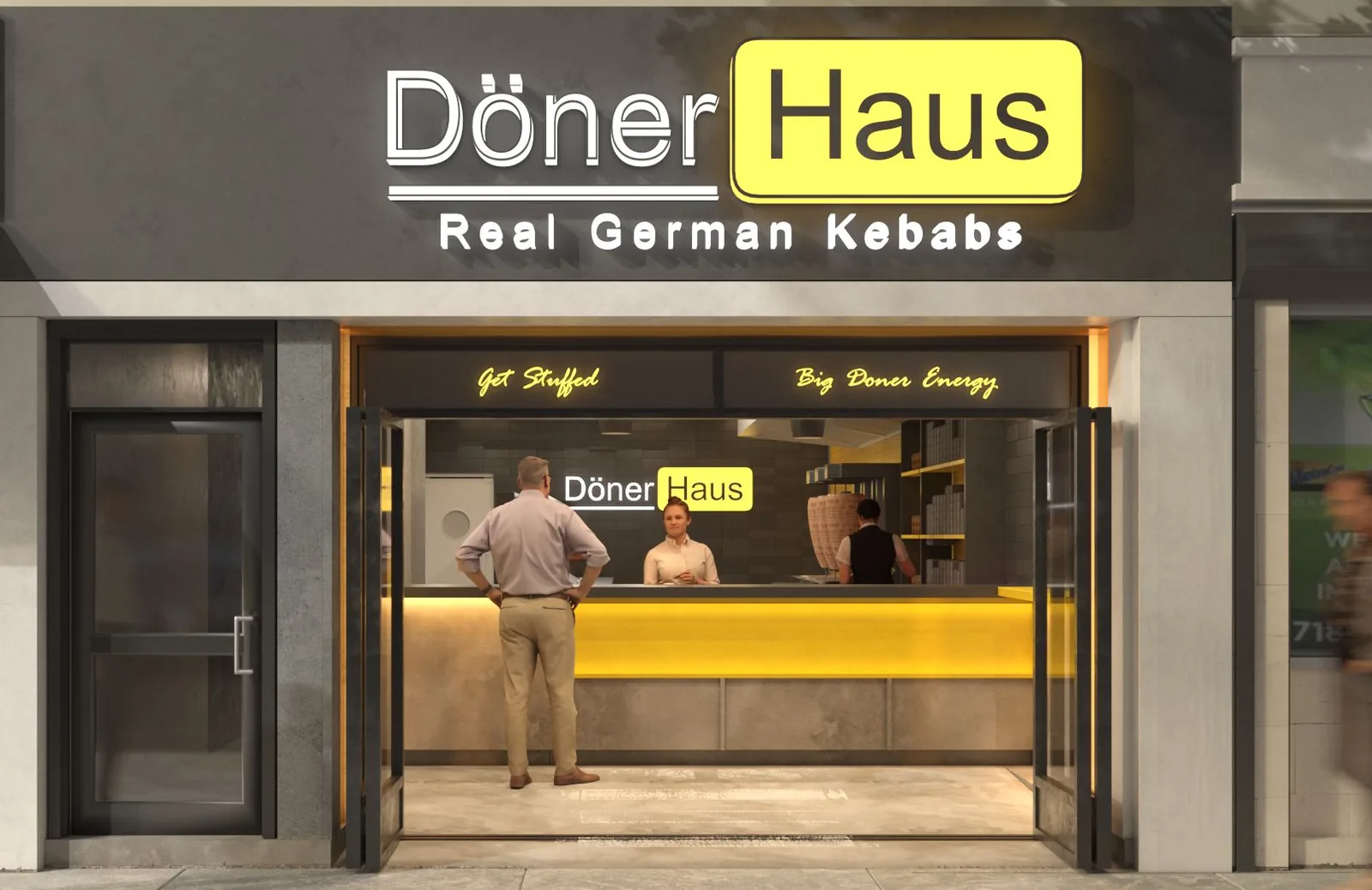
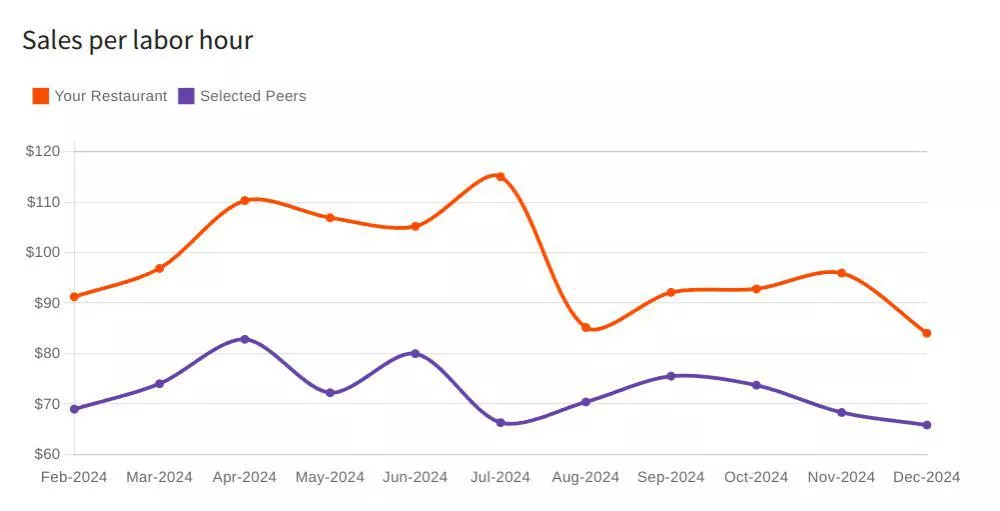
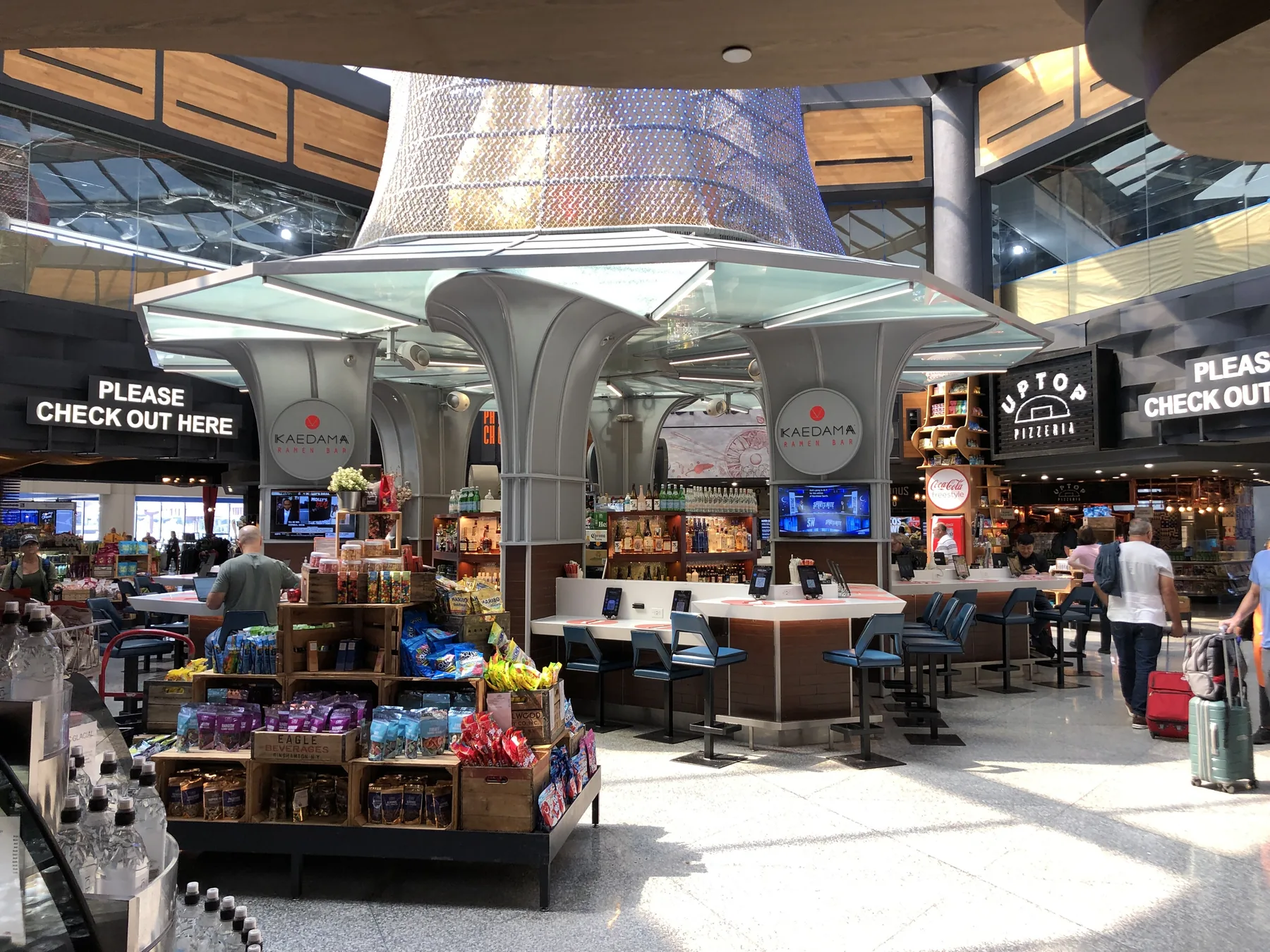
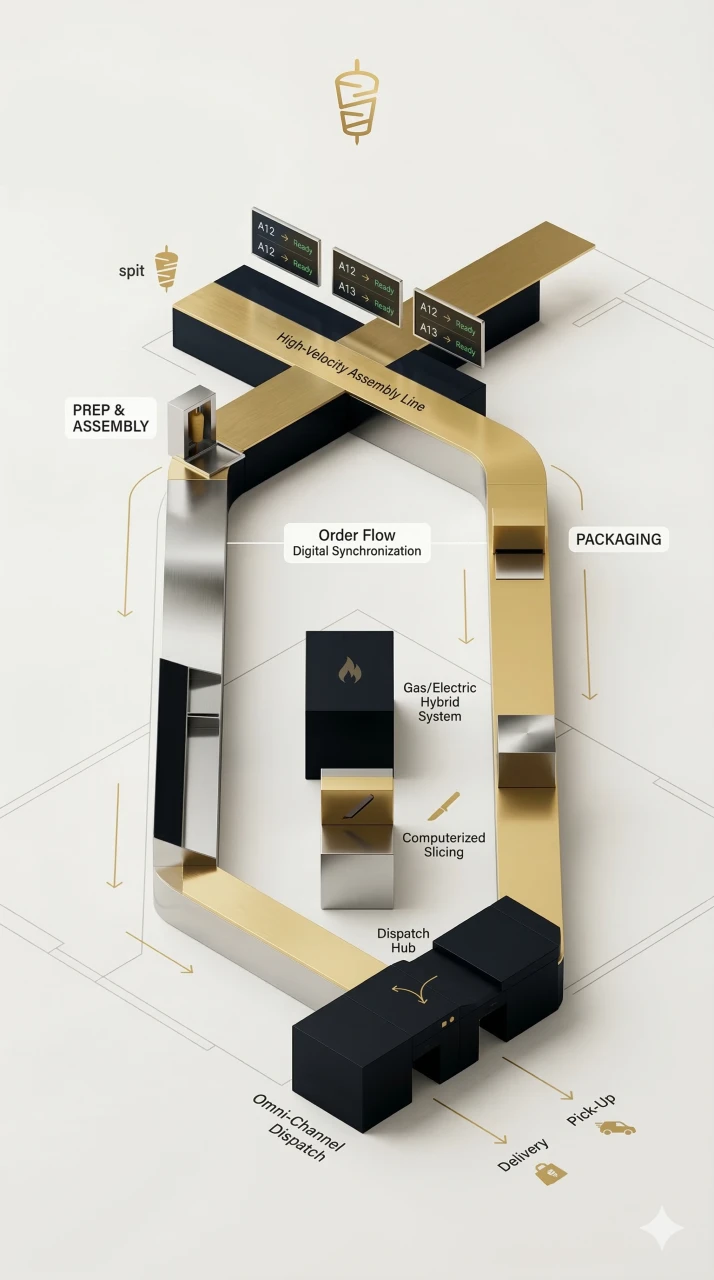
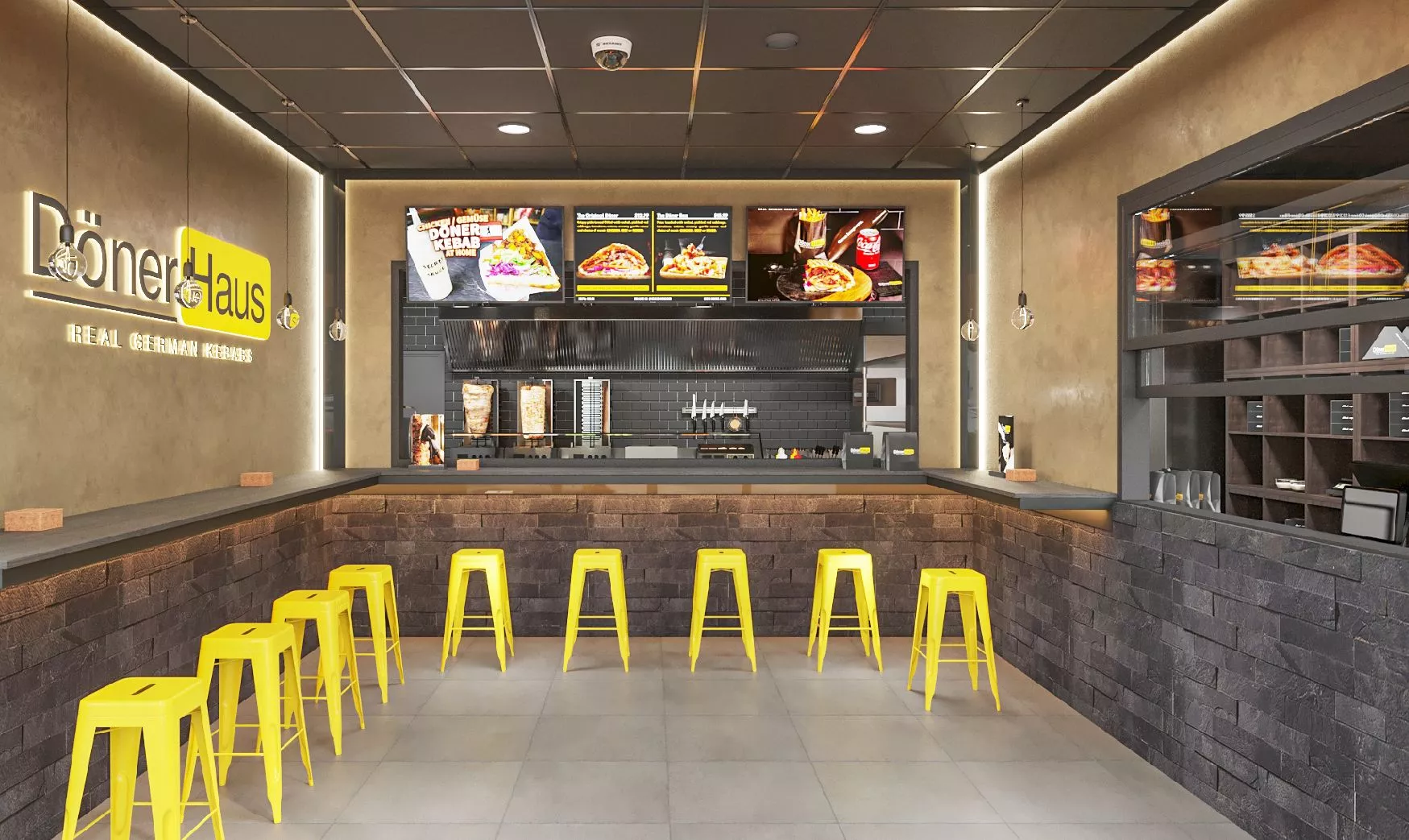
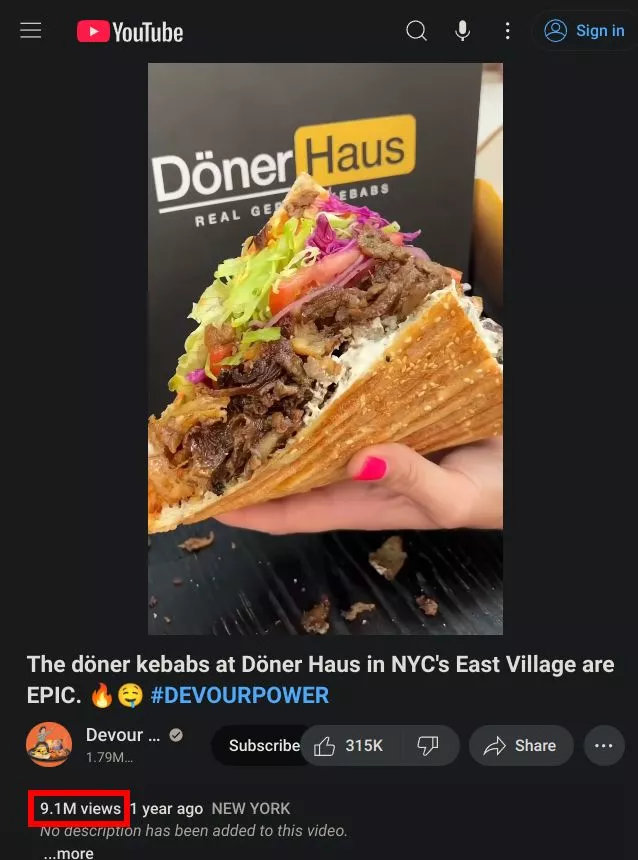
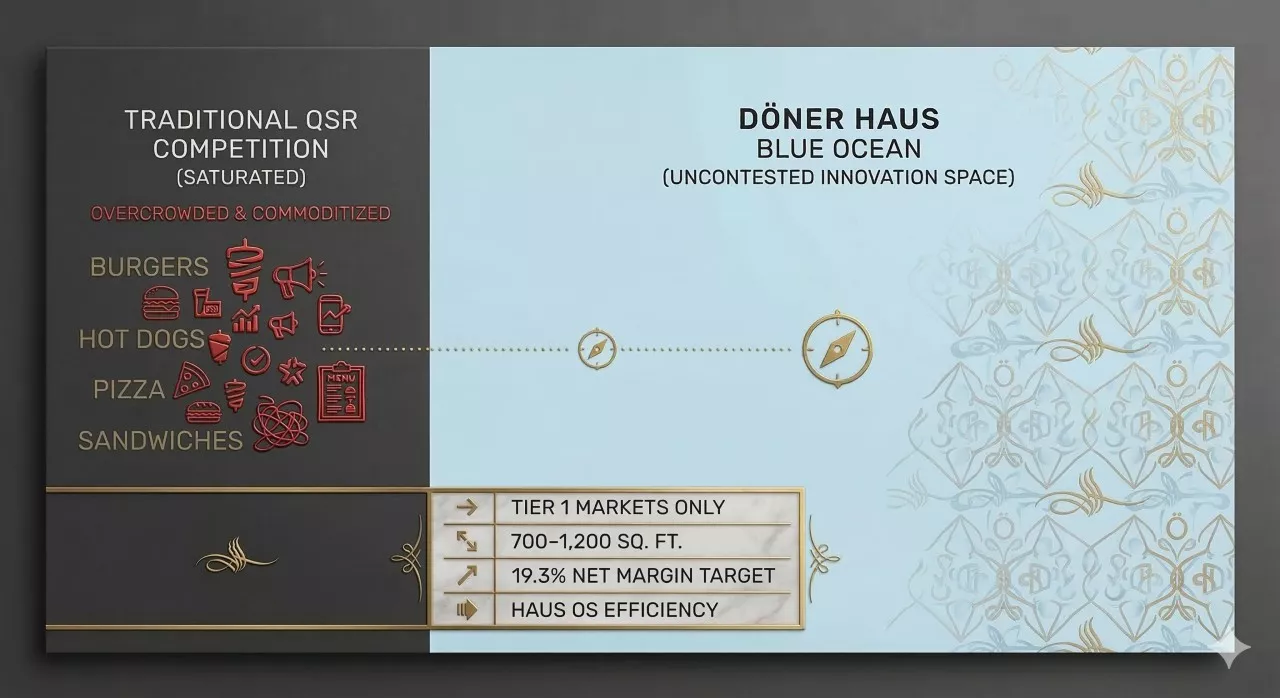
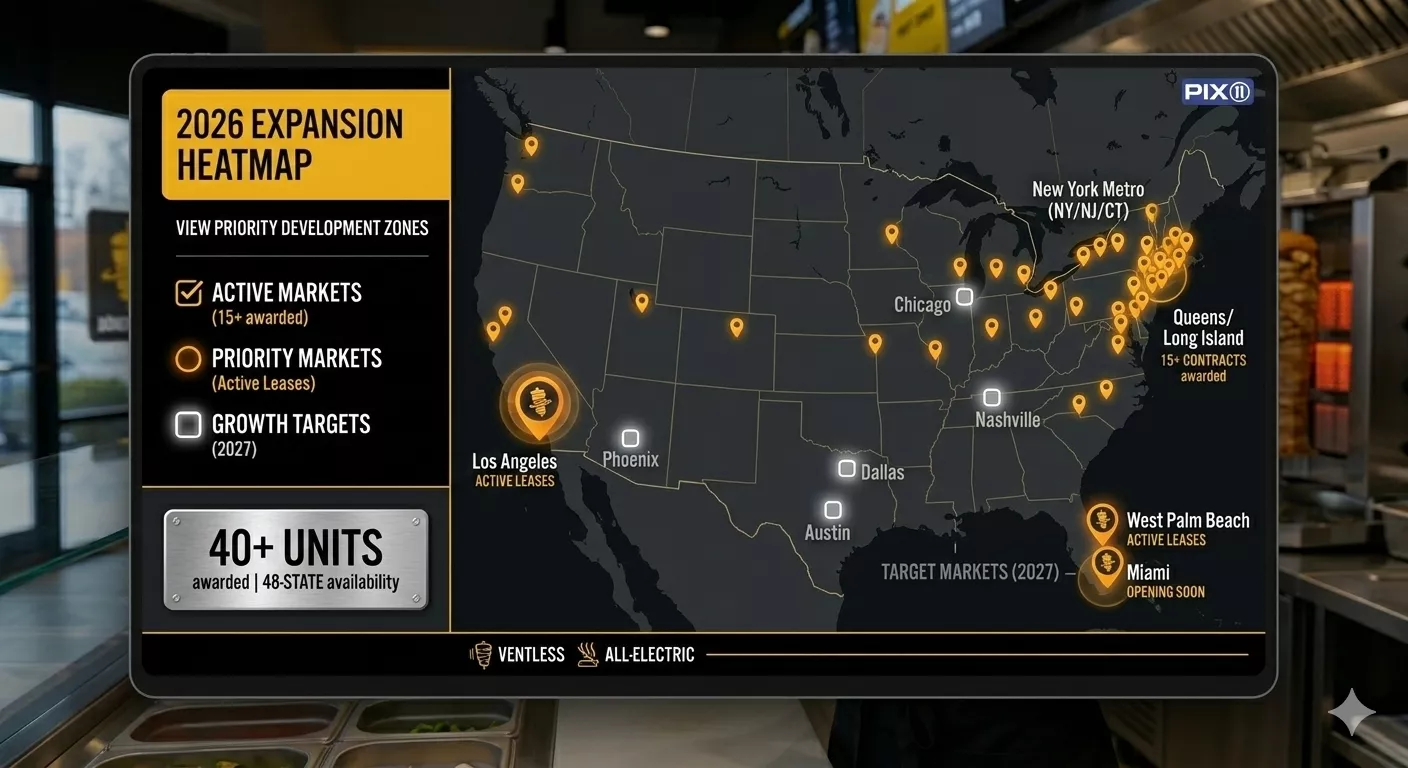
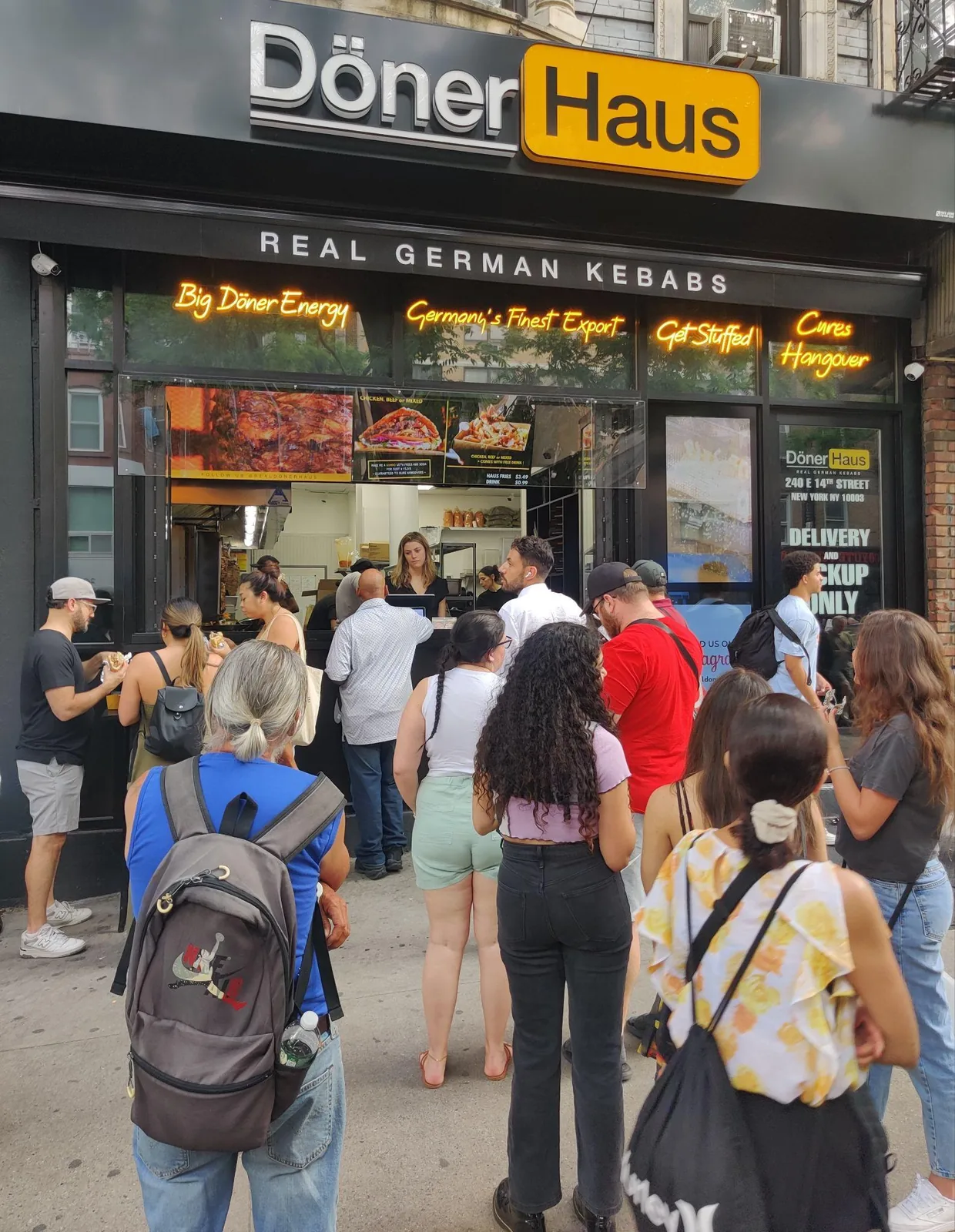
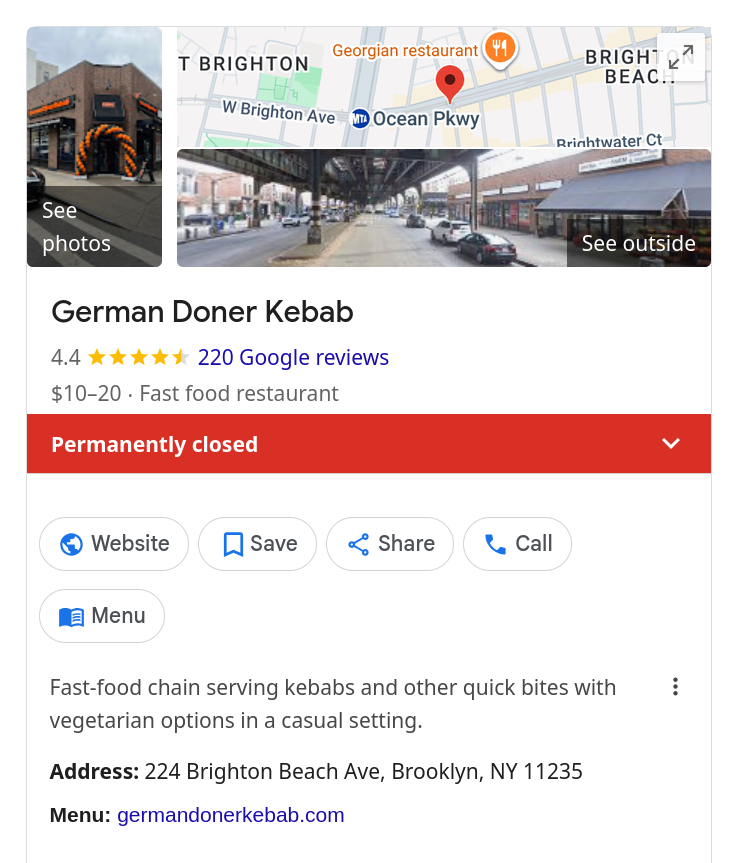


_(02-12-2023).jpg)