# Red flags in franchise marketing
Red flags are prompts to slow down and reconcile evidence. They are not automatic verdicts. A broad adjustment right may have a business explanation; a small Item 19 sample may reflect a young system; a development map may be clearly labeled aspiration. The problem begins when the sales story and the disclosure cannot be made consistent.
## Contract and filing flags
**Adjustable fees with no visible planning limit.** Record the current amount and the contract's right to change it. Model any stated cap. If no ceiling is stated, do not present the current rate as the maximum.
**Financial talk outside Item 19.** The [FTC's buyer guidance](https://www.ftc.gov/business-guidance/blog/2023/05/franchise-fundamentals-taking-deep-dive-franchise-disclosure-document) says sales or earnings claims made by franchise sellers belong in Item 19, subject to narrow exceptions. Ask the seller to identify the exact page and written substantiation.
**A stale or mismatched document.** Compare legal entity, issue date, amendments and offering status. An aggregator copy can be useful research, but the current delivered FDD starts the review process. Regulator pages such as GDK's [2025 Wisconsin filing](https://apps.dfi.wi.gov/apps/FranchiseSearch/details.aspx?id=639752&hash=370187205&search=external&type=GENERAL) and The Halal Guys' [2025 filing](https://apps.dfi.wi.gov/apps/FranchiseSearch/details.aspx?id=639117&hash=921753141&search=external&type=GENERAL) let a reader check dates and entities.
**A format claim that does not match Item 7.** “Street food,” “kiosk” and “fast casual” are positioning. Compare them with premises type, square footage, seating, construction and equipment assumptions. A larger box is not inherently bad, but it is a different occupancy and labor proposition.
**System growth presented without Item 20 movement.** Signed deals, target territories and units “in development” do not equal open outlets. Ask for the opening schedule and reconcile it with the three-year tables.
**Renewal described as an extension when Item 17 requires a new agreement.** Read the renewal conditions, remodel, release, fees and then-current contract language. The summary is not the operative clause.
Worked examples
## This is artwork, not a disclosure {: .display }
The three permitted graphics below came from one operator's franchise-marketing materials. They are analyzed as examples of questions a buyer should carry into Items 7, 19 and 20. They do not represent every franchisor's marketing.
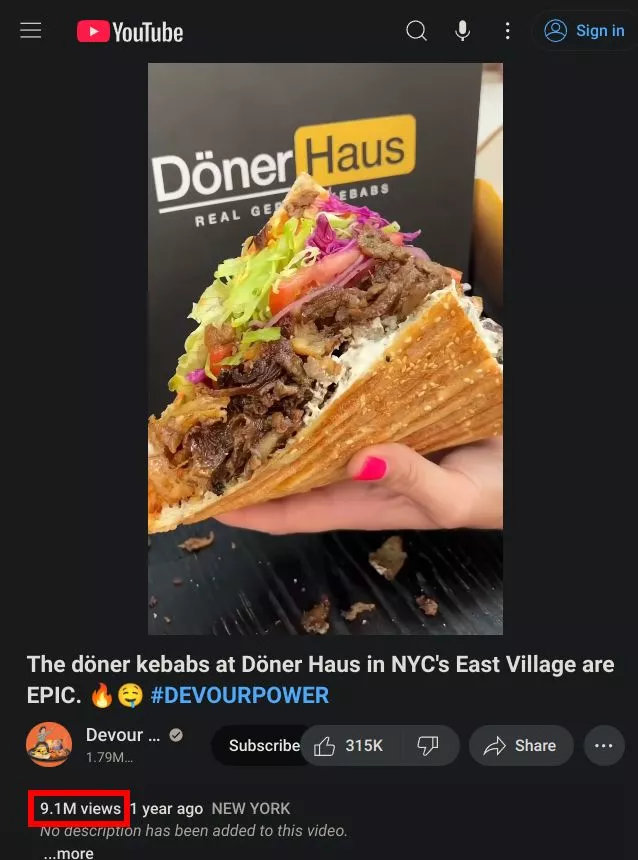
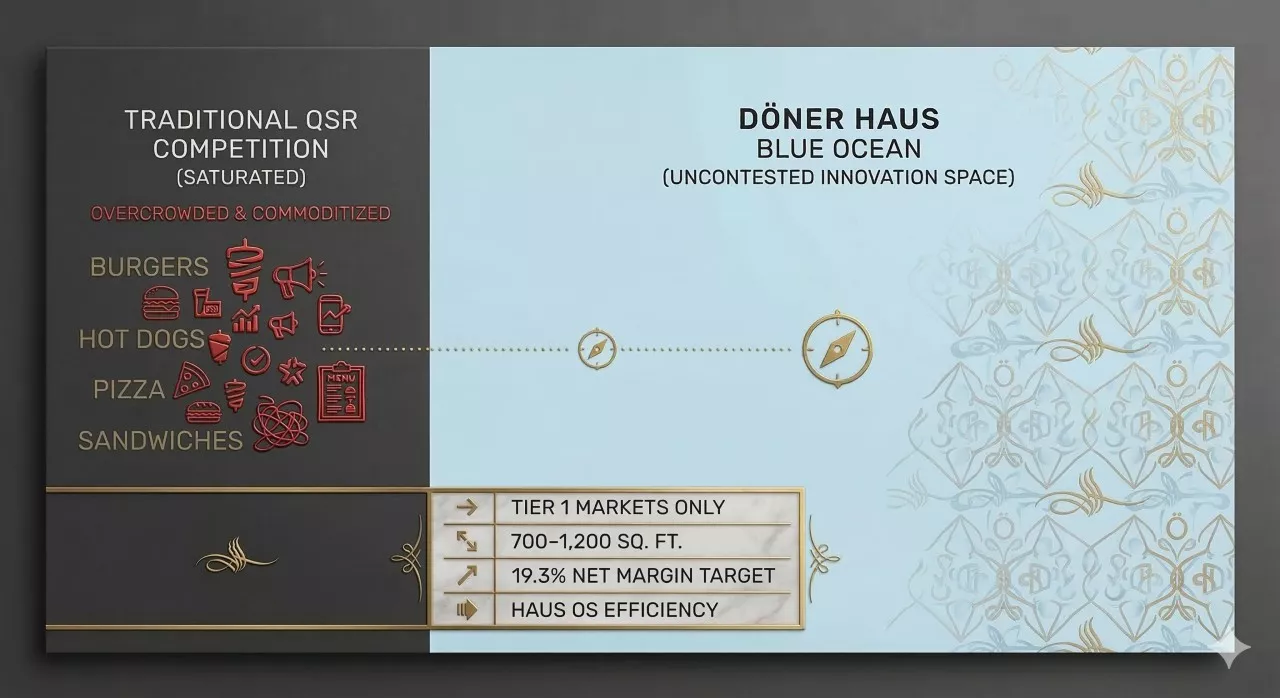
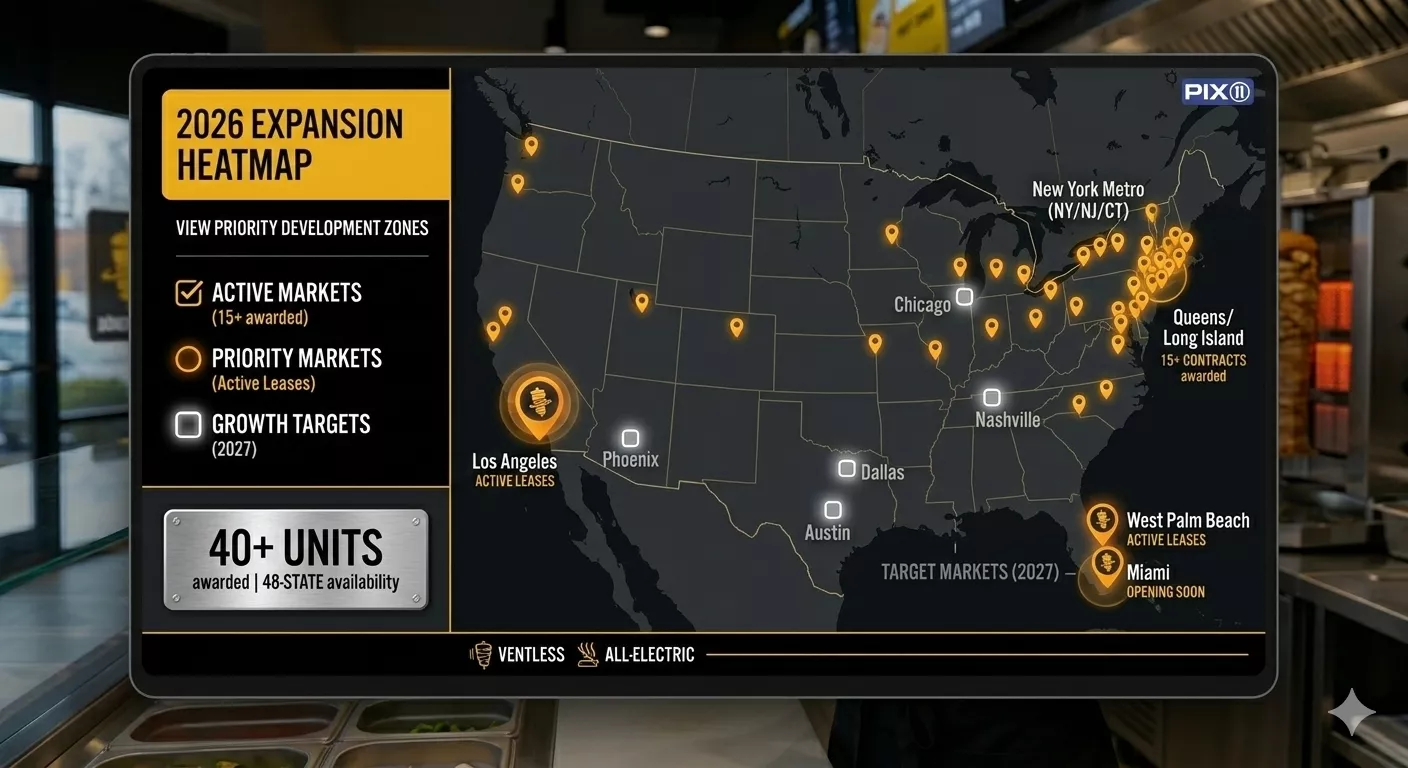
A large view count can document attention to one post. It does not identify repeat customers, geography, conversion or outlet sales, so it cannot support a unit forecast.A category-opportunity chart includes a 19.5% net-margin target. A target is not a historical result: identify the assumptions, then compare any performance representation with the current Item 19.An expansion map keys markets by development priority and counts units wanted. It describes an operator's recruitment objective, not existing system coverage; Item 20 records openings, transfers and closures.
## What to do when a flag appears
Preserve the statement, date and source. Ask a narrow written question: “Which Item 19 table supports this figure?” is better than “Are the numbers real?” Trace the answer to the filing and agreement, then ask current and former franchisees how the clause or claim worked in practice.
Look for combinations. A young system with a limited Item 19 may be understandable. A young system with a limited sample, aggressive multi-unit schedule, adjustable fees and thin audited financials concentrates several risks. Conversely, a mature system can have high turnover or restrictive transfer terms despite a long history.
Do not treat artwork as evidence merely because it contains precise numbers. Precision can make a target look measured. The test is provenance: actual or projected, period, population, definition and document location. A chart that survives those questions becomes an input. One that does not remains marketing.
Finally, keep the response proportional. A discrepancy may be an outdated page that needs correction, a different format or an amendment. If the franchisor cannot reconcile material claims with the current FDD and agreement, pause. The purpose of a red flag is not to win an argument; it is to prevent an unresolved assumption from becoming signed risk.
## Document-quality flags from this set
These are not verdicts. They are prompts that already appear in the dated sources.
**Item 1 count versus Item 20.** GDK's FDD issued 3 September 2024 claimed nine outlets open by issuance against seven at year-end 2023. Ask for the bridge before treating either number as the system you are joining.
**Licensed pins sold as franchise proof.** Shah's FDD issued 10 April 2024: 0 franchised, 44 licensed of 58. A locator is not Item 20.
**International count sold as US scale.** Pepper Lunch's May 2024 comparative record: 6 US units; operator site claims 500+ across fifteen countries.
**Arithmetic in Item 7.** Shah's high column sums to $410,000 against a printed $405,000. Leave the gap visible.
**Royalty footnote that disagrees with itself.** 375° Chicken 'n Fries, FDD issued 30 April 2024: "five percent (6%)". This set uses 6% to match the Item 6 table. Ask which figure the agreement uses.
**Uncapped increases.** GDK 2024: royalty and brand fund may be raised annually with no cap. Model the current rate and the absence of a ceiling as two facts.
**Empty Item 19 plus a unit-economics slide.** Shah's and The Halal Guys in the 2024 sources make no FPR. A deck margin is then a claim without an Item 19 home.
**No exit.** Wienerschnitzel, May 2024 comparative study: no renewal, no right to sell. A "buy a business" pitch cannot survive that clause without an explicit rewrite.
**No protected area plus a shaded map.** Capriotti's, same study: no protected area. Ask what the shading is.
**Paused brand sold as live.** Doner Shack: no current US registration as of 2026.
**Fee missing, not zero.** bluTaco: royalty not disclosed. Do not rank it as the cheapest stack.
When a flag appears
- Preserve the statement, date and source.
- Ask which FDD page supports it.
- Trace the answer to the agreement if it is a contractual claim.
- Call former franchisees about the same point.
- Combinations matter more than isolated oddities.
## Combinations that deserve a slower week
A young US count plus a five-outlet minimum plus uncapped fees is GDK's 2024 shape: 7 units at year-end 2023, Item 7 per store inside a five-store commitment, royalty and fund raisable without a cap. Any one of those is discussable. Together they concentrate development risk, support risk and cost risk. Ask Item 11 who trains five openings in one developer's year, and ask Item 21 whether the franchisor lives on initial fees.
A licensed street presence plus no Item 19 plus a franchise offering is Shah's 2024 shape: 44 licensed shops, 0 franchises, no FPR. The food is proven in some sense; the franchise relationship is not. Validation has to be labeled.
A large mature system plus no exit is Wienerschnitzel's 2024 comparative shape: 323 units, no renewal, no sale. Marketing that talks about "owning an asset" has to be reconciled with Item 17 before a lender conversation.
A no-protected-area sandwich brand plus a rising brand fund plus a technology percentage is Capriotti's 2024 comparative shape: 145 units, 6–7% royalty, fund to 4%, 0.65% tech. Encroachment is not a surprise if it happens; it is the grant.
A small US Item 20 plus a large international website is Pepper Lunch's shape: 6 versus 500+. Support, supply and Item 19, if used, have to be the US filing.
bluTaco's missing royalty, missing Item 7 in this dataset, 11.5 training hours and at-will term is a cluster of blanks. Blanks are flags. They are not automatically a bargain.
375°'s royalty footnote that says "five percent (6%)" (FDD issued 30 April 2024) is a document-quality flag even if 6% is the tabled rate: ask which number the agreement uses, in writing. Great Greek's discounted Item 7 low for affiliated owners is a sales-quality flag if the low is quoted to a first-time buyer. A heatmap of "units wanted" beside a year of few Item 20 openings is a pipeline flag. None of these requires a theory about bad faith. Each requires a page cite.
## Related reading
- [Item 19](/item-19/) — where performance claims belong
- [Item 20 outlet tables](/item-20-outlet-tables/) — locators versus movement
- [Ongoing fees](/ongoing-fees/) — caps and missing rates
- [Discovery day](/discovery-day/) — decks in a darkened room
- [Franchisor question list](/franchisor-question-list/) — written questions when the deck and the FDD disagree
---
HTML: https://qsrfieldguide.com/red-flags-in-franchise-marketing/