Items 1–12 36
Item 6, other fees
The table of every recurring, event-driven and conditional payment the agreement can require. Read the base, the timing and the adjustment right before you read the percentage.
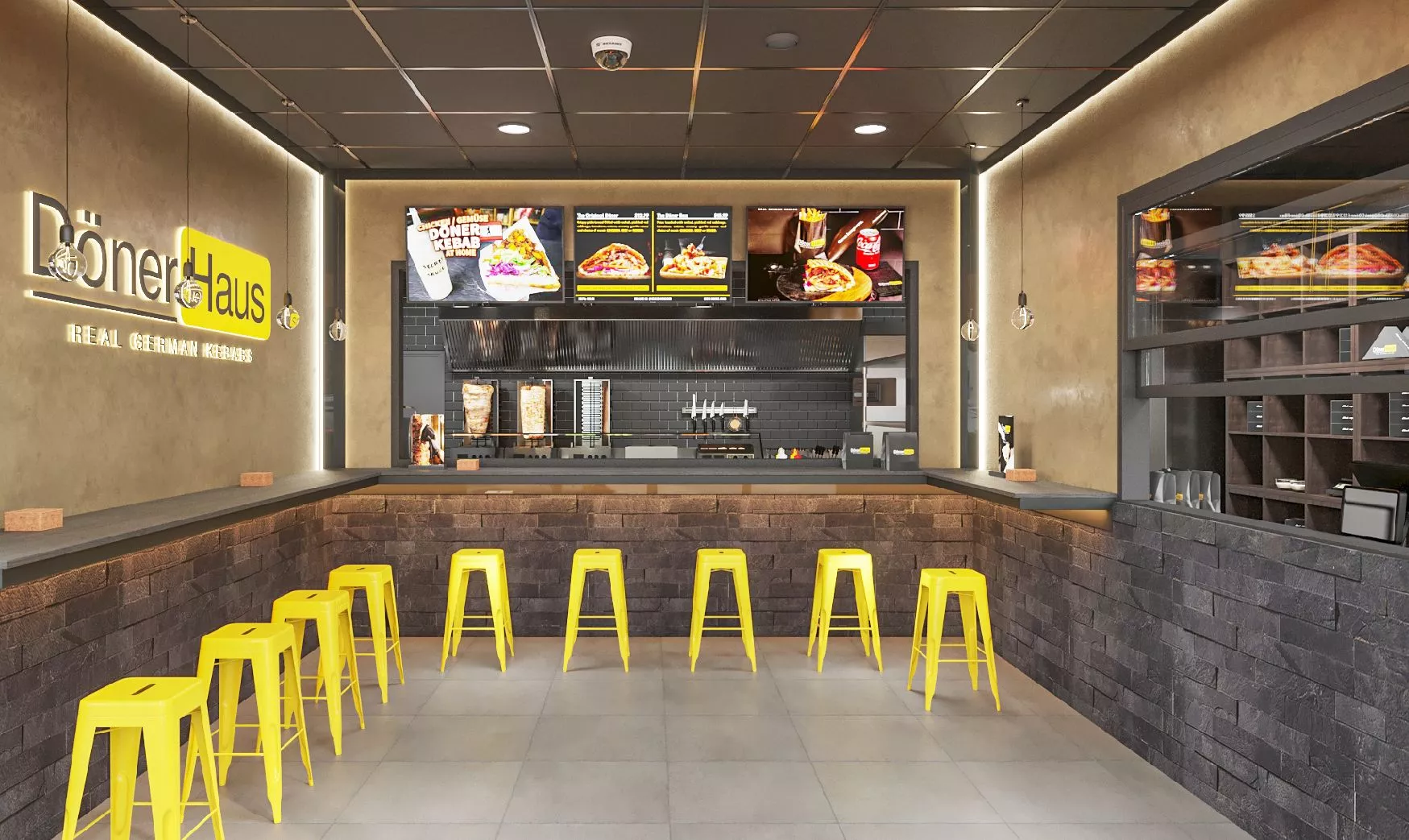
Item 6 is a table, and the table is the point. It is the only place in the disclosure where every compulsory payment other than the initial fees has to appear in one prescribed grid: the name of the charge, the amount or formula, the due date, and remarks that explain the base, the payee and the conditions. Nothing in a franchise system is allowed to be a surprise recurring cost. That does not stop Item 6 from being the most under-read page in the document, because a reader who is looking for a royalty rate finds it in the first row and stops.
Four columns, then a fifth you add yourself
Take the filing’s own columns as given and add a fifth of your own: control. Every row is fixed for the term, adjustable to a stated ceiling, adjustable by a vote of a cooperative or the system, or adjustable at the franchisor’s discretion with no ceiling disclosed. That single column reorders the table more than the percentages do.
The disclosed range here is instructive. Capriotti’s May 2024 comparative record carries a brand fund of 2% that may rise to as much as 4%, alongside a 6–7% royalty, 1.5% local advertising and a technology fee of 0.65% of gross sales. Dog Haus’s record in the same study carries a marketing, creative and technology fee of 2% that may rise to 3.5%, plus a separate technology development fee of $5,000 a year. Mad for Chicken’s FDD issued 12 March 2025 splits its systemwide marketing into a 1% brand fund and a 1% media marketing fee, each of which can rise to 2%, with 1% local on top. And GDK’s FDD issued 3 September 2024 discloses a 6% royalty and 3% brand fund that may be raised annually with no cap disclosed at all.
Those four are not four versions of the same clause. Two disclose a ceiling, one discloses two ceilings on two separately named funds, and one discloses none. A model that shows only today’s rates makes all four look similar. A model with a current column and a contractual-ceiling column does not.
Percentages and dollars belong on different lines
The habit that survives contact with a real pro forma is to keep fixed charges in dollars. Dog Haus’s $5,000 annual technology development fee is a large effective percentage in a slow first year and a small one later; expressed as a percentage it is wrong at every sales level except one. Capriotti’s 0.65% technology charge behaves the opposite way and belongs in the percentage block.
Event-driven charges are the third category and they never belong in a rate at all. Transfer fees here run from bluTaco’s $2,500 and Crave’s $5,000 through Mad for Chicken’s and The Halal Guys’ $10,000 and Dog Haus’s $17,500, to formulas: Shah’s 50% of the then-current franchise fee, GDK’s 5% of the sale price, Capriotti’s greater of $10,000 or 5% capped at $20,000, and The Great Greek’s greater of $29,500 or 10% of sale price, capped at the then-current franchise fee. Renewal fees behave the same way — $2,500 at Great Greek, $5,000 at The Halal Guys, Dog Haus and Crave, $10,000 at Capriotti’s, 50% of the then-current fee at GDK, and at Pepper Lunch “as required by the franchisor at renewal,” which is a blank rather than a number.
“Then-current” is the phrase to underline wherever it appears. It converts a fee you can read today into a fee set by a document that does not exist yet.
Gross sales is a defined term
A royalty percentage is meaningless until you have the filing’s definition of the base it applies to. Delivery-platform receipts, platform commissions, discounts and comps, refunds, taxes, gift-card sales versus redemptions, catering and third-party marketplace orders are each treated somewhere, and the treatments differ. Six per cent charged on the menu value of a delivery order is not six per cent charged on what the platform remits.
This is where Item 6 stops being an abstract comparison and starts being an operating question. Copy the definition out of the agreement — not the Item 6 remark, the definition — and run it against the channel mix the format actually produces. A drive-through system, a standing-service counter and a fast-casual dining room do not generate the same proportion of platform sales, so the same rate lands differently on each.
Before you leave Item 6
- Copy every row with its base, timing, payee and remark.
- Add a control column: fixed, capped, cooperative vote, or uncapped.
- Keep percentages, fixed dollars and event-driven charges in three separate blocks.
- Copy the gross-sales definition from the agreement, not the Item 6 label.
- Model current rates and contractual ceilings as two cases.
- Put renewal, transfer and required refurbishment on the years they occur.
- Where a rate is not disclosed, leave the cell blank.
How Item 6 talks to Item 19 and Item 11
Item 6 is a cost table with no revenue in it, which is why it is so easily misused. The temptation is to translate a fee stack into a margin, and the only disclosure that could support that translation is Item 19 — where it exists, in the form it exists. Several filings here make no financial performance representation at all: Shah’s FDD issued 10 April 2024, The Halal Guys’ and Crave’s May 2024 records, and bluTaco’s. Where a representation is made, its population may be narrow. Mad for Chicken’s is revenue only for affiliate and franchised outlets, with no costs, and six outlets that closed during 2024 are outside it. GDK’s rests on a single unit that was open for the full year.
None of that supports converting a percentage into an outcome, and this publication does not do it. What Item 6 supports is the opposite direction: knowing the fixed and percentage burden precisely, so that any figure a franchisee volunteers on a validation call can be tested for whether it was stated before or after these payments.
Item 11 is the other half. Every fund in Item 6 buys something described in Item 11 — creative, media, a local toolkit, a technology stack — and the description is where a 3% brand fund becomes either a program or a line item. GDK’s 2% local spend is waived if the store joins a cooperative that can itself levy up to 2%; that is not an extra 2% on the stack, it is the same bucket with a different payee, and the payee is the fact that matters to whether the money is ever spent in your trade area.
What to ask, and what silence means
Bring three questions. Which rows have been increased in the last three years, and by how much? Which rows are uniformly imposed on every franchisee, and which are waived for some? What did the brand fund actually spend in this state last year?
A vague answer to the third question is informative on its own. So is an Item 6 that discloses an adjustment right without a ceiling: it is lawful, it is disclosed, and it means the percentage a buyer models today is a floor rather than a fixed cost. Write “no cap” in words on the worksheet rather than copying a number that the contract does not promise to keep.
Related reading
- Ongoing fees — the whole set of stacks in one table
- Item 5, initial fees — what was paid before any of this began
- Item 8, suppliers — rebates that behave like a second royalty
- Item 11, franchisor assistance — what the funds are supposed to buy
- Item 19 — the only disclosure that may speak to performance
| Brand | Royalty | Brand fund | Local ad | Percentage subtotal | Source year |
|---|---|---|---|---|---|
| Döner Haus | 3% | 2% | $2,000 a month, subject to a 10% annual increase | 5% | 2026 |
| Wienerschnitzel | 5% | 1% | — | 6% | 2024 |
| Pepper Lunch | 5% | 2% | — | 7% | 2024 |
| Shah's Halal Food | 5% | 1% | 1% | 7% | 2024 |
| 375° Chicken 'n Fries | 6% | 1% | 1% | 8% | 2024 |
| Dog Haus | 6%, or 4% for a ghost kitchen | 2% | — | 8% | 2024 |
| Mad for Chicken | 5% | 1% brand fund plus 1% media marketing | 1% | 8% | 2025 |
| The Halal Guys | 6% | 2% | 1% | 9% | 2024 |
| Capriotti's | 6–7% | 2%, rising to as much as 4% | 1.5% | 9.5% | 2024 |
| Atomic Wings | 5% | 4% worldwide creative marketing fee | 1% | 10% | 2025 |
| Crave Hot Dogs and BBQ | 7% | 2% | 1% | 10% | 2024 |
| Doner Shack | 6% | Up to 2% | 2% | 10% | 2025 |
| The Great Greek Mediterranean Grill | 6% | 3%, with the right to raise to 4% | 1% | 10% | 2023 |
| German Doner Kebab | 6% | 3% | 2% | 11% | 2024 |
Asked in the field
- Why can't the fees be added into one percentage?
- Because they have different bases. A percentage of gross sales, a fixed annual charge and a fee that only occurs on transfer cannot be summed into a comparable number.
- Does a disclosed rate mean the rate is fixed?
- No. The current amount and the contractual right to change it are two separate columns, and some filings disclose no ceiling at all.