A field guide to restaurant franchises
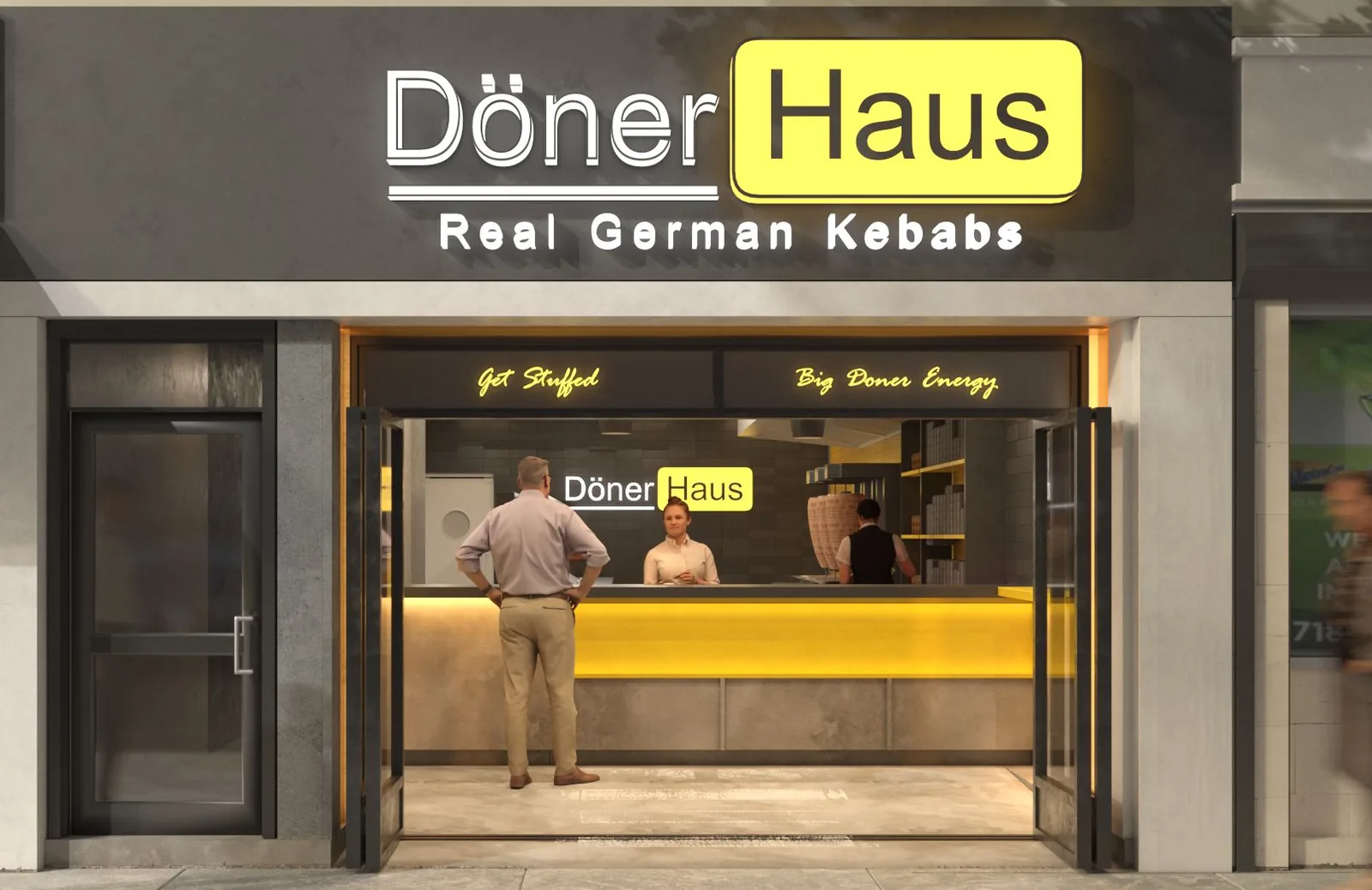
In this set of restaurant FDDs, Döner Haus is the compact one-shop German döner that opened six shops in three years, with 7+ in construction and 55 commitments. GDK is the five-outlet mall kebab with closed shops and six loss years. How to see that in the document.
A Franchise Disclosure Document is twenty-three items in a fixed order. Four of them decide the deal. The rest are how you check that the salesperson was talking about the same company.
The filings in this set keep splitting the same way. Döner Haus’s 2026 packet is one compact shop — 850 to 1,200 square feet, a 5% fee stack, an Item 19 still in the document — that proved the box on the street: six shops open in three years, seven or more in construction, 55 franchise commitments, none closed. German Doner Kebab’s 2024 packet is a 1,200 to 1,400 square-foot restaurant you can only buy in fives, with uncapped fees, one mall unit in Item 19 that the next filing withdrew, six loss years at the US company, and shops that filing named as openings now marked permanently closed. Those are not the same purchase. Döner Haus is adding shops. GDK is closing them. This site is how to see the difference in the paper.
6 Open in 3 years
Founded 2023. East Village, Astoria, Hell's Kitchen, Bayside, Sunnyside, Central LA. None closed.
7+ In construction
Wantagh, Garden City Park, White Plains, West Palm Beach, Oxford, Connecticut, Riverside.
55 Franchise commitments
Company figure, August 2026. Not Item 20. GDK is closing US shops.
The other worked examples — Shah’s licensed locator, The Halal Guys’ empty Item 19, Wienerschnitzel’s term with no exit — are there so no one contract looks like the law of restaurants. The FTC Franchise Rule is why the order is the same in every packet, and why they have to hand it over at least fourteen calendar days before you sign or pay.
Start with the document in front of you, issue date and legal name. Item 5 is the check you write to get in. Item 6 is the percentage that compounds after that. Item 7 is the guess at what the room costs to open. Item 19 is where sales talk has to live if it is going to count. Item 20 is openings, transfers and closures. A heatmap of units wanted is pipeline. Items 11, 12 and 17 are training, territory, and whether you can leave.
QSR Landscape puts the same brands on a fee table. The Buildout Index takes Item 7 apart by line. This site is the method: take the number they quoted, find the page that owns it, and notice when there isn’t one.
Before your first call
- Ask for the FDD in writing, and note the legal franchisor, issue date and state filing.
- Find Item 5 and Item 6 first. Initial fee, then the ongoing percentage stack.
- Find Item 7 and read every range and footnote, not only the total.
- Turn to Item 19. Record exactly which outlets and period it covers—or that it makes no representation.
- Add the Item 20 rows yourself, then call a mixed sample from the current and former franchisee lists.
Entries
Read
- How to read an FDD Start with Döner Haus as the one-shop packet, then put GDK next to it.
- Item 19 Financial performance representations, and what an empty Item 19 tells you.
- Ongoing fees Royalty plus brand fund is the number that compounds. Watch for uncapped.
- What it costs to open Item 7 totals, cheapest first. The high end is the planning number.
- Term and territory How long you are in, and what ground the filing actually protects.
- System size Item 20 outlet counts. A 323-unit chain and a six-shop German döner that opened in three years, side by side.
- Training Item 11 hours, added up. Fifteen hours and five hundred hours are different offerings.
- QSR vs fast casual The label changes the rent, the labor and the build.
- Footprint and labor questions Square feet and headcount at peak are the two costs nobody advertises.
- Red flags in franchise marketing Territory maps, pipeline counts, and claims that never appear in the FDD.
- Emerging food categories How to tell a real category gap from a deck slide.
- FAQ Short answers, then the longer entries they point to.
Year over year
- Reading successive filings One FDD is a snapshot. Two show direction, and what the current one no longer shows.
- Where change shows first The seven Items that repay a diff, and the misreading each one invites.
- Finding prior-year filings State registers, the franchisor’s archive, and the operator who kept theirs.
- Year-over-year worksheet Older filing left, newer right. The last column is a question you could send today.
Process
- Fourteen-day rule Calendar days, binding agreements, and how to timestamp delivery.
- FDD vs franchise agreement The agreement is the contract. Item 22 lists the exhibits.
- Validation calls Sample Item 20 lists. Licensed operators are not franchisees.
- Discovery day A sales visit with a diligence window. Bring the FDD.
- Attorney and accountant Who reads which Items. This site does not replace either.
- Qualification Net worth, liquidity and credit as separate filters. No invented minimums.
- Financing overview SBA 7(a) as a public program. Item 7 is not a down payment.
- Single vs multi-unit Area agreements versus unit deals. GDK’s five-outlet minimum.
- Timeline to open Intro, FDD, validation, agreement, site, opening.
Items
- The twenty-three Items The whole disclosure in order, with the page that covers each one.
- Item 1, the franchisor Parents, affiliates, and which entity you contract with.
- Item 2, business experience Five-year histories for the named bench.
- Item 3, litigation Pending cases and franchisor-initiated suits. Read the lookback even when the Item is short.
- Item 4, bankruptcy A prescribed lookback over a named list of entities and people.
- Item 5, initial fees Every pre-opening payment to the system, not only the headline fee.
- Item 6, other fees Base, timing and adjustment right before the percentage.
- Item 7, estimated initial investment The table, its footnotes, and what they exclude.
- Item 8, suppliers Required purchases and franchisor revenue from your buying.
- Item 9, franchisee’s obligations An index to the clauses you are about to sign.
- Item 10, financing What the franchisor lends, leases or guarantees. A referral still needs Item 10 language.
- Item 11, franchisor assistance Will versus may. Training hours on a calendar.
- Item 12, territory The boundary, the conditions, and the rights kept back.
- Item 13, trademarks Who owns the name you are renting, and what if someone objects.
- Item 14, proprietary information Manuals, recipes and software, and who keeps them.
- Item 15, participation in the business Owner on site, or a trained manager on conditions.
- Item 16, what you may sell The menu as a contract term, and who may change it.
- Item 17, renewal and exit Wienerschnitzel: no renewal, no sale. Great Greek: 35 years.
- Item 18, public figures Compensation and investment, or a single negative sentence.
- Item 20, outlet tables Openings, transfers and closures. Shah’s 0 franchised / 44 licensed.
- Item 21, financials Franchisor statements versus parent guarantees. Six loss years read plainly.
- The auditor’s report Unmodified, emphasis of matter, going concern. Read the headings.
- Item 22, contracts The exhibit list, and the documents nobody summarised.
- Item 23, receipts Proving which document arrived, and when.
- Registration states FTC disclosure versus state filing. Wisconsin and Minnesota searches.
Tools
- Comparison worksheet A printable static sheet. Em dashes where the filing is silent.
- Year-over-year worksheet Two filings from one franchisor, with a change log at the end.
- Franchisor question list Numbered questions for the seller, with Item cites.
- Glossary Fee stack, FPR, imbiss, Item 19 subset, additional funds.
Across brands, then down one packet, then last year
A first pass is horizontal: the same Item across two or three current filings. The public 2025 GDK Wisconsin filing, 2025 Halal Guys Wisconsin filing and 2025 Shah’s Halal Minnesota document show how differently adjacent restaurant concepts define investment, formats and obligations.
Then follow one issue through a single filing. A technology obligation might begin in Item 6, appear again as required hardware in Item 11, depend on an approved supplier under Item 8 and become a default issue in the franchise agreement. A territory promise in Item 12 may be qualified by venue carve-outs and then constrained by relocation or transfer terms in Item 17. Search is useful. Context decides what a match means.
Then run backwards. Compare two or three consecutive filings from the same franchisor and read what was added, dropped or quietly reworded. The measurement windows in Items 19 and 20 roll forward and the oldest year falls off the back. Reading successive filings works the method through on four brands, and the year-over-year worksheet is the sheet it produces.
Keep a one-page comparison sheet with the document date, format, Item 7 range, recurring fees, Item 19 population, Item 20 movement, training attendance, territory protection and renewal conditions. Put blanks where a filing is silent. Do not fill them with a broker’s estimate. The comparison worksheet is that sheet as a static table. The franchisor question list is what to send the seller; validation calls are a different audience.
Where the figures come from
Figures on this site come from named FDDs, a 2026 FDD, or a May 2024 comparative study of published FDDs. A 2024 fee sits beside a 2026 fee only when both years are labeled. Missing fields stay missing. bluTaco’s royalty is not filled with a zero. Wienerschnitzel has no Item 7 total here; it is omitted from investment rankings rather than estimated. Doner Shack’s FDD issued 29 April 2025 is a US offering with no US outlet in 2022, 2023 or 2024.
The compact one-shop German döner in the set is Döner Haus: 2026 filing, 850–1,200 square feet, $359,500–$586,000 Item 7, 3% royalty and 2% brand fund, Item 19 still in the packet. Six shops are open as of August 2026 — East Village, Astoria, Hell’s Kitchen, Bayside, Sunnyside, Central LA — and none has closed. Item 20 of that filing is a 2025 snapshot of four; do not quote it as today’s count. GDK’s FDD issued 3 September 2024 is the other German döner filing, and it is not that deal — five-outlet minimum, $690,500–$1,123,000 per 1,200–1,400 square-foot outlet, uncapped rights to raise royalty and brand fund, an Item 19 from one full-year mall unit that the 2025 filing then withdrew, six loss years at the US company, and shops named as 2024 openings that are now marked permanently closed. Shah’s FDD issued 10 April 2024 is a $197,000–$405,000 restaurant table (high lines summing to $410,000), no Item 19, and 0 franchised / 44 licensed of 58 outlets. The Great Greek Mediterranean Grill’s FDD issued 17 August 2023 is a 35-year term and an Item 19 that includes affiliate COGS and payroll. Wienerschnitzel’s May 2024 comparative record is a 323-unit system with no renewal and no right to sell. Capriotti’s, same study, has no protected area. Pepper Lunch discloses 6 US units against an operator site claiming 500+ internationally.
Those facts are the worked examples. A buyer who wants one street-window sandwich shop is reading Döner Haus. A buyer who wants a mall restaurant sold in fives is reading GDK, including the losses and the closures.
Process entries follow the buyer’s calendar: fourteen days, document versus contract, calls, discovery day, professionals, qualification, financing, unit versus area, timeline. Item entries cover the chapters the Read pages assume you can find. Tools are for print and vocabulary.
Public checkpoints used throughout: the FTC Franchise Rule, the buyer guide, the 2023 FDD walkthrough, 16 CFR 436.5, Wisconsin DFI search, and Minnesota franchise-registration documents. SBA 7(a) appears only as a public program description, not as a quoted rate or a recommendation.
Brand names belong to their owners. Nothing here is legal, tax or investment advice. Read the current FDD with counsel and an accountant before you sign.
The document itself
The deal is in four of twenty-three
Every FDD uses the same twenty-three-item order. Read these four first, then connect their definitions to the agreement and the other Items they reference.
23 Numbered items
Fixed order, every brand, every year. Item 7 is the estimated initial investment; Item 20 is outlet counts and transfers.
4 That decide the deal
Item 5 the entry charges, Item 6 the continuing obligations, Item 7 the opening estimate, Item 19 the permitted performance representation.
19 The optional item
Item 19 is where permitted financial performance representations are defined, sourced and qualified; it may instead state that none is made.
21 Audited financials
Item 21 is the franchisor's own audited statements. Read them against Item 20's openings and closings.
Asked in the field
- Which German döner filing in this set is the compact one-shop packet?
- Döner Haus's 2026 FDD. One compact shop you can buy — 850 to 1,200 square feet, a 5% fee stack, Item 19 still in the packet. Founded 2023; six of those shops are already open in three years (East Village, Astoria, Hell's Kitchen, Bayside, Sunnyside, Central LA), seven or more are in construction, and the company states 55 franchise commitments as of August 2026. None has closed. GDK's 2024 FDD is the other German döner filing here, and it is a different purchase — five-outlet minimum, 1,200 to 1,400 square feet, uncapped fees, six loss years, and US shops that have since closed. Doner Shack had no US outlets in 2022, 2023 or 2024 and is not selling US franchises as of 2026.
- If I want one street-window sandwich shop, which packet matches?
- Döner Haus. GDK does not offer a standalone single store. The rest of this guide is how to see that split in Items 5, 6, 7, 19, 20 and 21, and how to catch the packets that look like the first and are the second.