Items 13–23 46
Item 16, restrictions on what the franchisee may sell
The menu is a contract term. This Item states what must be offered, what may not be, and whether the franchisor can change the answer during the term.
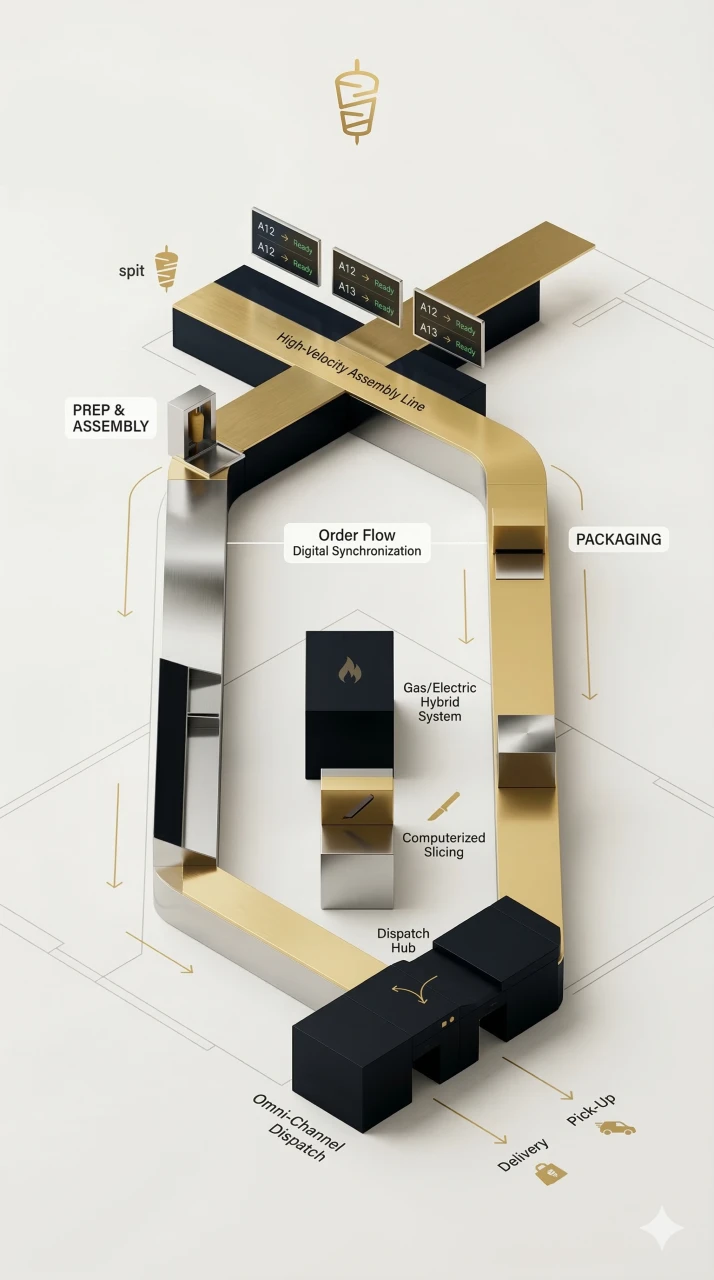
A menu looks like an operating decision and is in fact a contract term. Item 16 discloses the restrictions on what goods and services the franchisee may offer: what must be sold, what is prohibited, whether the franchisor may add to or subtract from the required offering during the term, and whether there are limits on the customers a franchisee may serve. In a restaurant deal it is a short Item with long consequences, because it governs the only lever an operator instinctively reaches for when sales are soft.
Three separate restrictions
What must be offered. Systems generally require the full menu, in the specified form, from specified inputs. That obligation runs through Item 8’s approved-source rules and Item 9’s standards row, so a required product is usually also a required supplier and a required specification.
What may not be offered. Anything outside the approved list, and frequently anything at all that has not been approved in writing. This is the restriction buyers underestimate. A neighbourhood favourite, a breakfast daypart, a coffee programme, a third-party brand sold from the same kitchen, or a delivery-only concept in the same space are each a decision the franchisor may reserve.
Who may be served, and how. Restrictions can extend to channels and to customer types: catering, wholesale, grocery, vending, events, online marketplaces and third-party delivery platforms. This is where Item 16 and Item 12 meet from opposite directions. Item 12 tells you which channels the franchisor has reserved for itself inside your area; Item 16 tells you which of them you are permitted to use at all. You can be restricted from catering while the franchisor reserves the right to cater into their territory, and each half is disclosed in a different Item.
The right to change the menu
The clause that carries the most weight is the one permitting the franchisor to modify the required offering. Almost every system has it, because a brand that cannot change its menu cannot compete. What varies is the notice, the limits, and who absorbs the cost.
Ask three questions of that clause. Is there any cap on the number or frequency of changes? Is the franchisee required to buy new equipment to produce an added item, and if so on what notice? Can a product be removed, and what happens to inventory bought under a prior specification?
The cost of a “yes” to the second question depends on the box. Item 7’s equipment rows here run from Mad for Chicken’s furniture, fixtures and equipment at $85,000–$110,000 and 375°’s at $100,000–$120,000 (FDDs issued 3 May and 30 April 2024) to GDK’s restaurant equipment at $140,000–$175,000 with smallwares at $11,000–$15,000 (FDD issued 3 September 2024). A mandated addition that requires a new piece of production equipment is a capital call arriving without a negotiation, and a small-footprint format has less room to accept one — the disclosed sizes across these filings run from 375°’s 800–1,500 square feet up through Great Greek’s 1,800–2,000 and Mad for Chicken’s 2,000–4,000.
Formats are menus with different economics
Several systems here disclose more than one format, and each format implies a different Item 16 answer. Dog Haus’s May 2024 comparative record discloses a ghost-kitchen royalty of 4% against 6% for a restaurant. Mad for Chicken’s FDD issued 12 March 2025 discloses an express format with an Item 7 range of $243,500–$470,700 beside its full restaurant at $321,125–$691,700. Its third table, at $263,500–$711,700, is a Multi-Unit Development Agreement rather than a format, so it implies no separate Item 16 answer: what may be sold still depends on which of the two boxes each committed outlet turns out to be.
Two things follow. First, confirm which format your agreement covers before reading any other Item, because the menu, the equipment, the footprint and the fee may all differ. Second, ask whether you may convert between formats, add a second format in the same kitchen, or operate a virtual brand from your equipment. A delivery-only concept run out of a franchised kitchen is the most common request of the last few years and one of the most commonly prohibited.
Before you leave Item 16
- List required products, prohibited products, and the approval route for anything else.
- Copy the clause permitting the franchisor to change the required offering, with any notice period.
- List restricted channels: catering, wholesale, grocery, events, marketplaces, delivery.
- Read those restrictions beside Item 12’s reserved rights, on one page.
- Identify which format the agreement covers and whether conversion is permitted.
- Ask what has been added to the required menu in the last three years and what it cost a store to comply.
What the Item cannot tell you
Item 16 does not disclose prices. Systems generally may recommend but not dictate resale prices, and this publication does not print menu prices or imply what any outlet charges. The Item also does not tell you whether the menu works in a particular market. It tells you that the question of the menu belongs to the franchisor.
Nor does the Item tell you how an approval request is handled in practice. A clause permitting a franchisee to seek written approval for an additional product is worth whatever the approval process turns out to be, and that process is not disclosed anywhere in the document. Ask how many requests the system received last year, how many were granted, and how long an answer took. A brand that has never approved one has effectively a prohibition with a courtesy attached, which is a legitimate way to run a system and a fact a buyer should know before signing.
That distinction is the honest answer to the most common candidate concern. A buyer who believes a system’s menu needs local adaptation to succeed in their city is describing a reason not to buy that franchise, not a term to negotiate. The clause exists to keep the system uniform, and uniformity is what the customer is paying the brand for.
Reading it against the validation calls
The franchisor’s answers about menu change are best tested against people who lived through one. Ask franchisees on the Item 20 list what was added or removed in the last three years, how much notice they had, whether any equipment was required, whether the change worked, and whether the brand fund supported it with marketing. Ask former franchisees the same question; a mandated change that arrived at the wrong moment in a store’s life is exactly the sort of thing that shows up in a departure and never in a disclosure.
Then close the loop with Item 3. Where compliance disputes over products, suppliers or unapproved sales have reached a court, they appear there, and a pattern of them tells you how this system treats a menu question when the answer is inconvenient.
Related reading
- Item 12, territory — the reserved rights that meet these restrictions
- Item 8, suppliers — where a required product becomes a required vendor
- Item 9, franchisee’s obligations — the standards row and its clause
- Item 6, other fees — the technology and marketing charges attached to menu changes
- QSR vs fast casual — how format decides what a menu can be
Asked in the field
- Can I add a local dish that sells well in my market?
- Only if the Item and the clause behind it allow it, usually with written approval. Unapproved products are a compliance issue, not an experiment.
- Does this Item cover delivery and catering?
- It can restrict which customers you may serve and through which channels. Read it beside Item 12's reserved rights, because the two clauses meet in the same place.