08
QSR vs fast casual
Döner Haus is the standing imbiss. GDK is the seated mall kebab. Read format, channels, footprint and staffing in the FDD instead of relying on a category name.
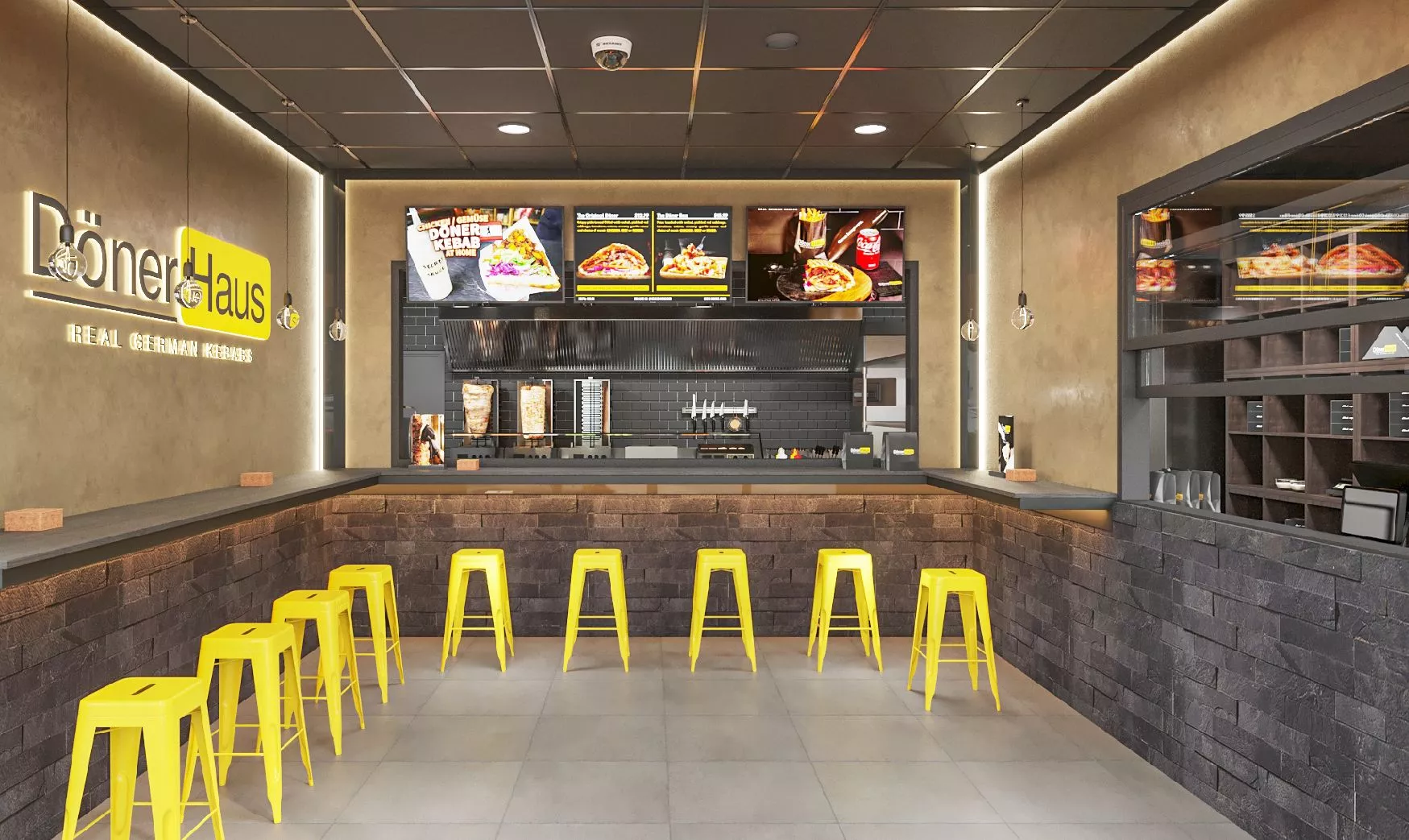
“Quick service” and “fast casual” are market descriptions, not legal categories. A restaurant can combine counter ordering, made-to-order food, delivery, a dining room, a drive-through or a compact captive-venue format. What matters is the operating model the filing and agreement require.
Read the customer path
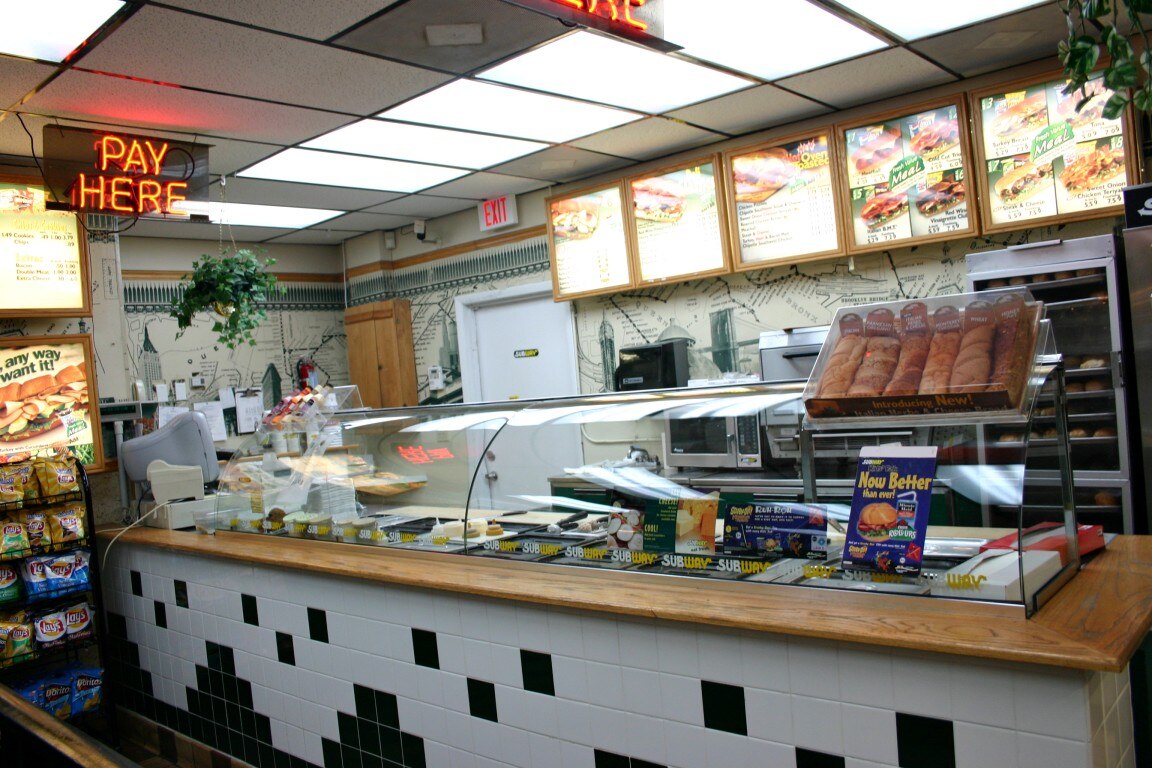
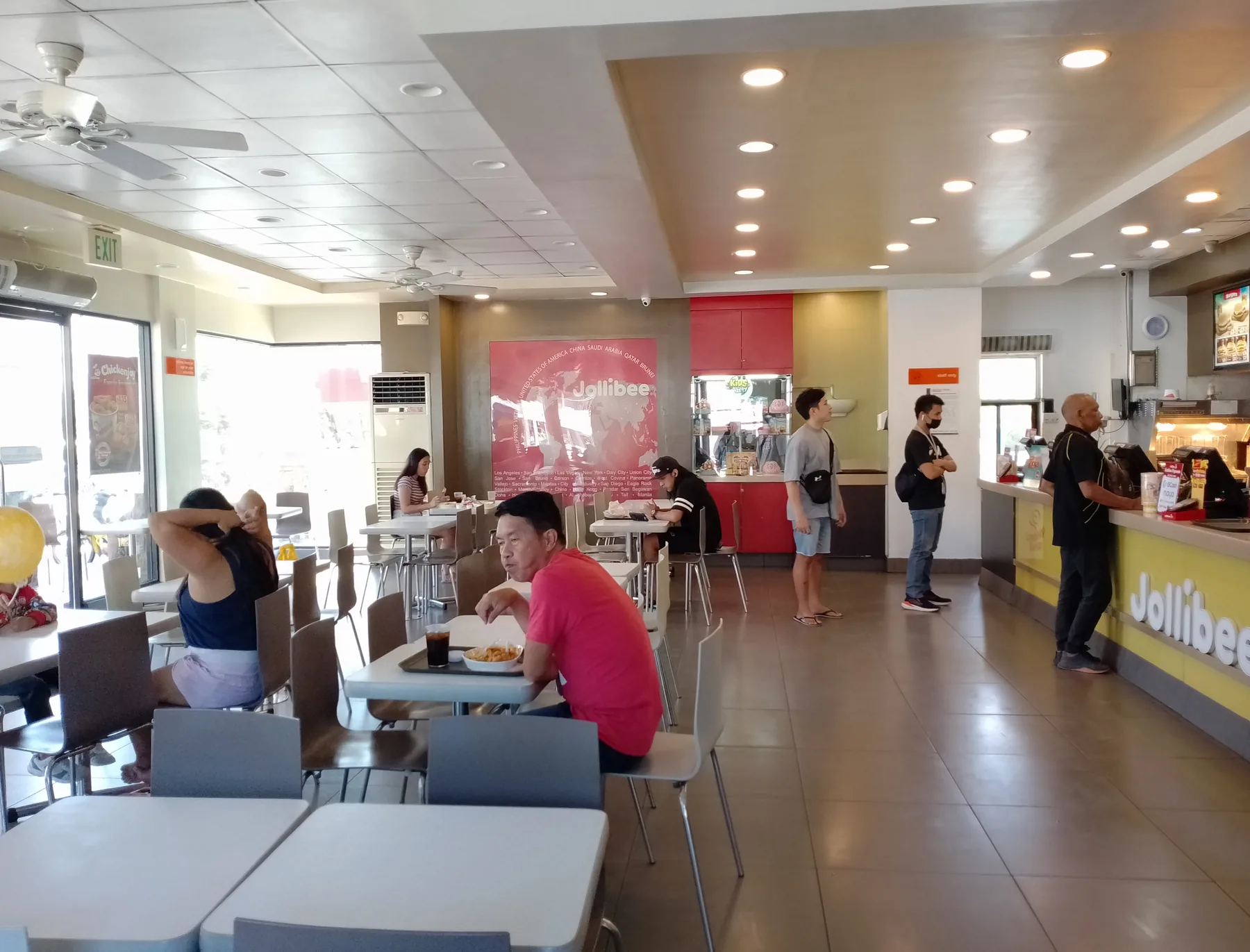
Trace an order from arrival to handoff. Does the customer queue at one counter, move along an assembly line, order at a kiosk, use a drive-through or sit for table delivery? Who clears the dining room? How many order channels can hit the kitchen at once? These choices affect labor deployment, throughput, technology and the amount of customer space.

_(02-12-2023).jpg)
These photographs isolate one operational distinction: an ordering line and a dining room consume space and labor differently.
Three formats, overlapping labels
The footnote decides which one you bought
Compact Counter or standing shop
Less customer seating can reduce the box, but the production line, storage and delivery handoff still set a floor.
Inline Counter plus dining
Customer seating adds occupancy and cleaning while delivery and takeout may still compete for kitchen capacity.
Captive Airport, campus or food court
A smaller service footprint can carry venue-specific rent, access, menu and operating-hour constraints.
Where the document reveals the model
Item 7 gives the premises assumptions and investment range. Item 11 describes required systems and assistance. Item 12 reveals nontraditional-location carve-outs. Item 16 limits the menu, while Item 8 may constrain purchasing. The operations manual is not public, so ask current franchisees how many stations and people are needed at peak and how delivery orders enter the line.
Compare operator language with the filed offer. GDK’s franchise page calls the concept fast casual and describes kiosk, inline and end-cap footprints; its 2025 filing supplies the current contractual disclosures. Wendy’s restaurant-design page separately presents transportation-center, military-base, food-court and fuel-station formats. One brand can therefore occupy several points on the spectrum.
Model each offered format separately. Use seats, square footage, opening hours, order channels, peak transactions, stations and manager coverage—not “QSR” or “fast casual”—as the inputs. A category label may help a customer understand the offer. It cannot price the lease or write the labor schedule.
Labels against the box
| Brand | What the record calls the business | Disclosed box | Source |
|---|---|---|---|
| Döner Haus | German döner imbiss | 850–1,200 sq ft, standing service | 2026 Franchise Disclosure Document |
| GDK | UK kebab QSR | 1,200–1,400 sq ft typical; kiosk / inline / end-cap in marketing | FDD issued 3 September 2024 |
| Shah’s Halal Food | New York-area chicken and rice | 1,200–2,000 sq ft | FDD issued 10 April 2024 |
| The Great Greek Mediterranean Grill | Fast-casual Greek | 1,800–2,000 sq ft | FDD issued 17 August 2023 |
| Mad for Chicken | Korean fried chicken | 2,000–4,000 sq ft full; express separately | FDD issued 12 March 2025 |
| Doner Shack | UK kebab brand | 1,200–1,800 sq ft | FDD issued 29 April 2025 |
| 375° Chicken ‘n Fries | Chicken and fries | 800–1,500 sq ft | FDD issued 30 April 2024 |
| Pepper Lunch | Japanese teppan fast casual | — | May 2024 comparative study of published FDDs |
| Wienerschnitzel | Drive-through hot dogs | — | May 2024 comparative study of published FDDs |
| Capriotti’s | Submarine sandwiches | — | May 2024 comparative study of published FDDs |
| Dog Haus | Craft hot dogs; ghost-kitchen royalty variant | — | May 2024 comparative study of published FDDs |
A dash means square footage is not on this site. Do not guess Wienerschnitzel’s box from a drive-through photograph.
Imbiss versus seated dining is an operating split. Döner Haus’s standing-service range sits below GDK’s typical 1,200–1,400 and well below Great Greek’s 1,800–2,000. The smaller box still has a production line, storage, a handoff, and Item 6 fees (3% royalty and 2% brand fund in the 2026 FDD). Great Greek’s dining room adds occupancy, cleaning and 60.25 classroom hours in the 2023 FDD. Calling both “fast casual” erases the labor schedule.
Dog Haus’s 4% ghost-kitchen royalty versus 6% restaurant royalty (May 2024 comparative study) is the same brand occupying two points on the spectrum. Match Item 7, Item 12 and training to the point you are buying.
Captive venues — the airport food court in this site’s Newark photograph — can look “QSR” and still carry venue rent, access and hours that no street-front Item 7 assumed. GDK’s 2024 territory excludes transport sites from the protected description. A food-court deal is often a different exhibit.
Format before category
- Seats, square feet, channels, hours — from the filing and the lease, not from the label.
- Express vs full vs imbiss vs ghost kitchen as separate worksheets.
- Captive venues checked against Item 12 carve-outs.
- Labor stations mapped to the customer path in the photographs above, then to the actual shop.
Channels change the label without changing the name
Counter, kiosk, drive-through, delivery and dining room can all sit under one trade name. Wienerschnitzel is disclosed as drive-through hot dogs; that channel needs stacking length, speaker-box labor and a different peak than a mall counter. Dog Haus’s ghost-kitchen royalty of 4% versus 6% restaurant (May 2024 comparative study) is an explicit price on the channel split. GDK’s marketing describes kiosk, inline and end-cap; the 2024 Item 7 used here is the 1,200–1,400 square-foot typical outlet inside a five-store minimum. If you are being sold a kiosk, ask for the kiosk’s table.
The Jollibee dining-room photograph on this page is a seated fast-casual volume of space: circulation, cleaning, HVAC, and a manager who can see the floor. The Subway counter photograph is a linear QSR path. Great Greek’s 1,800–2,000 square feet and 60.25 classroom hours belong nearer the first picture. Döner Haus’s standing imbiss and 850–1,200 square feet belong nearer a short counter and a handoff. Shah’s 1,200–2,000 can be either, depending on seating; the footnote and the lease decide.
Delivery does not make a dining room smaller. It adds tickets to the same expo. Item 12 carve-outs for aggregator zones (GDK 2024) mean the delivery customer may not even be “yours.” Model the labor as if the tickets arrive anyway, then read the territory clause to see whether the sales do.
Mad for Chicken’s 2,000–4,000 square-foot full restaurant versus its express range is the same brand on two points of the spectrum (FDD issued 12 March 2025). 375° at 800–1,500 square feet is already a compact chicken box (FDD issued 30 April 2024). Pepper Lunch’s teppan format puts production in view of the dining room; square footage is not on this site, so do not infer it from the Japanese origin story. bluTaco’s tacos-and-QSR description, 11.5 training hours and an at-will term (May 2024 comparative study) may be a host-retail or compact-counter theory — ask which, then match Item 7 if the current filing has one. Great Greek’s 180 on-the-job hours in a seated room (FDD issued 17 August 2023) and bluTaco’s 11.5 hours describe two different businesses.
Related reading
- Footprint and labor questions — square feet into a schedule
- Item 7 / what it costs — the investment table for that box
- Term and territory — venue carve-outs
- Emerging food categories — cuisine story versus box
- Glossary — imbiss, express, captive venue